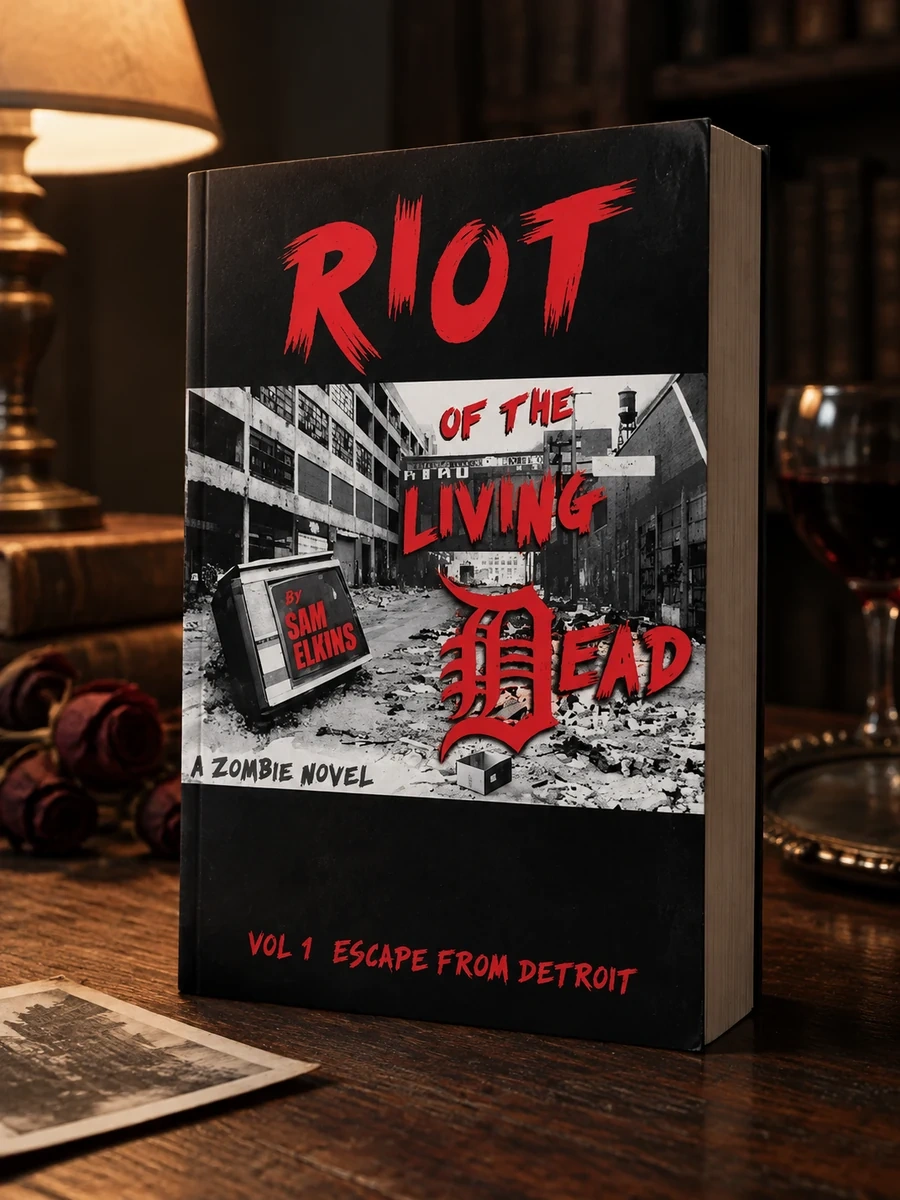

Riot of the Living Dead: Escape From Detroit
A zombie outbreak erupts during a Detroit riot in this urban horror novel.
The narrative follows an MRI technologist fleeing a city consumed by both social unrest and undead violence. Elkins uses the setting of Detroit to explore themes of decay and survival. The protagonist’s struggle is not only against the reanimated dead but also against the harsh realities of poverty and racial tension. The book avoids traditional hero tropes, focusing instead on desperation and the breakdown of order. This approach distinguishes it from generic zombie fiction by anchoring the horror in real-world urban issues.
This work sits within the tradition of American urban horror, specifically utilizing Detroit as a symbol of post-industrial decline. The setting reflects early twenty-first century anxieties about city infrastructure and social fragmentation.


📝 Description: Riot of the Living Dead: Escape From Detroit
💎 Our verdict on Riot of the Living Dead: Escape From Detroit
📖 Why choose it
Why this book is worth reading
Readers seeking a grim portrayal of city life under siege will find this narrative compelling. It appeals to those interested in the intersection of social unrest and biological horror, offering a perspective distinct from generic zombie fiction. By anchoring the supernatural threat in the tangible reality of urban ruin, socioeconomic depression, and racial tension, the book provides a visceral exploration of desperation. It is ideal for fans who appreciate horror that does not shy away from harsh realities or traditional hero tropes. The focus on survival amidst the breakdown of order offers a unique entry point into apocalyptic themes rooted in specific American geography.
⭐ Reader reviews
Reader rating
Elkins effectively utilizes Detroit’s historic structures to create a backdrop for survival, distinguishing this title through its refusal to offer easy solutions to depicted societal issues. The narrative succeeds by grounding supernatural horror in urban decay, making the threat feel immediate and tangible. It suits readers who enjoy apocalyptic fiction rooted in specific cityscapes and those interested in psychological horror driven by poverty and racism. While it avoids lighthearted tones, it delivers a relevant, grim examination of civilization’s fragility. Fans of urban gothic horror will appreciate the focus on crumbling infrastructure as a catalyst for chaos, providing a serious, unflinching look at survival when order collapses.