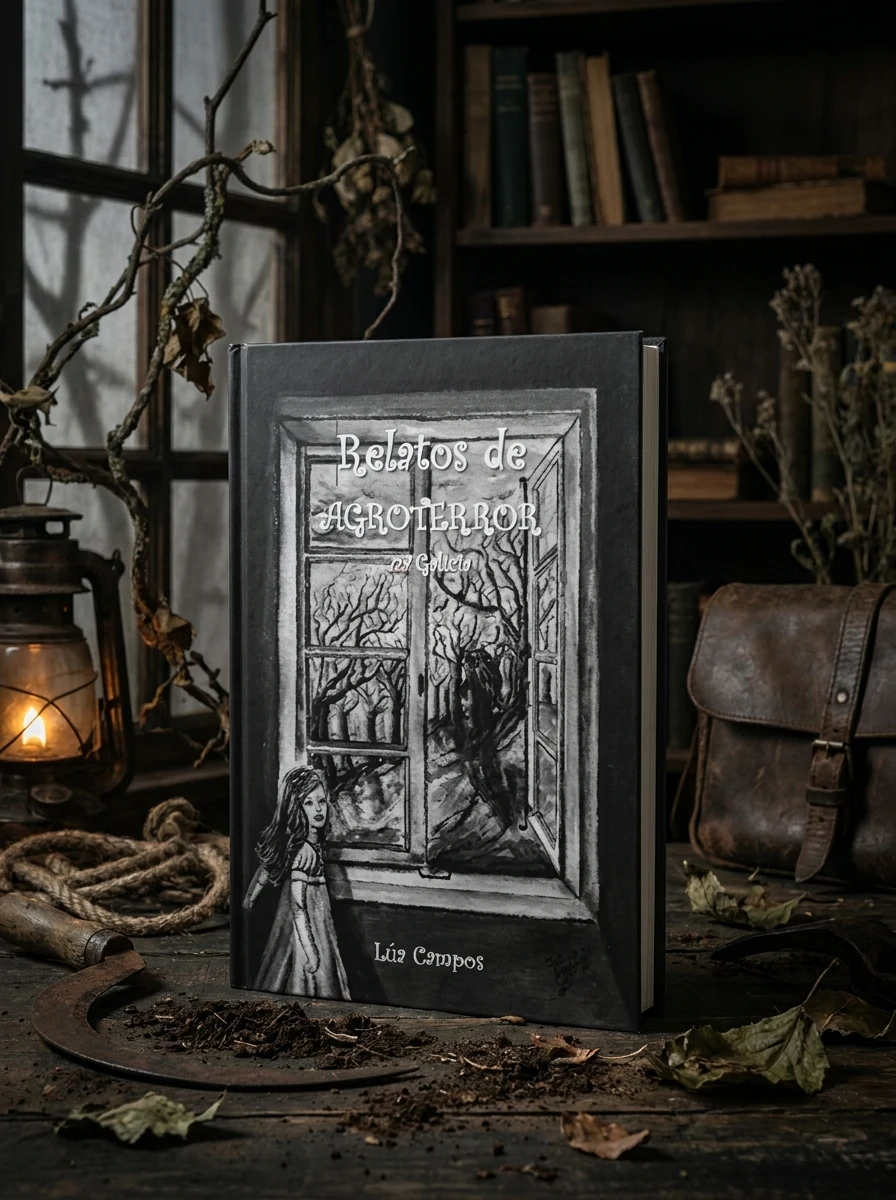
Relatos de Agroterror na Galicia
A rural horror collection focusing on atmospheric dread and isolation in Galicia.
Lua Campos's paperback anthology uses the geography of Galicia to create fear. These tales reject urban clichés, finding tension in nature and rural silence. The environment acts as the primary threat in these narratives. Pressure builds slowly through mood rather than action. This method generates a lasting unease for fans of psychological horror. Folk traditions are woven in, sometimes leading to violent outcomes, offering a fresh view on supernatural tales. The work distinguishes itself by focusing on place and isolation.
The collection is set in Galicia, a region known for its distinct cultural identity. Campos draws on the local landscape to create atmosphere. The work reflects the traditions of rural life in this area, using the environment as a primary source of horror rather than external monsters or urban decay.


📝 Description: Relatos de Agroterror na Galicia
💎 Our verdict on Relatos de Agroterror na Galicia
📖 Why choose it
Why this book is worth reading
Readers seeking emotional depth and atmospheric immersion will find this collection rewarding, as it prioritizes lingering unease over abrupt shocks. It appeals to those who appreciate the weight of solitude and the discomfort inherent in remote landscapes. Fans of gradual horror will value the slow accumulation of pressure through quiet moments rather than rapid pacing. The work is ideal for individuals who enjoy psychological turmoil and folk traditions woven into terrifying outcomes. It offers a fresh perspective on supernatural tales by rejecting city-based clichés in favor of tension born from terrain. Those who dislike metropolitan backdrops or cheap thrills may find this volume particularly resonant, as it relies on the disturbing quality of location to forge a persistent sense of danger that remains with the reader long after the final page.
⭐ Reader reviews
Reader rating
Campos successfully crafts a collection where geography acts as the primary antagonist, generating tension through nature and rural silence rather than action. The anthology distinguishes itself by focusing intensely on place and isolation, offering a refreshing alternative to conventional horror narratives. By weaving folk traditions into tales that lead to violent outcomes, it provides a unique lens on supernatural fear. This volume is best suited for admirers of psychological horror who favor mood over plot movement. It may disappoint those seeking rapid pacing or urban settings, but for readers who enjoy the burden of solitude and emotional depth, it stands as a compelling example of atmospheric dread. The writing avoids cheap thrills, relying instead on the persistent danger inherent in the environment to create a lasting impact.
📖 Read on the blog
🏛 Books from this publisher Independently Published








You might also like
See more →
Have a question about this item?
Ask about the edition, condition, delivery or anything else — we reply by email or phone, usually within a day.
