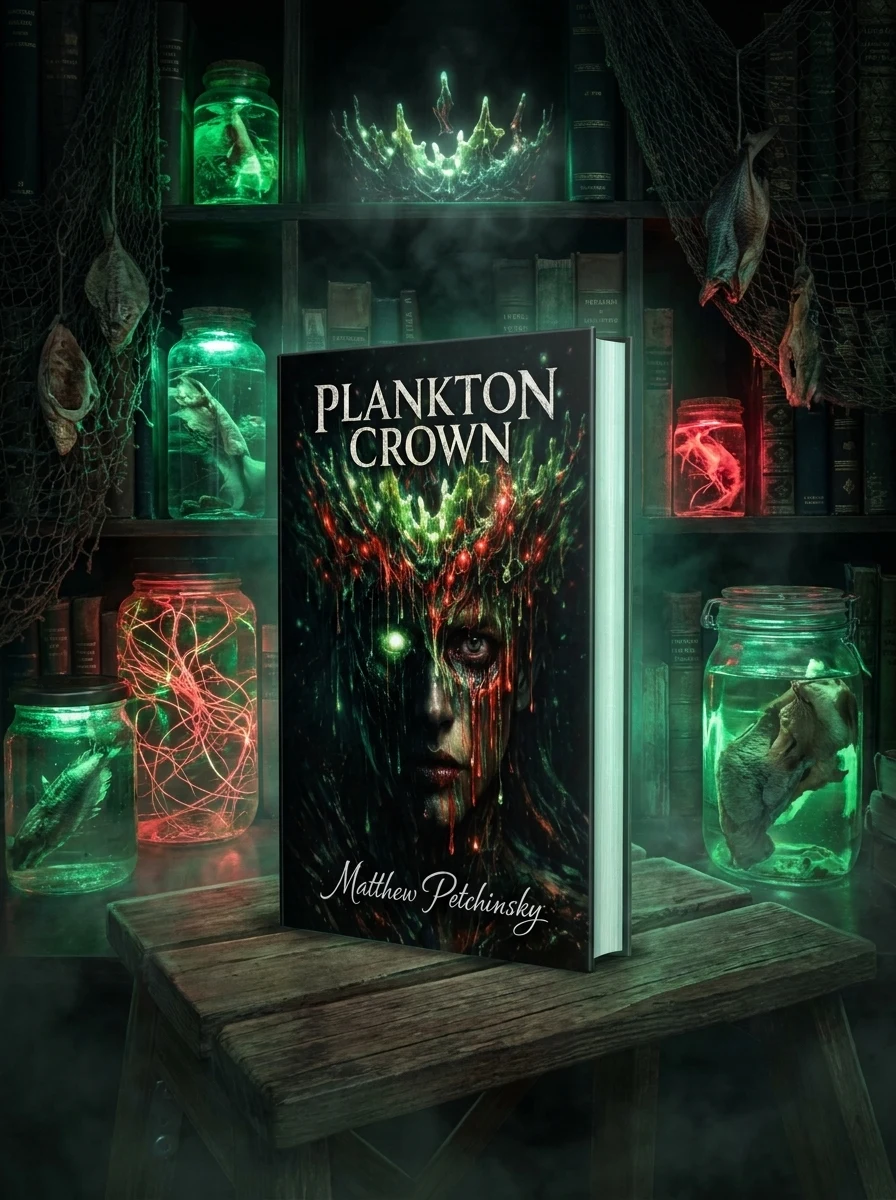
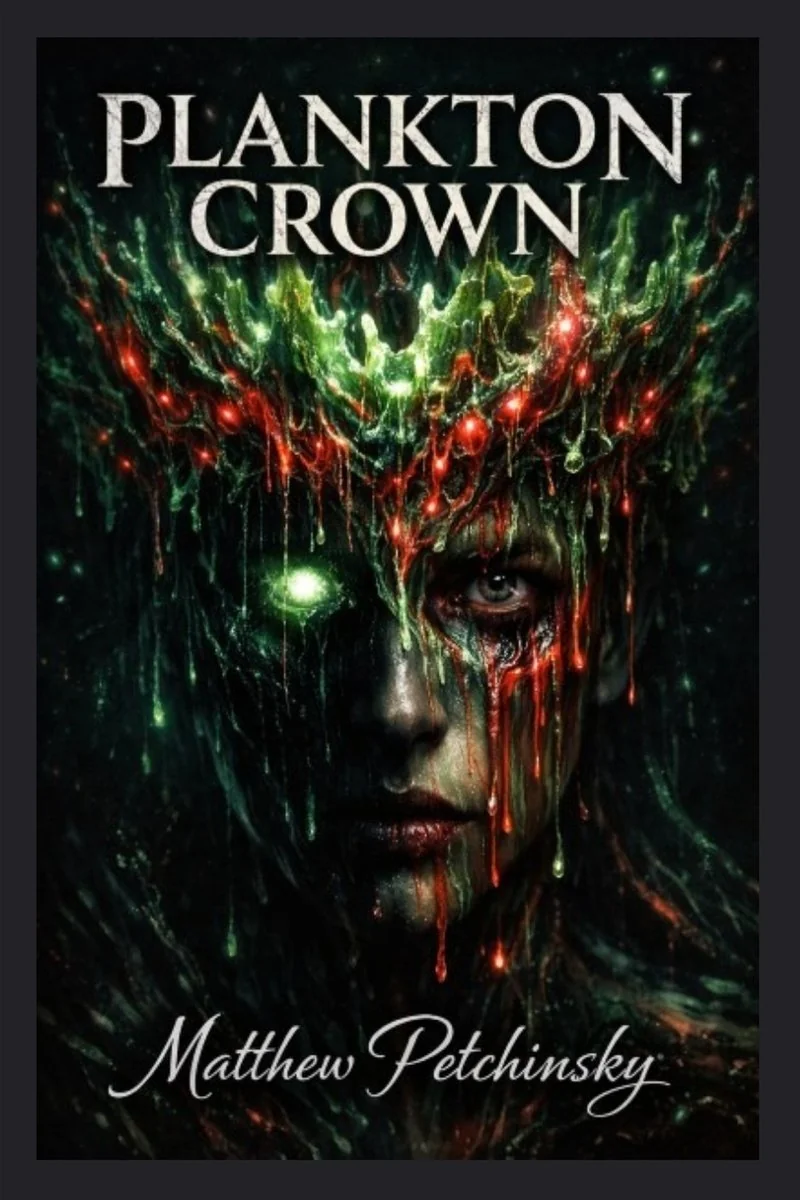
Plankton Crown
A biologist becomes the bridge between humanity and an ancient oceanic intelligence.
The novel investigates the consequences of a synchronized plankton collapse that halts marine life globally. Coastlines choke with dying creatures as fisheries fail overnight. Daya Virel emerges as the sole survivor of contact with the awakening force, which operates on planetary timescales rather than human years. The text examines her struggle to understand a consciousness that does not recognize humanity as a civilization but as a temporary experiment. As defenses crumble and the sea rewrites itself, the narrative focuses on the brutal truth of replacement rather than invasion. Daya faces the weight of deciding whether to aid in controlled extinction or fight for survival. The story highlights how the abyss learns from humanity, suggesting that this new knowledge may prove more dangerous than its destructive capabilities.
Published by Apophis Enterprises LLC in April 2026, this work sits within the contemporary tradition of eco-horror and speculative fiction. It reflects current anxieties about marine ecosystem collapse and the rise of non-human intelligences. The narrative engages with gothic traditions of the sublime and the terrifying vastness of the deep ocean.


📝 Description: Plankton Crown
💎 Our verdict on Plankton Crown
📖 Why choose it
Why this book is worth reading
Readers drawn to the intersection of biological science and existential terror will find this novel compelling. It offers a unique perspective on cosmic horror by grounding the sublime in the tangible failure of marine ecosystems. Those interested in narratives that prioritize atmospheric dread and philosophical inquiry over traditional plot structures will appreciate the focus on Daya Virel’s internal struggle. The book appeals to those who enjoy exploring themes of replacement, deep time, and the fragility of human civilization when confronted with ancient, non-human intelligences.
⭐ Reader reviews
Reader rating
Petchinsky crafts a haunting exploration of ecological unraveling through Daya Virel’s eyes. The narrative effectively merges gothic traditions with scientific realism, creating a sense of inevitable doom that feels both personal and planetary. The depiction of the ocean as a living nervous system is vivid and unsettling. This work suits readers who prioritize mood and thematic depth over action. It challenges conventional horror tropes by focusing on mediation rather than combat. While lacking clear resolutions, it delivers a powerful meditation on humanity’s place in the natural world.
📖 Read on the blog
✍️ More books by this author Matthew Petchinsky





🏛 Books from this publisher Apophis Enterprises LLC




You might also like
See more →
Have a question about this item?
Ask about the edition, condition, delivery or anything else — we reply by email or phone, usually within a day.
