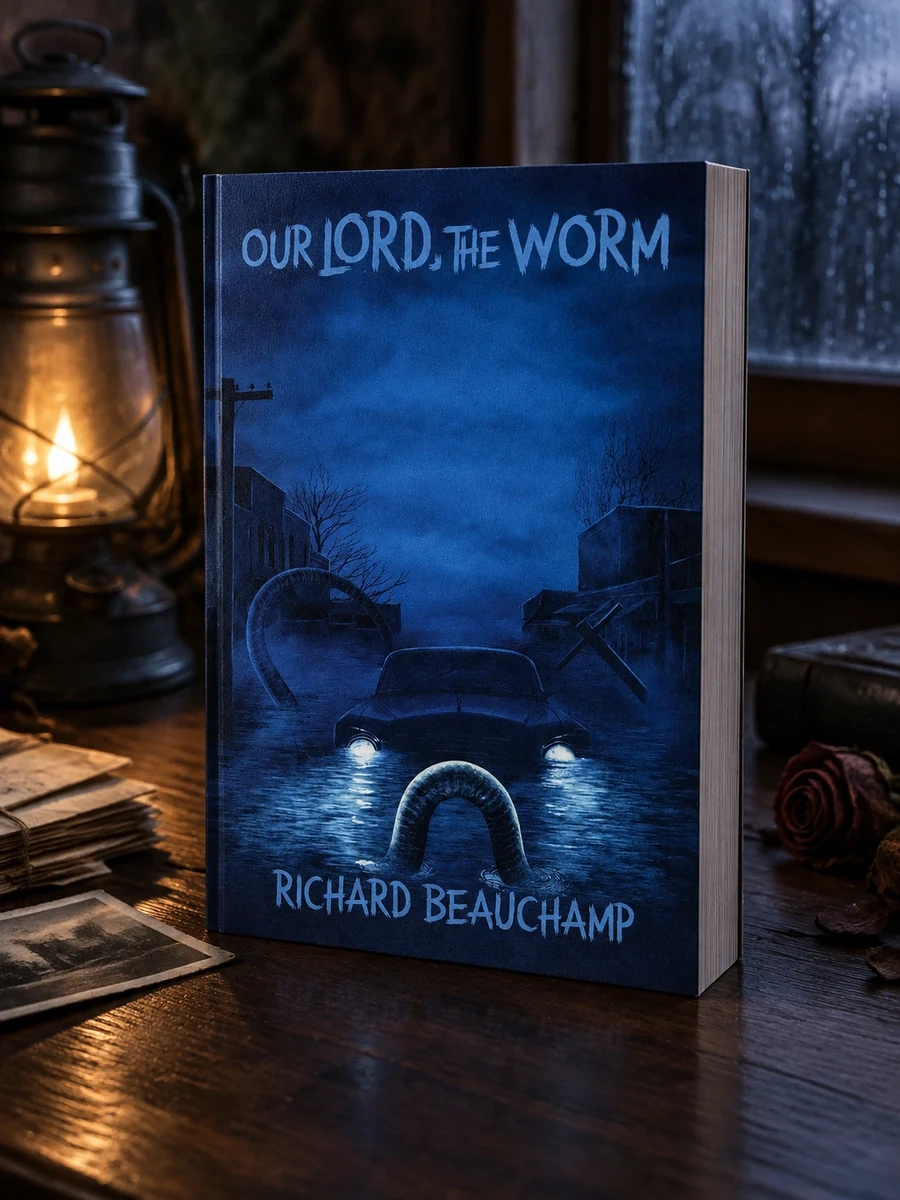
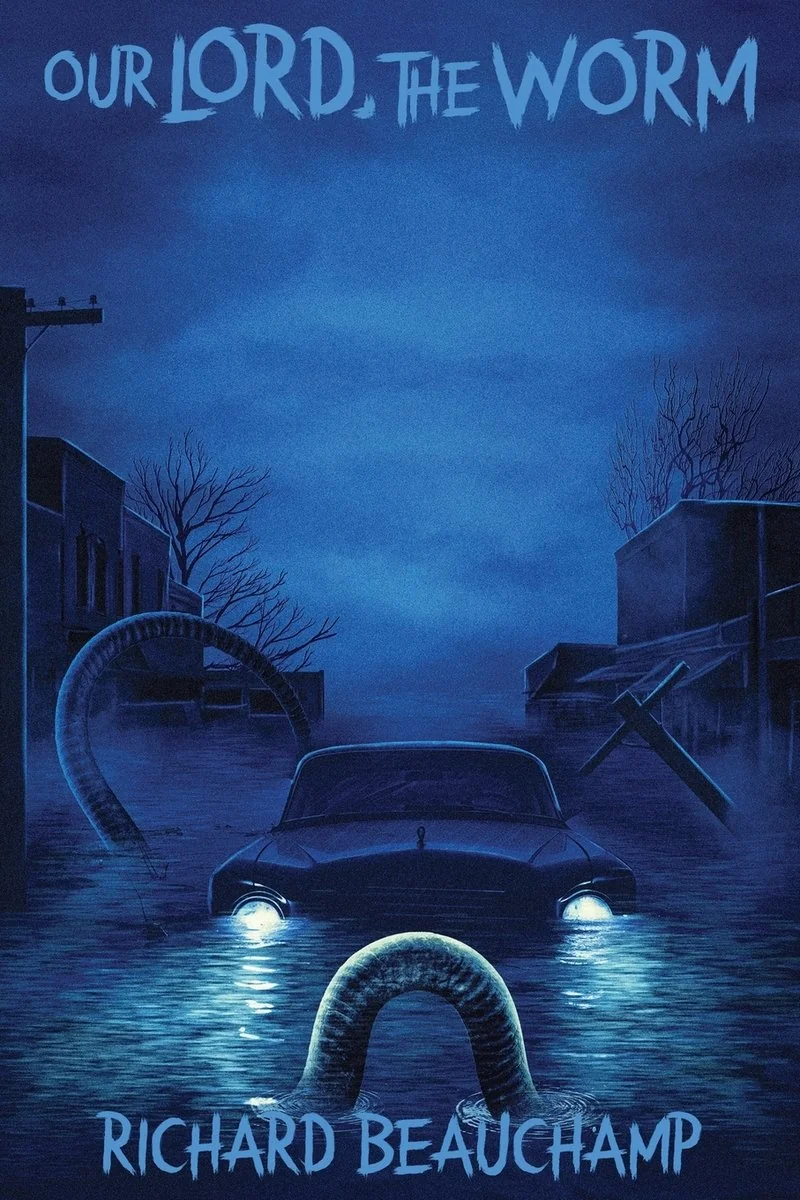
Our Lord, The Worm
A biochemical disaster turns a Missouri river town into a biological hellscape ruled by a worm cult.
Dawson explores the consequences of environmental hubris through the lens of body horror and religious fanaticism. The narrative examines how a well-intentioned cleanup effort in Carlyle, Missouri, unravels into a nightmare scenario. The author focuses on the molecular changes affecting the population and the rise of a new faith centered on the river. This approach highlights the fragility of human civilization when faced with unseen biological threats. The story avoids traditional monster tropes by making the environment itself the source of horror. Dawson’s background in supernatural fiction informs the realistic depiction of societal breakdown. The characters’ backgrounds, including military service and urban displacement, contrast sharply with their new reality. This juxtaposition emphasizes the loss of control over one’s own body and community. The book serves as a cautionary tale about ignoring ecological warnings until it is too late.
The story is set in Carlyle, Missouri, a town along the Mississippi River known for its historical districts and resistance to change. The narrative reflects contemporary anxieties about pollution and corporate negligence in rural America.


📝 Description: Our Lord, The Worm
💎 Our verdict on Our Lord, The Worm
📖 Why choose it
Why this book is worth reading
Readers who appreciate visceral body horror and narratives exploring the fragility of human civilization will find this book compelling. It appeals to those interested in how societal breakdown intersects with religious fanaticism during a crisis. The story offers a unique perspective on environmental hubris, transforming a cleanup effort into a nightmare. Fans of gothic horror and psychological terror will engage with the themes of bodily autonomy and loss of control. The juxtaposition of military backgrounds against supernatural biological shifts provides depth for those who enjoy complex character dynamics under extreme pressure. It is ideal for audiences seeking cautionary tales that emphasize the consequences of ignoring ecological warnings until it is too late.
⭐ Reader reviews
Reader rating
Dawson crafts a tense narrative where the environment itself becomes the primary antagonist, avoiding traditional monster tropes in favor of molecular horror. The exploration of religious extremism arising from biological catastrophe offers a fresh take on cosmic dread. The author’s background informs a realistic depiction of societal collapse, grounding the surreal elements in tangible fear. This approach suits readers who prefer atmospheric terror over jump scares. The contrast between rural tradition and sudden horrific change creates a compelling tension throughout the text. While the focus remains heavily on the horror of transformation, the narrative effectively highlights the loss of community control. It is best suited for dedicated horror enthusiasts who enjoy deep dives into psychological and ecological themes.
📖 Read on the blog
🏛 Books from this publisher Independently Published








You might also like
See more →

Have a question about this item?
Ask about the edition, condition, delivery or anything else — we reply by email or phone, usually within a day.
