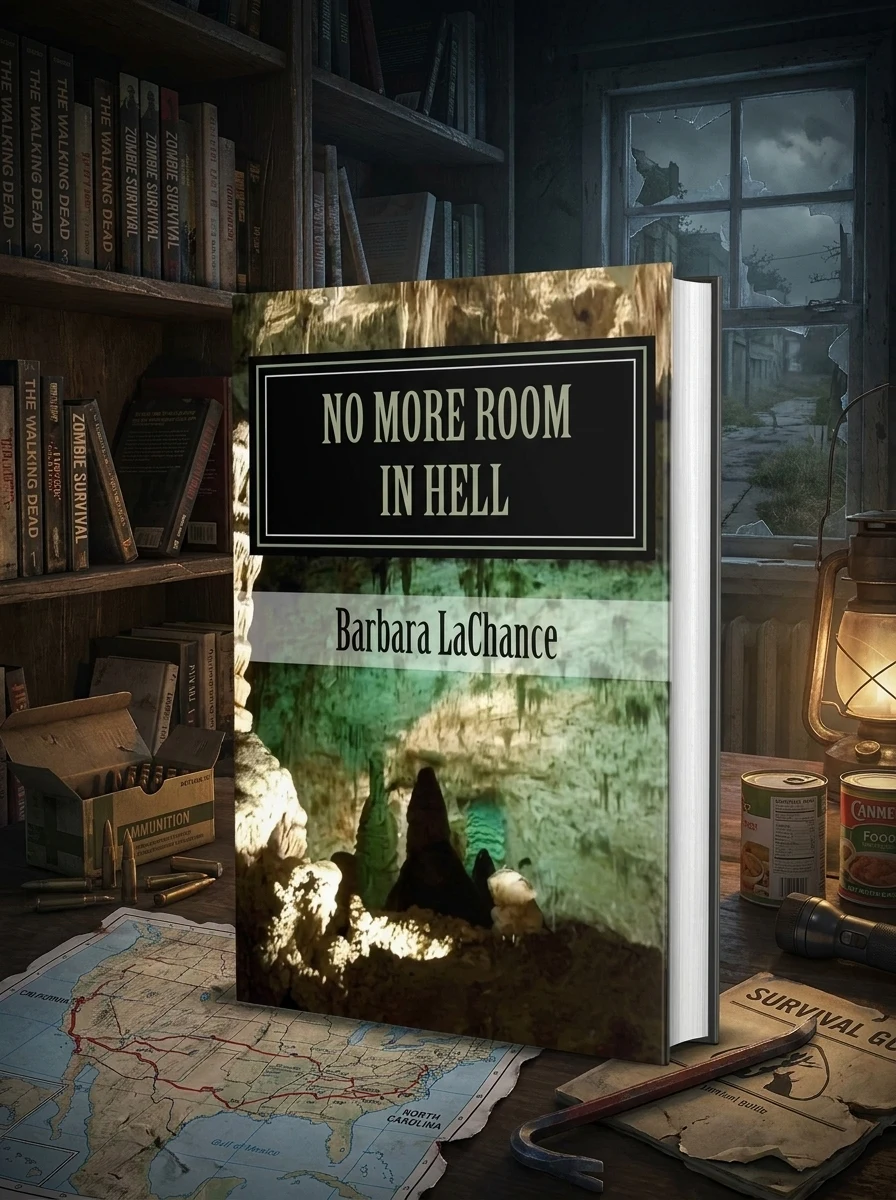
No More Room In Hell
A survival story tracking two paths converging during a zombie outbreak.
The narrative splits between two protagonists facing the same catastrophe from opposite coasts. Kath endures isolation and violence in her North Carolina residence. John Lancer traverses California, gathering allies who become liabilities rather than assets. The plot emphasizes the difficulty of maintaining humanity when societal structures vanish. LaChance explores the tension between self-preservation and the urge to help others. This dynamic creates a suspenseful atmosphere where trust is scarce. The story does not rely on military solutions or government responses. Instead, it focuses on the intimate horror of knowing your loved ones are among the dead.
Published in late 2015 by Createspace Independent Publishing Platform, this work fits within the contemporary independent horror genre. It reflects the enduring popularity of zombie fiction as a metaphor for societal collapse and personal resilience.


📝 Description: No More Room In Hell
💎 Our verdict on No More Room In Hell
📖 Why choose it
Why this book is worth reading
Readers who prefer psychological depth over action-heavy sequences will find significant value in this narrative. Those interested in the erosion of humanity during apocalyptic crises will appreciate the focus on trust and betrayal rather than combat mechanics. The book is ideal for individuals tired of government-centric zombie tropes, offering instead a stark look at personal stakes. It appeals to fans of gothic tension and true crime-adjacent realism, providing a suspenseful atmosphere where every interaction carries lethal weight. If you enjoy stories that question the boundary between life and death through the lens of isolated protagonists, this text delivers the necessary dread.
⭐ Reader reviews
Reader rating
LaChance effectively captures the terror of sudden societal collapse by focusing on two parallel paths rather than a broad scope. The narrative succeeds in maintaining suspense through the scarcity of trust and the constant threat of betrayal among survivors. By avoiding military solutions, the author highlights the vulnerability of ordinary people facing the undead. This approach suits readers who value character development over world-building lore. However, those seeking detailed scientific explanations for the plague may find the scope too narrow. The book excels in portraying the intimate horror of knowing loved ones are lost, creating a claustrophobic atmosphere that lingers long after the final page.
📖 Read on the blog
🏛 Books from this publisher Createspace Independent Publishing Platform


You might also like
See more →

Have a question about this item?
Ask about the edition, condition, delivery or anything else — we reply by email or phone, usually within a day.
