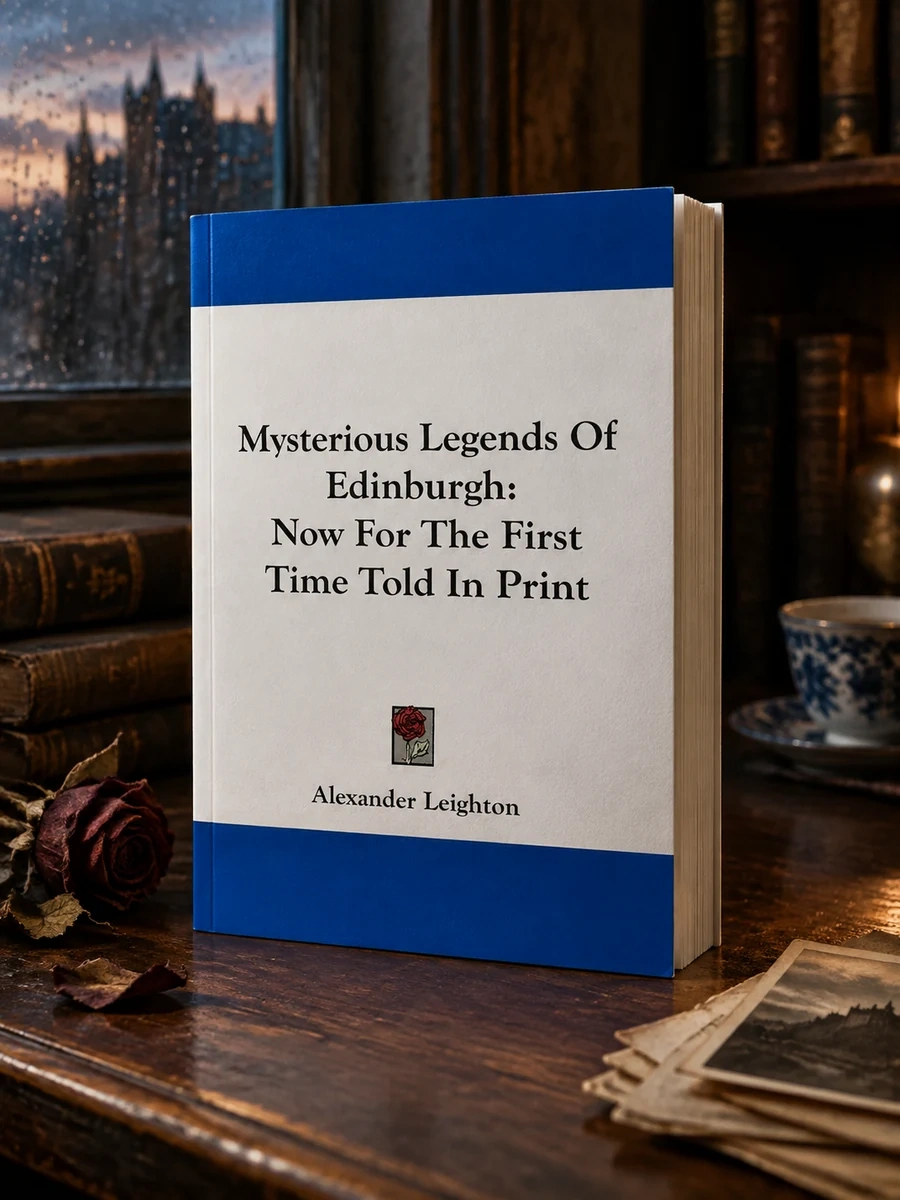

Mysterious Legends Of Edinburgh: Now For The First Time Told In Print
A collection of ghost stories rooted in folklore and mythology by Alexander Leighton.
This volume explores the intersection of gothic fiction and traditional fairy tales within the context of Edinburgh's legendary past. Leighton curates tales that emphasize isolation and the persistence of history. The narrative style prioritizes mood and atmosphere over plot speed. It targets an audience interested in the subtle, psychological aspects of supernatural horror. The book avoids graphic violence in favor of unresolved mystery. It provides a specific lens through which to view the city's folklore.
Published by Kessinger Publishing in 2007, this paperback edition brings Alexander Leighton's collection of legends to print for the first time. It addresses readers interested in occult narratives and supernatural horror within a historical framework.


📝 Description: Mysterious Legends Of Edinburgh: Now For The First Time Told In Print
💎 Our verdict on Mysterious Legends Of Edinburgh: Now For The First Time Told In Print
📖 Why choose it
Why this book is worth reading
Readers who appreciate the subtle, psychological aspects of supernatural horror will find this collection deeply rewarding. Alexander Leighton curates tales that emphasize isolation and the persistence of history, offering a distinct lens through which to view Edinburgh’s haunted past. The book is ideal for those who prefer atmospheric dread and unresolved mystery over fast-paced action or graphic violence. By focusing on mood and ancient presences rather than shock value, Leighton creates lingering discomfort that appeals to fans of occult themes and gothic fiction. It serves as a perfect entry point for enthusiasts of psychological tension who enjoy narratives that unfold slowly, allowing the weight of folklore and mythology to build a sense of unease. This work suits individuals seeking a thoughtful exploration of myth rather than visceral horror.
⭐ Reader reviews
Reader rating
Leighton’s compilation excels in crafting an immersive gothic atmosphere rooted in Edinburgh’s folklore. The prose style deliberately prioritizes mood over plot speed, effectively building tension through the depiction of isolated settings where the past remains active. This approach highlights ancient presences and psychological dread rather than relying on explicit gore or shock tactics. The collection is best suited for readers who enjoy supernatural horror with an occult focus and appreciate unresolved mysteries. While those seeking fast-paced action may find the slow narrative style less engaging, fans of atmospheric tales will find value in its nuanced exploration of myth. The book successfully merges gothic fiction elements with traditional fairy tales, offering a cohesive and haunting perspective on the city's legendary history without resorting to sensationalism.