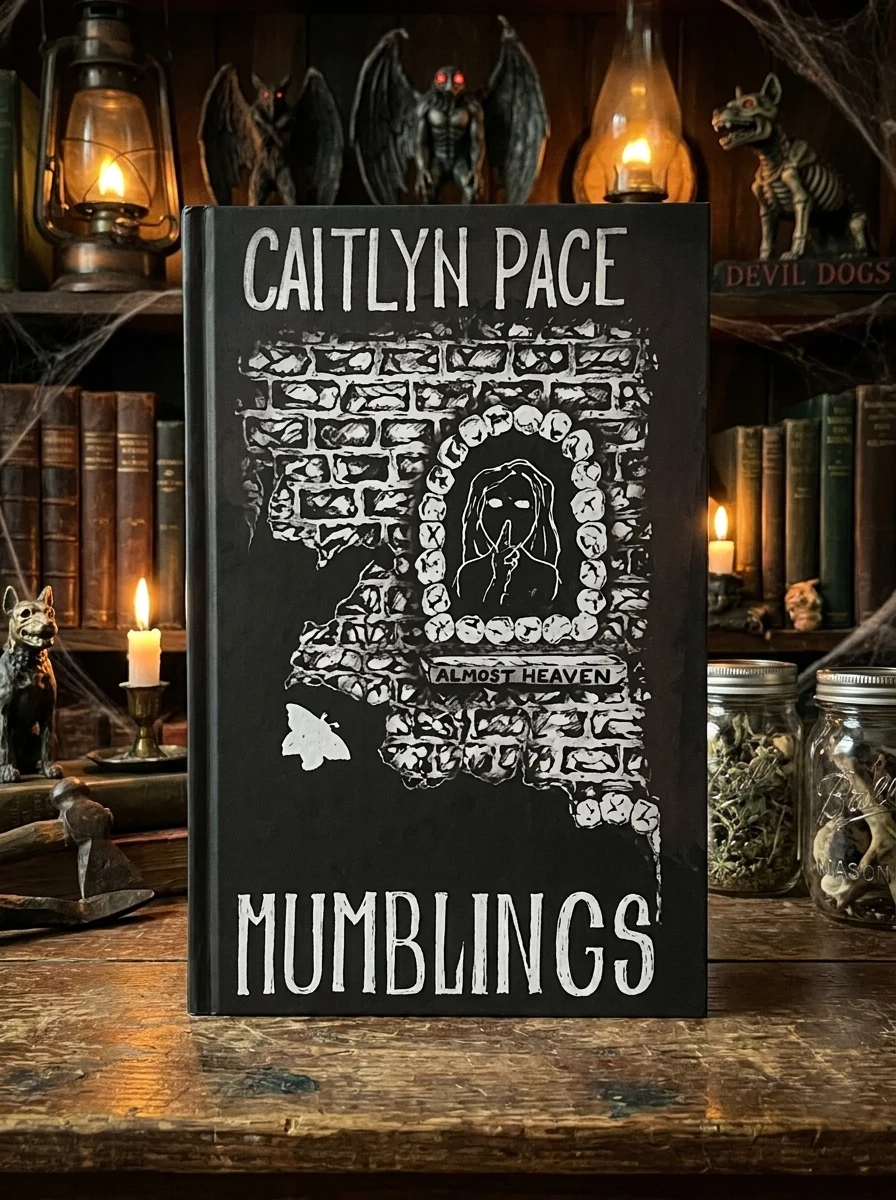
Mumblings
Thirteen West Virginia horror stories by Caitlyn Pace.
This anthology focuses on the intersection of personal ghost stories and established Appalachian myths. Pace uses the geography of West Virginia as a primary character in each narrative. The text does not invent new monsters but recontextualizes known entities like Mothman for modern readers. The structure allows each story to stand alone while contributing to a broader theme of regional dread. The writing style avoids sensationalism, relying instead on the inherent creepiness of the source material. This approach makes the horror feel grounded and immediate. Readers interested in the specific cultural history of Appalachia will find value in how Pace handles these traditional figures. The collection serves as a bridge between oral tradition and printed fiction.
The book draws on West Virginia folklore and Appalachian traditions. It is set in the Mountain State, utilizing local legends to create a specific regional atmosphere for horror readers interested in American supernatural fiction.


📝 Description: Mumblings
💎 Our verdict on Mumblings
📖 Why choose it
Why this book is worth reading
Readers interested in the specific cultural history of Appalachia will find significant value in Pace’s grounded approach to regional dread. This collection serves as a vital bridge between oral tradition and printed fiction, offering a focused look at how local legends can be reshaped into contemporary fear. Those who appreciate supernatural fiction rooted in specific American landscapes will gain from the inherent creepiness of the source material. The work avoids sensationalism, relying instead on the eerie weight of place and inherited myth. It is ideal for those seeking horror that feels immediate and grounded, rather than distant or fantastical.
⭐ Reader reviews
Reader rating
Pace successfully recontextualizes known entities like Mothman for modern readers, using West Virginia’s geography as a primary character in each narrative. The anthology avoids inventing new monsters, instead drawing on established folklore to create a cohesive atmosphere of dread. This approach makes the horror feel grounded and immediate, appealing to those who appreciate regional horror over high fantasy. The writing style relies on the inherent creepiness of traditional figures rather than unnecessary embellishment. While it may not suit readers seeking non-regional settings, it offers a steady hand in handling disastrous tales drawn from local tradition. The structure allows each story to stand alone while contributing to a broader theme of inherited myth and cultural history.