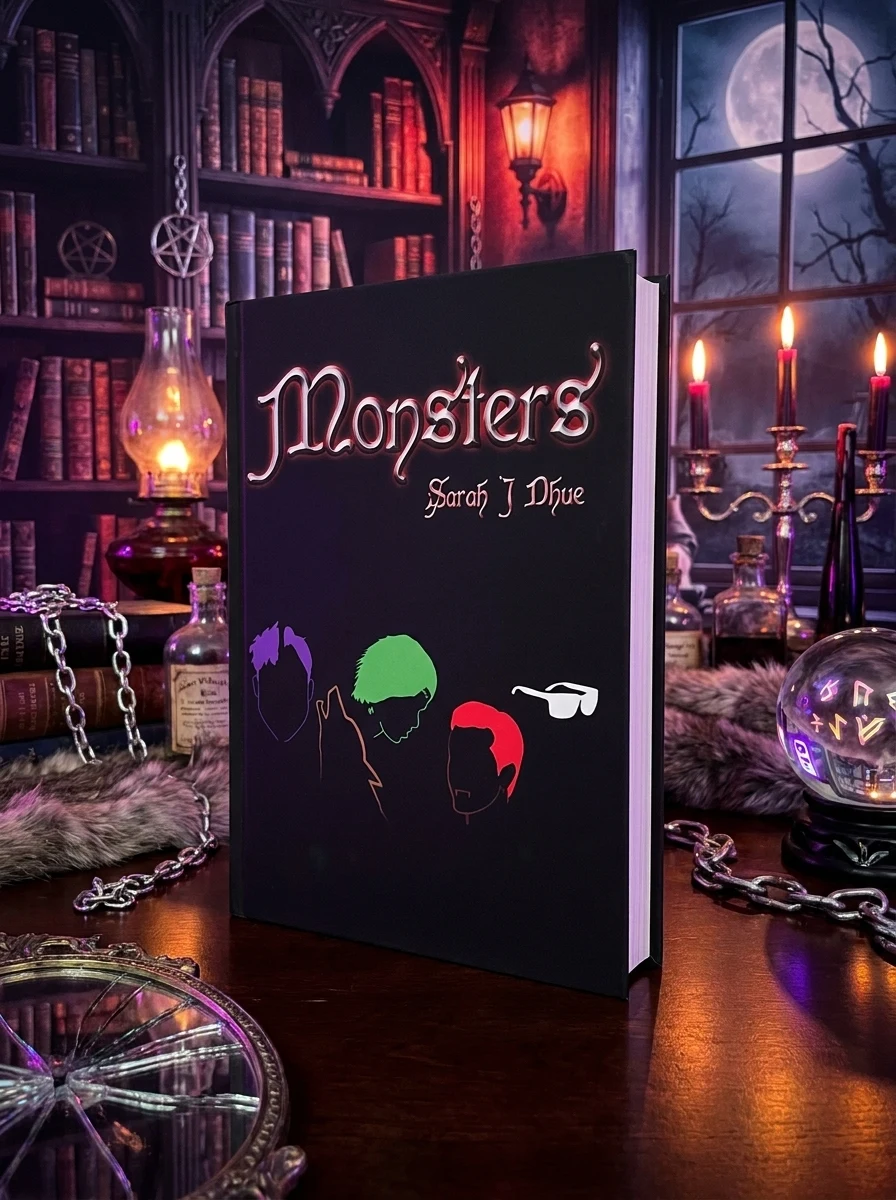

Monsters
A collection of stories about supernatural beings living as ordinary people.
The text investigates the intersection of the mundane and the monstrous through distinct character studies. Dhue portrays vampires, werewolves, and other entities not as distant legends but as residents of a familiar world. The focus remains on their internal struggles and societal roles rather than external battles. By presenting a vampire who has lost his purpose and a corpse created by an insane genius, the work challenges definitions of humanity. The stories reveal that danger often comes from those who appear normal. This approach shifts the horror from physical threat to psychological and moral complexity. Readers encounter tales where the line between monster and person is intentionally obscured.
The book sits within the urban fantasy and supernatural fiction genres, published in 2017 by Lulu.com. It draws on traditions of vampire and werewolf lore but places them in a contemporary setting indistinguishable from modern daily life.


📝 Description: Monsters
💎 Our verdict on Monsters
📖 Why choose it
Why this book is worth reading
Readers seeking character-driven horror and ethical ambiguity will find this collection compelling. It appeals to those interested in psychological complexity rather than traditional monster hunts or clear moral distinctions between good and evil. The book is ideal for fans of urban fantasy who enjoy exploring the burden of immortality, identity crises, and the blurred lines between humanity and monstrosity. Those who prefer vignettes over continuous plots will appreciate the varied perspectives on beings like vampires, werewolves, and reanimated corpses navigating ordinary lives. It offers a deep dive into moral boundaries and societal roles, challenging definitions of humanity through internal struggles rather than external battles.
⭐ Reader reviews
Reader rating
Sarah J Dhue effectively shifts the horror focus from physical threats to psychological depth by portraying supernatural beings as ordinary residents. The collection succeeds in obscuring the line between monster and person, highlighting how danger often stems from those appearing normal. By examining characters like a purposeless vampire and a man with a murderous alter ego, Dhue explores identity with nuance. This approach suits readers who appreciate ethical ambiguity and gothic traditions reimagined in modern settings. The vignette structure allows for rich character studies without the pressure of a single overarching narrative. It is a thoughtful examination of what it means to be human when one is not.