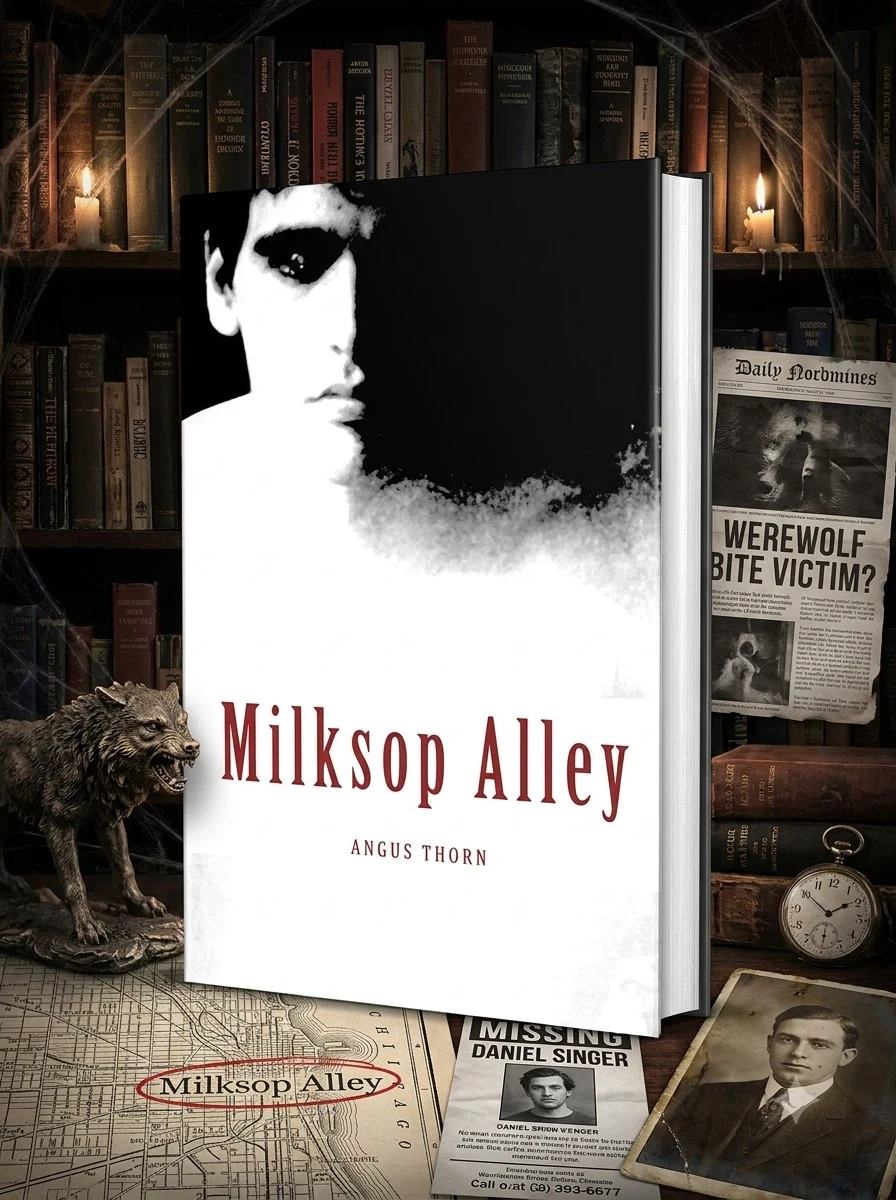
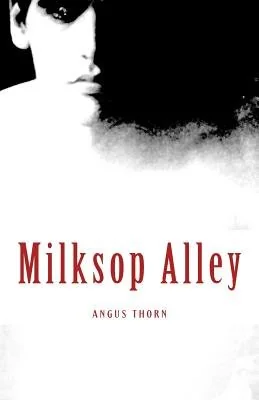
Milksop Alley
A man questions his humanity after a bite triggers violent urges in Chicago.
The narrative follows Joey Luna, formerly Daniel Singer, as he struggles with uncontrolled violence in Chicago. His past includes abandonment by his father and a traumatic bite incident that fuels his fear of becoming a wolf. The story investigates whether his actions are supernatural or psychological. Thorn uses the setting of Milksop Alley to highlight the protagonist's isolation and dangerous interactions. The plot focuses on the internal conflict of a young man who killed many people before leaving Michigan. It examines the consequences of seeking father figures in a hostile environment. The text does not confirm if the transformation is real, leaving the nature of his condition ambiguous throughout the journey.
This 2013 publication by Angus Thorn sits within the tradition of American urban horror fiction. It draws on gothic themes of transformation and abandonment, set against the backdrop of Chicago's dangerous districts like Milksop Alley. The work reflects early twenty-first-century interests in psychological ambiguity and supernatural suspense.


📝 Description: Milksop Alley
💎 Our verdict on Milksop Alley
📖 Why choose it
Why this book is worth reading
Readers seeking a nuanced exploration of identity crisis and psychological fragmentation will find this narrative compelling. It appeals to those who prefer ambiguous endings that challenge the boundary between supernatural horror and mental illness. The book offers a deep dive into themes of abandonment, anger, and dangerous urban isolation, making it ideal for fans of character-driven horror. Those interested in how trauma manifests as violent urges, without resorting to traditional monster lore, will appreciate the complex examination of the protagonist's descent. It provides a tense, atmospheric experience suitable for those who enjoy psychological depth over clear-cut resolutions.
⭐ Reader reviews
Reader rating
Angus Thorn delivers a tightly focused study on the erosion of self under the weight of trauma and isolation. The narrative effectively utilizes the setting of Milksop Alley to mirror the protagonist’s internal disintegration, creating a palpable sense of dread that stems from uncertainty rather than gore. By leaving the nature of the transformation ambiguous, Thorn challenges readers to consider whether the horror is supernatural or psychological. This approach suits audiences who appreciate literary horror with gothic undertones and complex character studies. While it may frustrate those seeking traditional werewolf lore, it rewards readers willing to engage with themes of lust, terror, and the search for paternal connection in a hostile environment.
📖 Read on the blog
🏛 Books from this publisher Createspace Independent Publishing Platform








You might also like
See more →


Have a question about this item?
Ask about the edition, condition, delivery or anything else — we reply by email or phone, usually within a day.
