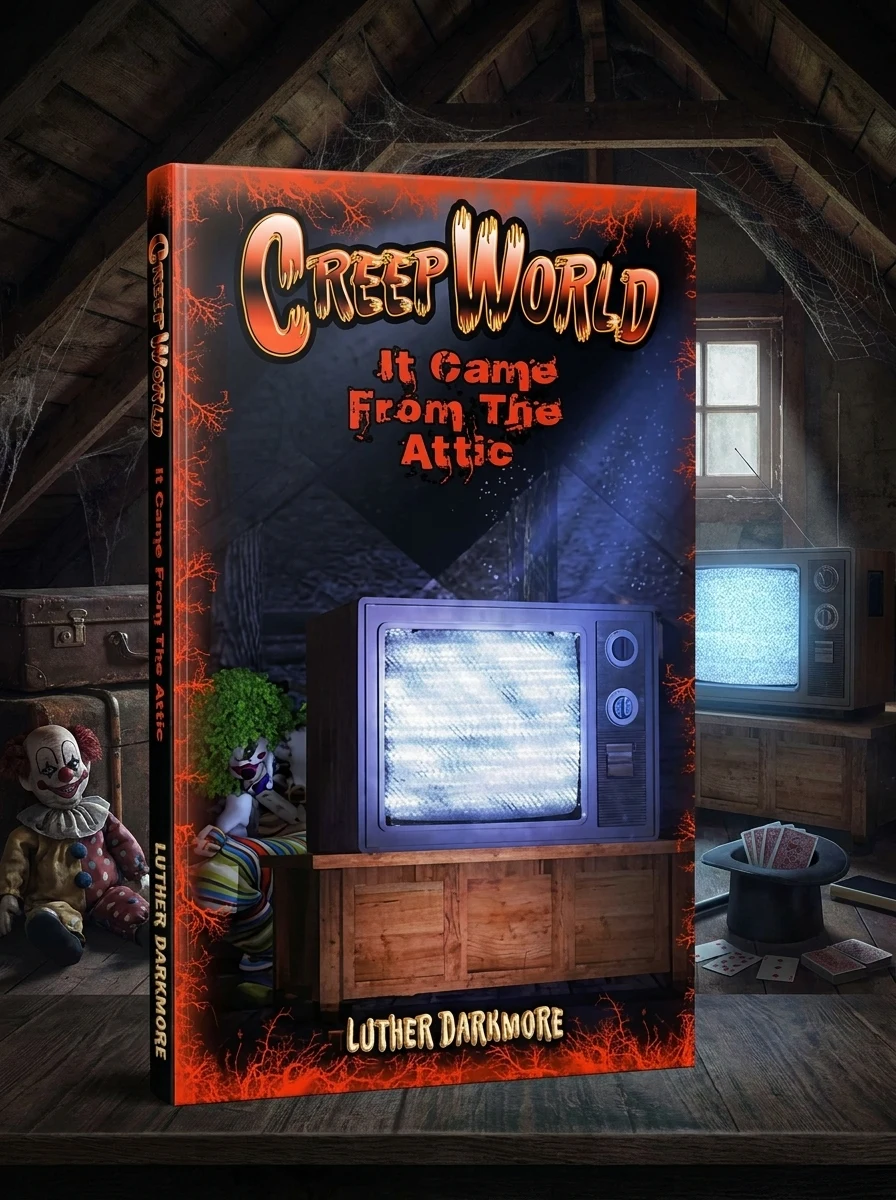
It Came From The Attic ( Creep World #1)
A boy finds a haunted TV in his grandparents' attic during summer vacation.
The narrative follows Tommy Brooks as he navigates the quiet isolation of his grandparents' mountain residence. The plot hinges on his curiosity leading him to the attic, a space strictly off-limits by his grandfather. There, he discovers a television displaying only one program, The Smiling Johnny Cartoon Show. The horror element emerges when the clown host acknowledges Tommy's presence through the screen. Darkmore structures this first volume to appeal to fans of Goosebumps, focusing on immediate supernatural threats rather than slow-burn mystery. The book serves as an entry point into the Creep World series, establishing the rules of this fictional universe for young audiences.
This 2016 release by Createspace Independent Publishing Platform sits within the tradition of Goosebumps and scary creepy horror tales for kids. It targets children and young teens seeking present-day mystery stories and ghost stories to read at night in bed.


📝 Description: It Came From The Attic ( Creep World #1)
💎 Our verdict on It Came From The Attic ( Creep World #1)
📖 Why choose it
Why this book is worth reading
This title is ideal for children and young teens seeking a quick, adrenaline-fueled fright without the complexity of adult-oriented psychological horror. It offers a perfect entry point into the Creep World series, introducing readers to its specific rules through a straightforward narrative. The book appeals to fans of Goosebumps-style tales who enjoy immediate supernatural threats over slow-burn mysteries. Readers will appreciate the relatable setting of isolation during summer vacation and the tension of violating forbidden boundaries. It serves as an accessible gateway to dark fantasy and ghost stories, providing spooky entertainment suitable for nighttime reading while maintaining a clear, engaging pace for those new to the horror genre.
⭐ Reader reviews
Reader rating
Darkmore effectively captures the essence of classic middle-grade horror by utilizing familiar isolation tropes and cursed media motifs to generate immediate dread. The narrative structure prioritizes action and supernatural encounters over deep character development or literary nuance, making it a highly entertaining read for its target demographic. The book succeeds in creating a spooky atmosphere suitable for young audiences who enjoy fresh scary stories. However, readers preferring complex literary fiction or adult-oriented psychological horror will likely find the execution too simplistic. It is best suited for those looking for a fun, engaging introduction to the genre rather than a profound exploration of fear.