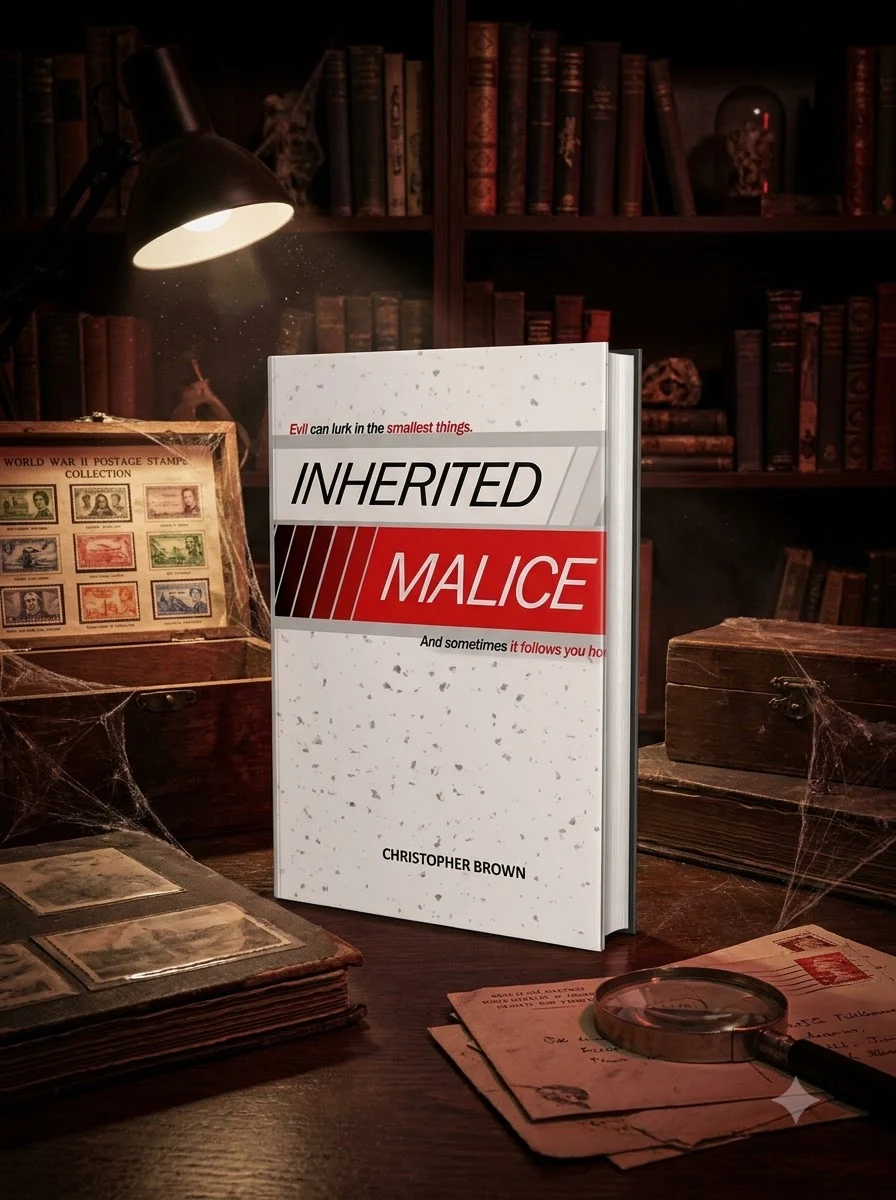

Inherited Malice
A story about a man unleashing hidden evil through a WWII stamp.
Alexander Broward faces consequences after disturbing a family secret while clearing his grandparents' home. He finds a World War II postage stamp that acts as a vessel for buried malevolence. The narrative tracks his journey from curiosity to disaster as he releases something his grandfather failed to contain. The story emphasizes the unpredictable and devastating nature of evil, showing how it can emerge from mundane objects. Brown uses this premise to explore the fragility of domestic safety when confronted with supernatural forces.
This work sits within the tradition of American horror and gothic fiction, published in 2015. It draws on the historical period of World War II to ground its supernatural elements in a specific past era. The narrative reflects themes common in contemporary independent publishing that focus on personal and familial dread.


📝 Description: Inherited Malice
💎 Our verdict on Inherited Malice
📖 Why choose it
Why this book is worth reading
Readers who appreciate horror rooted in personal history and family lineage will find this title compelling. It appeals to those interested in the psychological weight of inherited secrets rather than external monsters. The narrative offers a tense exploration of how mundane objects can harbor devastating supernatural forces. Those who enjoy stories where curiosity leads to inevitable disaster, and where evil remains pervasive without clear resolution, will gain satisfaction from its atmospheric dread. It is ideal for fans of dark fantasy and gothic tales that examine the consequences of disturbing the past.
⭐ Reader reviews
Reader rating
Christopher a Brown delivers a tense narrative that effectively bridges domestic chores with supernatural dread. The premise of a WWII stamp acting as a vessel for buried malevolence provides a unique angle on inherited evil, avoiding clichés through its focus on historical baggage. The book succeeds in creating an atmosphere where the unpredictability of evil is central, rather than relying on jump scares or fast-paced action. It suits readers who prefer slow-burn psychological horror and stories that emphasize the devastating nature of confronting one's own lineage. While it lacks clear resolutions, this ambiguity enhances the pervasive sense of dread.
📖 Read on the blog
🏛 Books from this publisher Createspace Independent Publishing Platform








You might also like
See more →


Have a question about this item?
Ask about the edition, condition, delivery or anything else — we reply by email or phone, usually within a day.
