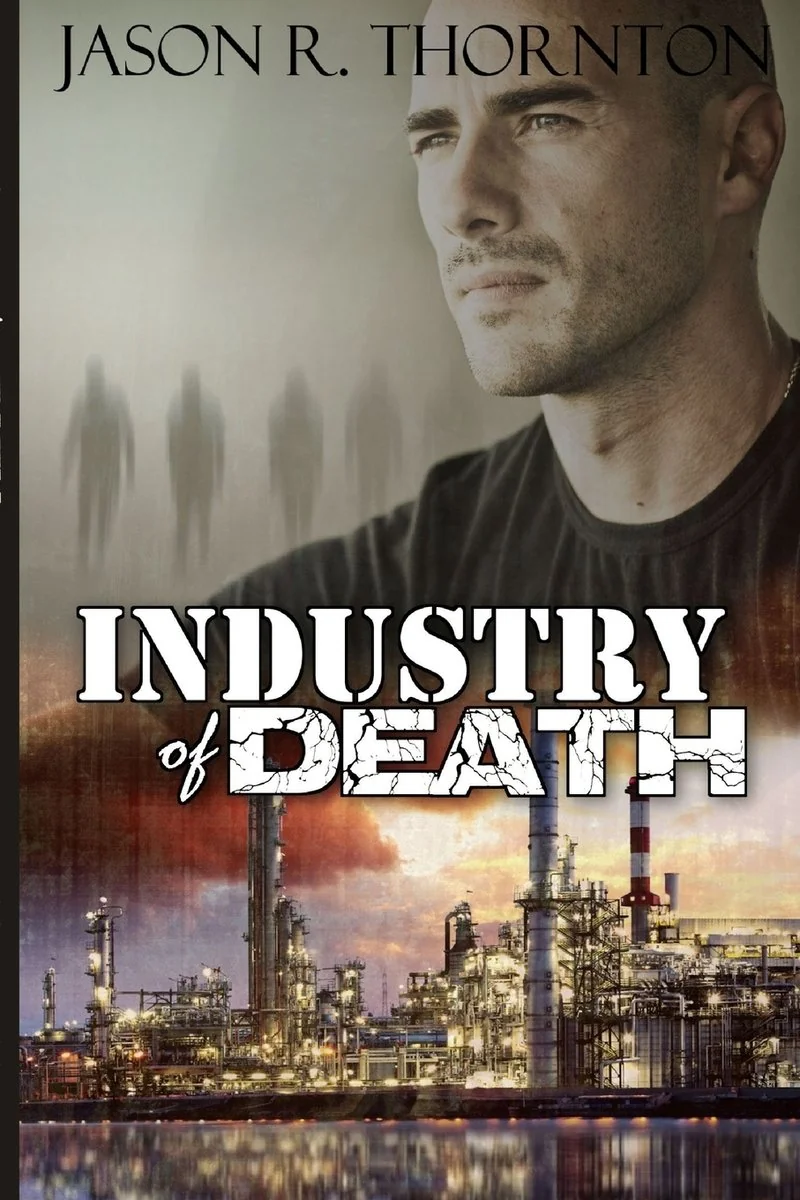
Industry of Death
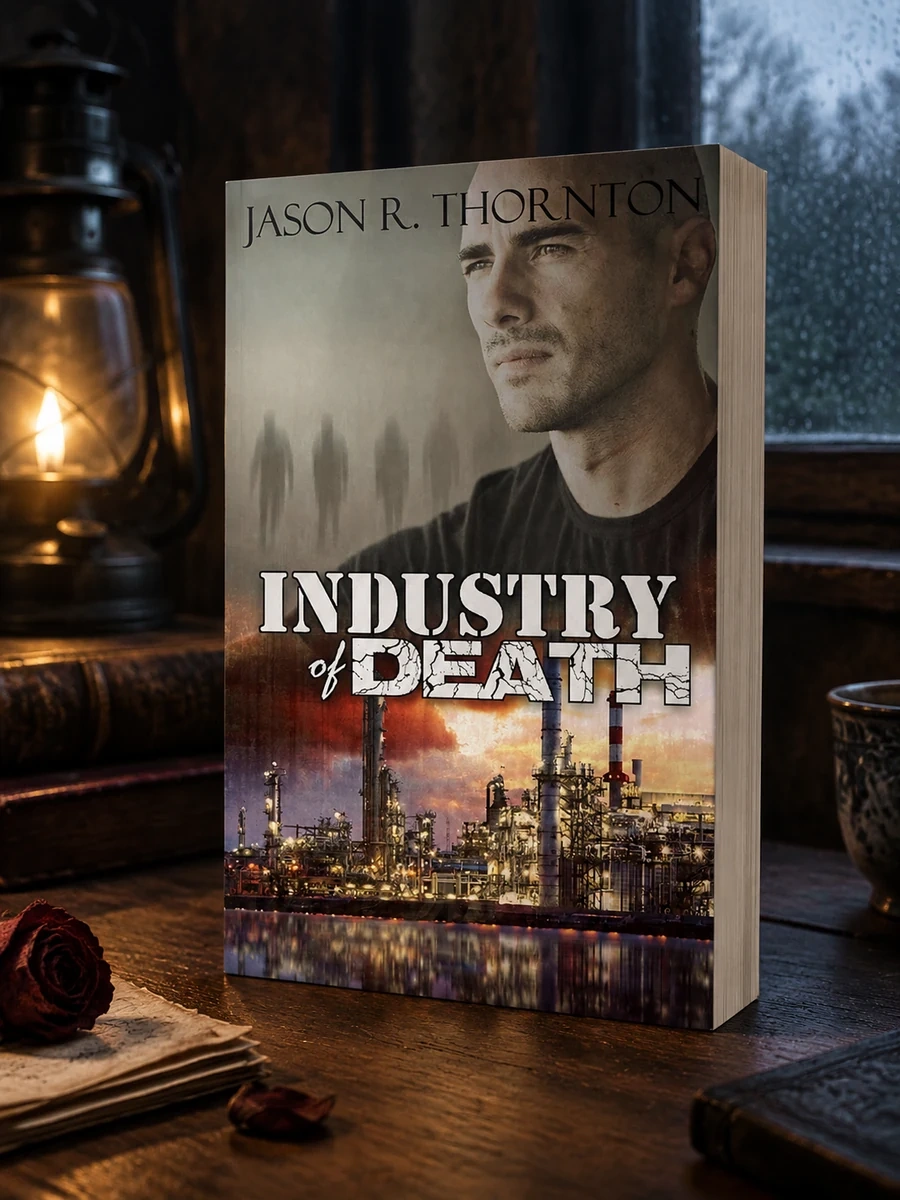
A novel about using zombies as power sources in a post-apocalyptic world.
The plot centers on the D-Tec Corporation, which builds and services zombie-powered devices ranging from massive power plants to portable generators. Tyler becomes a star employee as a stoker, tasked with maintaining the precise level of aggression required for optimal energy output. His expertise in dealing with the undead makes him valuable, allowing him to settle into a stable life in Fargo. However, the monotony of his role eventually leads to boredom and a request for a different assignment. The story highlights the irony of using destruction agents for reconstruction. It questions the cost of such an energy model on both the workers and the resource itself. Thornton uses this premise to critique corporate reliance on dangerous systems.
This work sits within the subgenre of post-apocalyptic fiction, specifically exploring the concept of bio-fuel in a world recovering from a zombie outbreak. It reflects on industrial resilience and the ethical implications of harnessing supernatural entities for mundane utility.


📝 Description: Industry of Death
💎 Our verdict on Industry of Death
📖 Why choose it
Why this book is worth reading
Readers who appreciate dystopian satire and the intersection of supernatural elements with mundane corporate bureaucracy will find this narrative compelling. It offers a unique perspective on post-apocalyptic recovery by focusing on infrastructure rather than survival. Those interested in critiques of industrial exploitation and the commodification of horror tropes will gain insight into how society rebuilds using its own destruction agents. The book appeals to those who enjoy exploring the irony of utilizing dangerous systems for reconstruction, providing a fresh twist on zombie fiction that prioritizes economic and social commentary over traditional action.
⭐ Reader reviews
Reader rating
Thornton successfully merges horror with speculative fiction by presenting zombies as renewable energy sources within a rigid corporate structure. The narrative excels in its ironic examination of industrial exploitation, asking readers to consider the human cost of such technological reliance. By focusing on the monotony of managing undead aggression, it avoids typical survival clichés, offering instead a sharp critique of late-stage capitalism. This approach suits fans of dark fantasy and cosmic horror who prefer intellectual engagement over visceral terror. It is an ideal choice for those seeking innovative narratives that challenge conventional genre boundaries while delivering thought-provoking social commentary through a grotesque yet plausible lens.