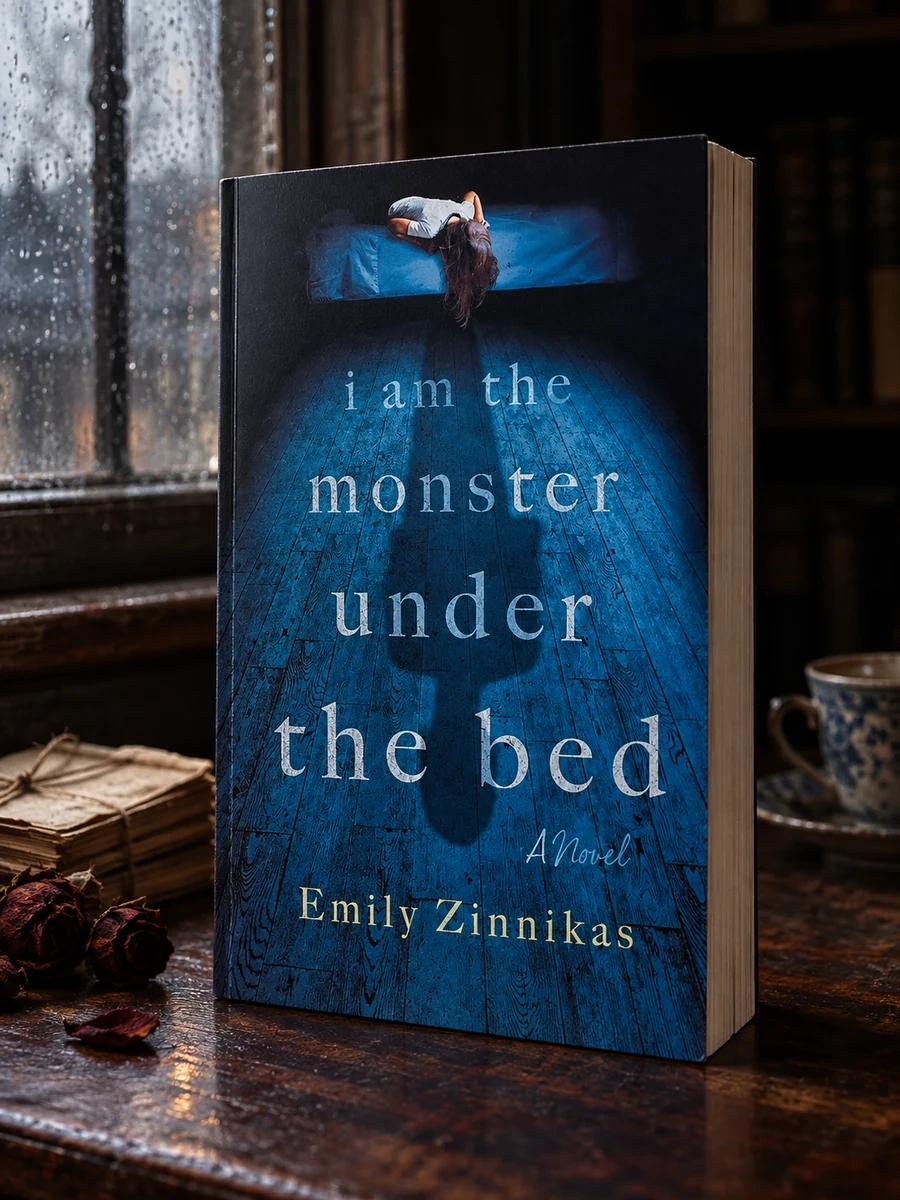
I Am the Monster Under the Bed
A reclusive painter returns home to face a childhood monster and public guilt over six deaths.
The narrative follows Willa, a successful but isolated artist, who is thrust back into the spotlight by media exposure of her identity as the sole survivor of the Rapture Mystery Slayings. Six teenagers perished in the woods during her high school years, leaving her to bear the weight of public suspicion. Her return to her sleepy hometown forces her to confront the possessed forest that stole her friends and the decaying childhood home where unexplained noises persist. The story examines how past trauma resurfaces when a person is forced to face the source of their fear. Zinnikas utilizes the tradition of the haunted house combined with small-town secrets to create an atmosphere of dread. The plot focuses on Willa’s internal battle as she becomes the villain her community believes her to be, suggesting that the monster under the bed was only the beginning of her nightmare.
This work sits within the contemporary American horror genre, drawing on gothic fiction traditions and small-town mystery tropes. It reflects modern anxieties about media scrutiny and public perception of trauma survivors. The setting in a sleepy US hometown grounds the supernatural elements in a familiar cultural landscape.


📝 Description: I Am the Monster Under the Bed
💎 Our verdict on I Am the Monster Under the Bed
📖 Why choose it
Why this book is worth reading
Readers who appreciate slow-burn psychological terror and unreliable narration will find this narrative compelling. It offers a deep dive into the lingering trauma of unsolved tragedies and the public assumption of guilt. The story suits those interested in how past trauma resurfaces when forced to confront its source. It is ideal for fans of atmospheric dread who enjoy watching a protagonist’s psychological decay rather than seeking fast-paced action or clear resolutions to supernatural mysteries.
⭐ Reader reviews
Reader rating
Zinnikas effectively utilizes the tradition of the haunted house combined with small-town secrets to create an atmosphere of dread. The narrative excels in examining how past trauma resurfaces, blurring the line between memory and reality through the protagonist's struggle against public suspicion. The focus on psychological decay rather than explicit gore makes it a sophisticated entry in the gothic genre. It suits readers who prefer internal battles over external action, offering a chilling exploration of guilt and isolation within a decaying familial setting.
📖 Read on the blog
🏛 Books from this publisher St. Martin's Press


You might also like
See more →


Have a question about this item?
Ask about the edition, condition, delivery or anything else — we reply by email or phone, usually within a day.
