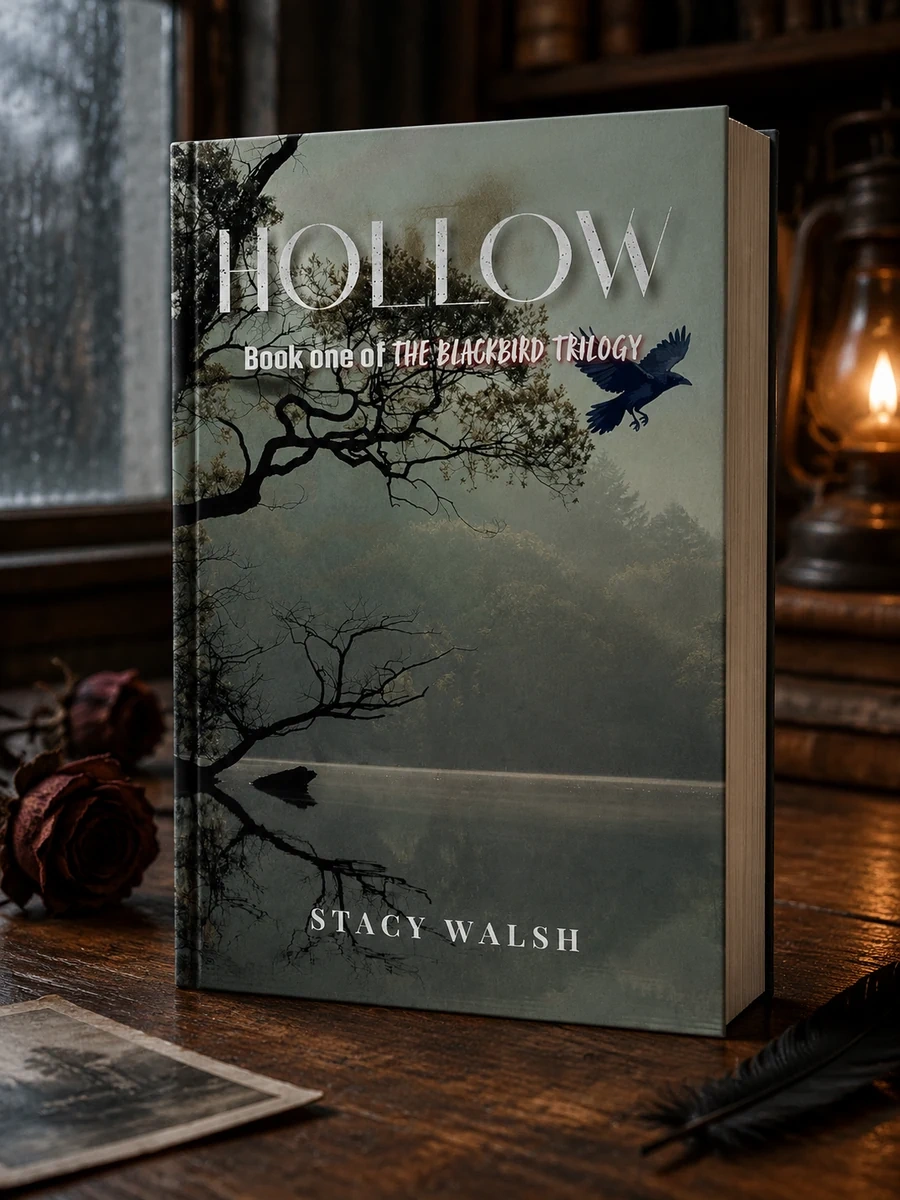

Hollow
A serial killer mystery set across two summers at a Missouri camp.
The narrative structure alternates between Norah’s initial traumatic experience in 1989 and her return in 1994. The first period establishes the stain of horror that forced the temporary closure of Camp Blackbird. The second period sees Norah reunite with friends and crushes, only to face a new threat. The text focuses on the investigation into who is using the campgrounds for nefarious plans. Walsh examines how the community attempts to replace disturbing crimes with happier memories, a goal that fails as another tragedy unfolds. The story does not rely on supernatural elements but rather on human predation within a secluded environment.
The book is situated in the Ozark Mountains near Clearwater Springs, Missouri. It draws on the cultural memory of summer camps as sites of coming-of-age rituals that can turn into nightmares. The timeline spans from June 1989 to 1994, reflecting a specific era of American youth culture and the lingering trauma of unsolved or recently solved crimes in rural settings.


📝 Description: Hollow
💎 Our verdict on Hollow
📖 Why choose it
Why this book is worth reading
Readers who appreciate grounded, psychological horror set within the eerie isolation of summer camps will find this narrative compelling. It offers a stark contrast to supernatural tales by focusing on human predation and the failure of communities to replace disturbing crimes with happier memories. The dual timeline structure provides a deep exploration of how trauma lingers over five years, making it ideal for those interested in serial killer mysteries. Fans of true crime aesthetics blended with fiction will value the realistic depiction of a secluded environment where inhabitants must uncover the identity of their hunter without relying on magical or ghostly interventions.
⭐ Reader reviews
Reader rating
Stacy Walsh delivers a tense exploration of human predation within the Ozark Mountains, eschewing supernatural elements for chilling realism. The alternating timeline between 1989 and 1994 effectively builds dread, showcasing how a community attempts to mask infamy yet fails as tragedy repeats. The book excels in establishing atmosphere through the contrast of youthful hope against underlying horror, appealing strongly to fans of psychological thrillers and true crime narratives. It suits readers seeking serious, non-lighthearted coming-of-age tales that do not shy away from disturbing crimes. The focus on investigation and the weight of past trauma creates a persistent sense of unease that drives the plot forward without resorting to cheap scares or ghostly tropes.
📖 Read on the blog
✍️ More books by this author Stacy Walsh



🏛 Books from this publisher Solstice Publishing

You might also like
See more →


Have a question about this item?
Ask about the edition, condition, delivery or anything else — we reply by email or phone, usually within a day.
