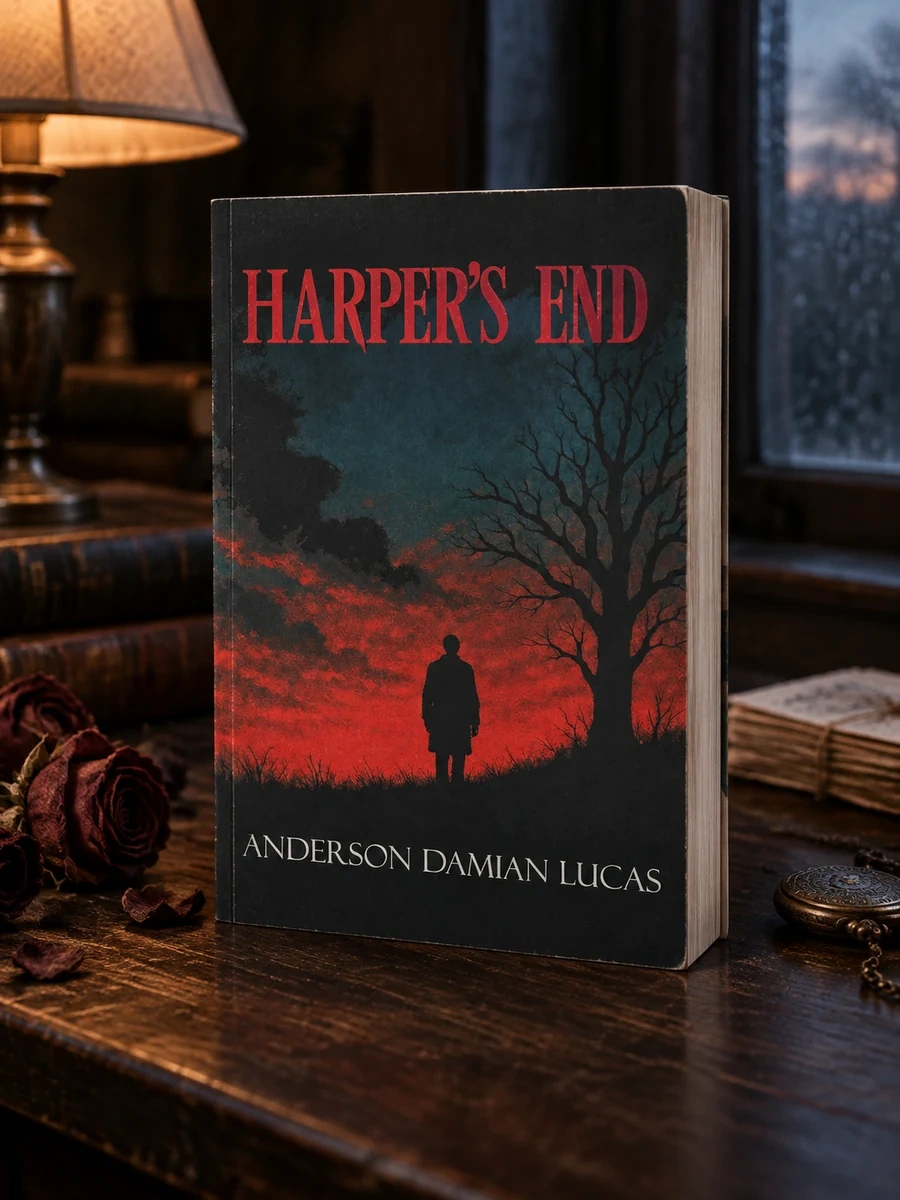
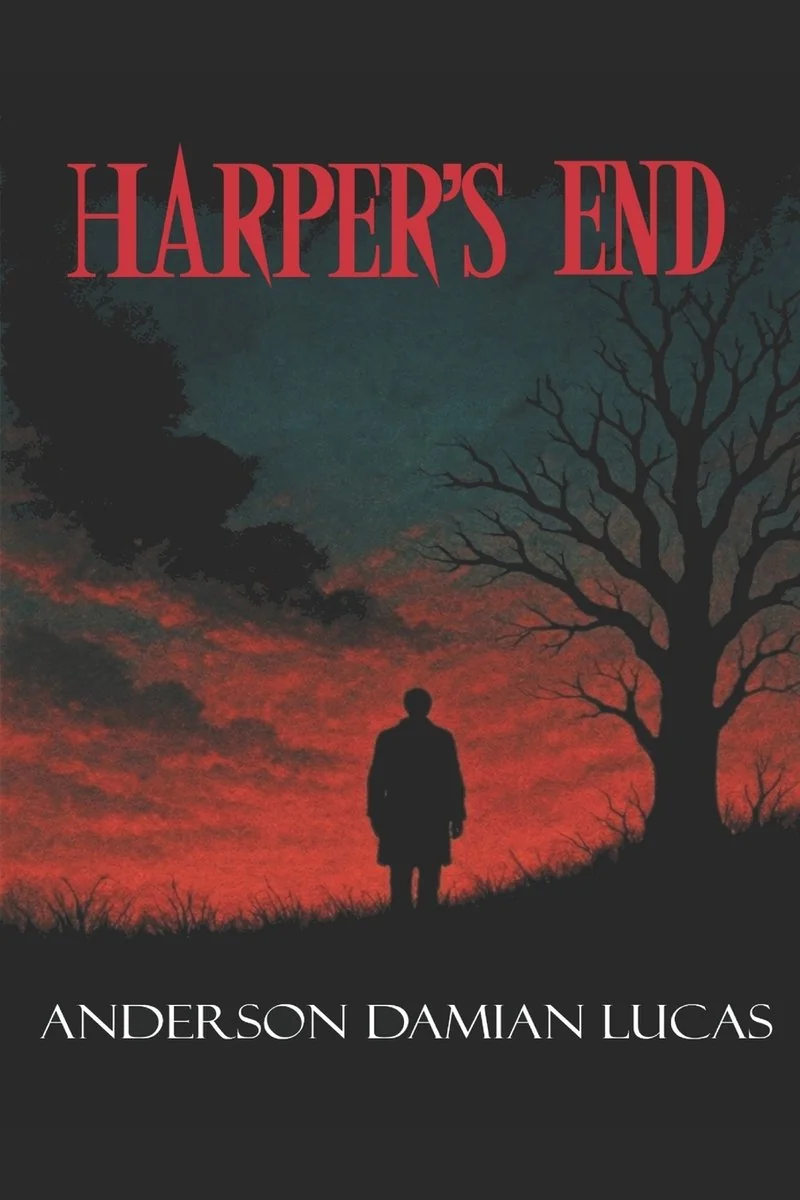
Harper's End
A gothic tale of a coastal town hiding century-old secrets and psychological horror
Harper's End operates as a study in atmospheric dread rather than traditional jump-scare horror. Lucas constructs a narrative where the environment itself becomes hostile through subtle distortions of reality. The plot centers on the disintegration of trust among residents who realize their shared past is built on lies. A visiting writer serves as an outsider perspective, highlighting the town's insular nature. The tension arises from the inability to distinguish between natural decay and supernatural interference. Readers are invited to observe how guilt manifests physically in a community that refuses to acknowledge its history. The ending provides no comfort or closure, leaving the characters trapped in their own reckoning. This approach appeals to those who prefer psychological depth over visceral thrills.
The book sits within the tradition of American gothic fiction, specifically the coastal horror subgenre popularized by regional writers. It reflects contemporary anxieties about community isolation and the persistence of past sins in modern settings.


📝 Description: Harper's End
💎 Our verdict on Harper's End
📖 Why choose it
Why this book is worth reading
Readers who prefer psychological depth over visceral thrills will find this book rewarding. It appeals to those interested in the erosion of sanity within isolated communities and the physical manifestation of guilt. The narrative offers a study in atmospheric dread rather than traditional horror, making it ideal for fans of gothic fiction who enjoy subtle distortions of reality. Those willing to engage with slow-burn tension and ambiguous endings will appreciate the exploration of repressed history. It is not suited for those seeking fast-paced action or clear resolutions.
⭐ Reader reviews
Reader rating
Lucas constructs a compelling study in atmospheric dread, utilizing the hostile environment to drive the narrative forward. The book excels in blurring the line between natural decay and supernatural interference, creating a pervasive sense of unease. Its strength lies in the psychological toll on characters forced to confront buried truths. This approach suits readers who enjoy slow-burn horror and gothic traditions. However, those expecting fast-paced action or clear resolutions may find the ambiguous ending unsatisfying. The narrative demands attention to subtle shifts rather than explicit gore. It is a thoughtful examination of collective memory.
📖 Read on the blog
🏛 Books from this publisher Independently Published








You might also like
See more →
Have a question about this item?
Ask about the edition, condition, delivery or anything else — we reply by email or phone, usually within a day.
