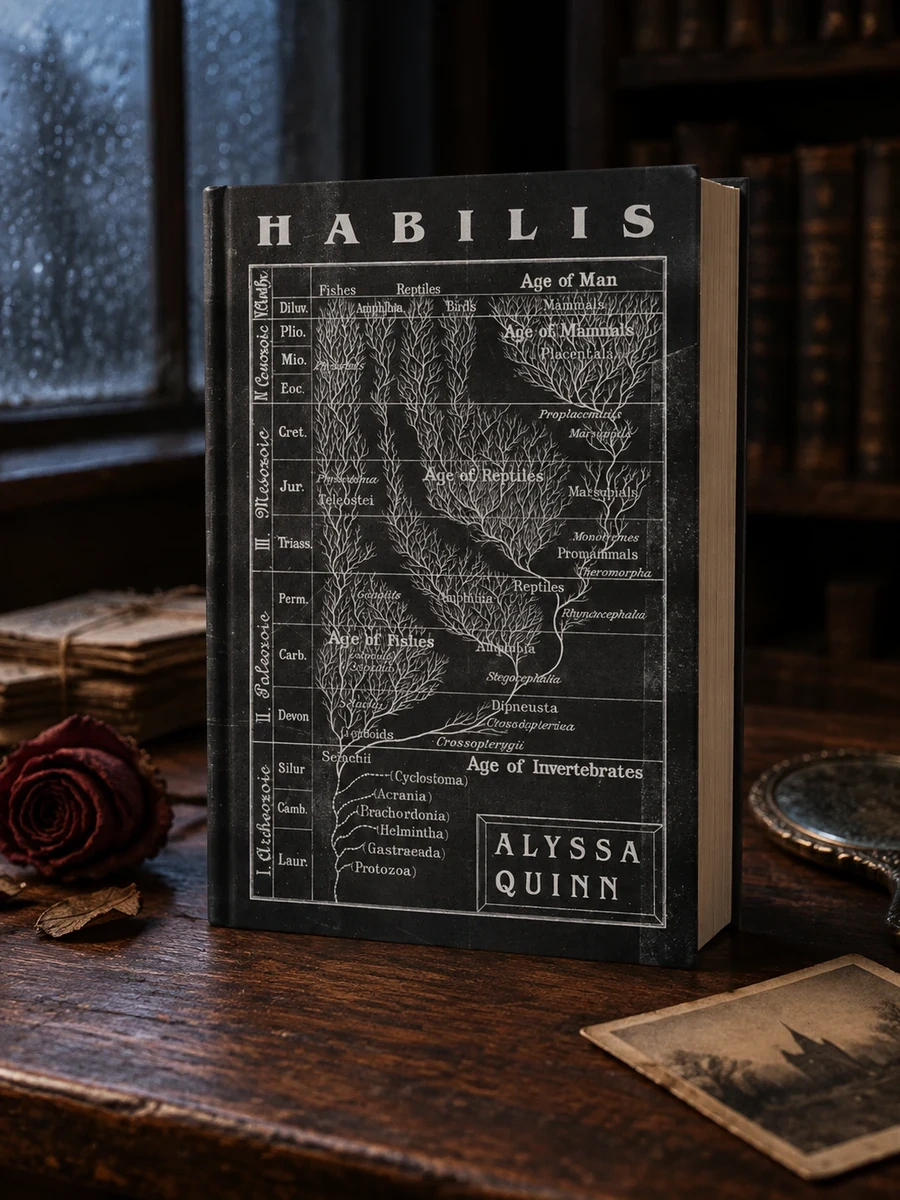
Habilis
A surreal novel tracing human origins through a museum that becomes a disco club.
Quinn writes a story where reality breaks down. Lucy navigates changing environments as she loses control over language. The narrative splits to bring in historical figures from East Africa. Mary Leakey, a railway worker, and a guarded curator appear alongside Lucy’s current timeline. These threads combine with her present experience. This blending reveals the hidden price of hunting for origins. The museum setting merges different eras. The dance club aspect adds surrealism to the psychological fear. The book asks readers to tolerate uncertainty. It avoids closure. Instead, it explores how narratives can dismantle us.
The novel draws on the history of East Africa and the work of British anthropologist Mary Leakey. It references the construction of the Uganda Railway by Indian indentured laborers. The setting shifts between a contemporary museum and historical sites in East Africa, blending scientific inquiry with supernatural fiction.


📝 Description: Habilis
💎 Our verdict on Habilis
📖 Why choose it
Why this book is worth reading
Readers who appreciate bold, disorienting literary experiments will find reward in this work. It offers a unique exploration of how narratives dismantle the self, blending historical reconstruction with psychological terror. Those interested in the troubling aspects of seeking human origins and the erosion of identity through language will engage deeply with its intricate form. It is ideal for those willing to tolerate uncertainty and avoid closure, offering a profound reflection on desire and self-narrative rather than a traditional plot.
⭐ Reader reviews
Reader rating
Alyssa Quinn crafts a disorienting narrative where reality fractures, merging an anthropology museum with a disco club to explore the cost of hunting for origins. The text effectively blends psychological fear with historical threads involving figures like Mary Leakey, highlighting the instability of memory and language. While the lack of linear closure may frustrate some, the book succeeds as a powerful meditation on identity and narrative construction. It suits readers comfortable with surrealism and dense prose who seek to understand how stories can dismantle our sense of self.
📖 Read on the blog
🏛 Books from this publisher Dzanc Books


You might also like
See more →


Have a question about this item?
Ask about the edition, condition, delivery or anything else — we reply by email or phone, usually within a day.
