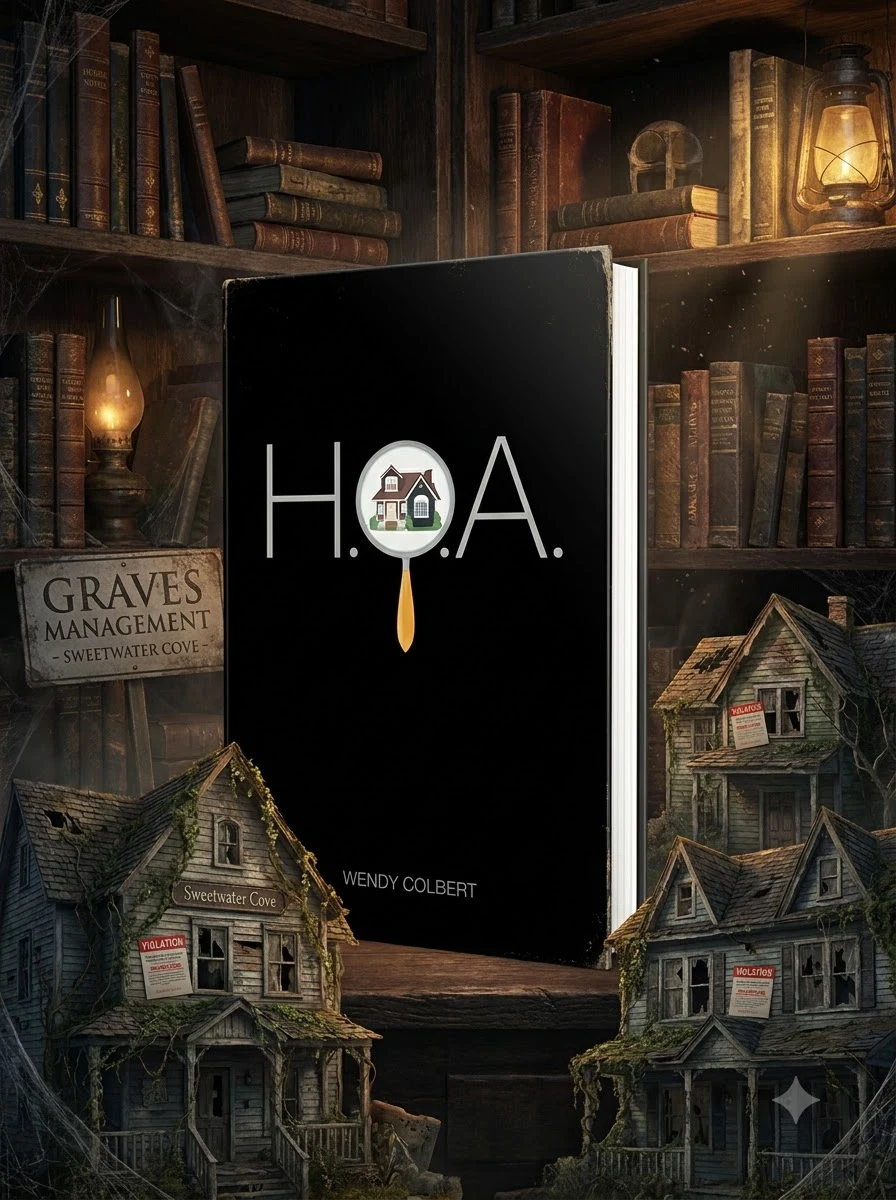

H.O.A.
A suburban HOA enforces rules with terrifying consequences in South Carolina.
This novel examines the psychological horror found in bureaucratic overreach. Colbert places her characters in Sweetwater Cove, where aesthetic standards become tools for domination. The narrative follows the descent of a community into chaos as Denise Graves’ management style intensifies. The story highlights how small violations can lead to disproportionate punishment. It critiques the American Dream by showing its dark underbelly. The tension arises from the loss of control and the erosion of trust among residents. Colbert avoids supernatural elements, focusing instead on human cruelty enabled by institutional power. The plot moves through escalating conflicts that reveal the fragility of social contracts. This approach creates a sense of dread rooted in reality rather than fantasy.
The book sits within the tradition of American suburban horror, drawing on the real-world authority of Homeowners Associations. It is set in South Carolina and published independently in 2022, reflecting contemporary anxieties about community governance.


📝 Description: H.O.A.
💎 Our verdict on H.O.A.
📖 Why choose it
Why this book is worth reading
Readers who appreciate psychological horror grounded in realistic social dynamics will find this narrative compelling. It offers a chilling exploration of how institutional power can corrupt community bonds, turning neighbors into adversaries. Those interested in the intersection of law, terror, and domestic life will gain insight into the fragility of social contracts. The book provides suspense through the escalation of arbitrary judgments rather than supernatural threats. It appeals to audiences seeking commentary on the dark underbelly of the American Dream. The focus on human cruelty enabled by bureaucracy creates a unique sense of dread. It is ideal for those who prefer tension rooted in reality over fantasy.
⭐ Reader reviews
Reader rating
Colbert effectively utilizes the mundane horror of Homeowners Association rules to create an atmosphere of pervasive dread. By focusing on bureaucratic madness rather than supernatural elements, the text offers a fresh perspective on psychological terror. The narrative excels in depicting the gradual breakdown of civil order within a gated community. This approach allows for a sharp critique of lost privacy and autonomy among residents. The story suits readers who enjoy social commentary wrapped in suspenseful fiction. It avoids high-action tropes, relying instead on the erosion of trust and control. While it may not appeal to traditional horror fans seeking ghosts or monsters, it delivers a potent examination of human cruelty. The tension arises from the disproportionate punishment for minor infractions, making the threat feel chillingly plausible.
📖 Read on the blog
🏛 Books from this publisher Independently Published








You might also like
See more →

Have a question about this item?
Ask about the edition, condition, delivery or anything else — we reply by email or phone, usually within a day.
