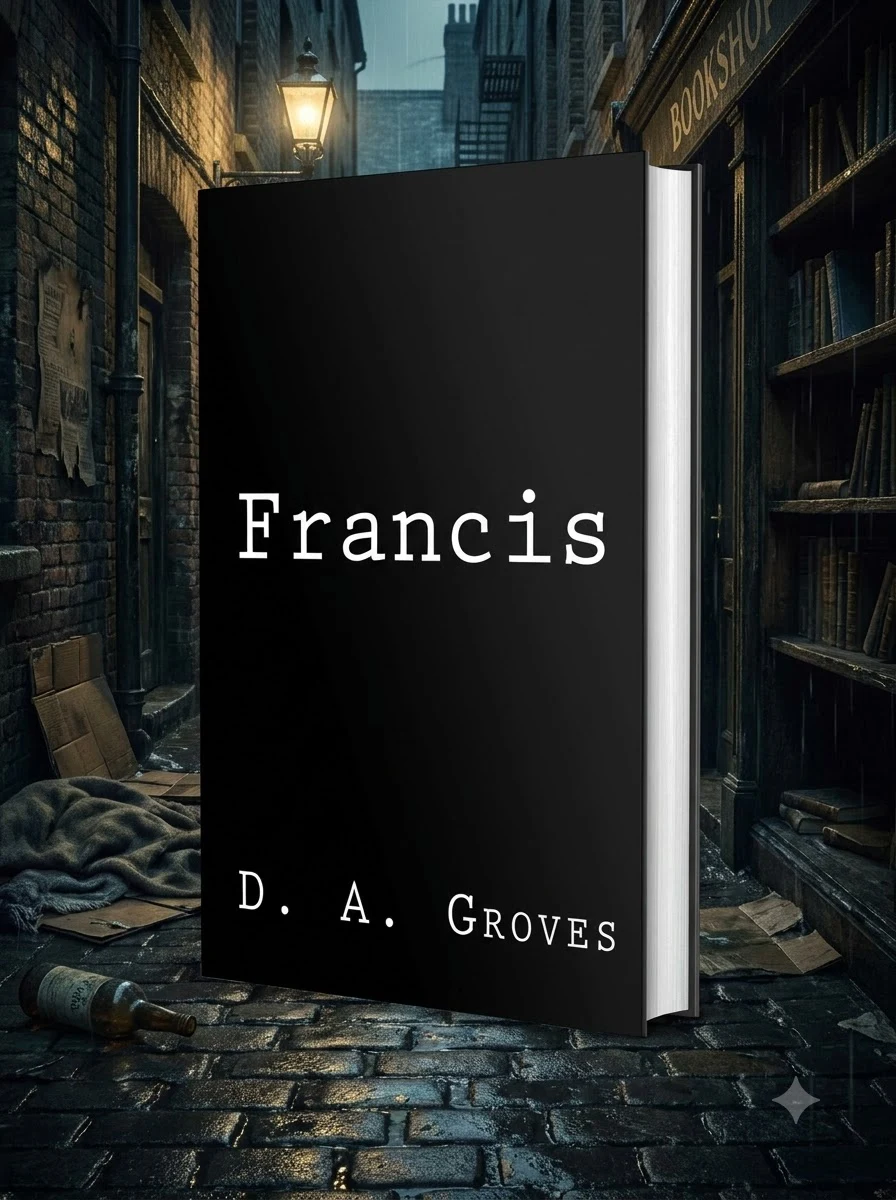
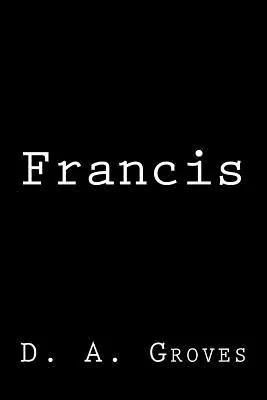
Francis
A man loses everything to theft and finds salvation among Dublin's dead homeless.
D a Groves crafts a tale where the supernatural intersects with social realism. Francis starts as an ordinary individual who makes a critical error in judgment. The consequences are immediate and total. He loses his job, his family, and his stability. The narrative follows his descent into homelessness in Dublin. The city acts as an antagonist, eroding his identity. He must interact with spirits to survive. This interaction provides a mechanism for his potential redemption. The story is grounded in the harsh realities of urban poverty. It uses the supernatural not for spectacle but for emotional resonance. The focus remains on Francis's internal and external battles.
The book is set in Dublin, Ireland. It engages with the local experience of homelessness and urban decay. The narrative draws on Irish gothic traditions. It reflects the specific social conditions of Ireland's capital city.


📝 Description: Francis
💎 Our verdict on Francis
📖 Why choose it
Why this book is worth reading
This book is designed for readers who appreciate atmospheric horror that serves as a vehicle for deep social commentary rather than mere spectacle. Those interested in the intersection of the supernatural and urban decay will find its exploration of homelessness compelling. It appeals to audiences seeking character-driven narratives where psychological unraveling mirrors physical desperation. Readers who value emotional resonance over jump scares or traditional monster tropes will engage with its serious examination of human fragility. It offers a stark, visceral look at loss and redemption within an unforgiving city, making it ideal for those tired of lighthearted entertainment and ready for a difficult, immersive struggle.
⭐ Reader reviews
Reader rating
Groves successfully merges social realism with gothic horror, using the supernatural to amplify the protagonist's internal crisis. The narrative avoids easy redemption, instead presenting a raw depiction of identity erosion in Dublin. While it lacks traditional horror elements, its strength lies in psychological depth and atmospheric tension. It suits readers who enjoy dark, character-focused tales where the environment acts as an antagonist. Those seeking visceral emotional impact through the lens of urban poverty will find this work resonant and thought-provoking.
📖 Read on the blog
🏛 Books from this publisher Createspace Independent Publishing Platform








You might also like
See more →


Have a question about this item?
Ask about the edition, condition, delivery or anything else — we reply by email or phone, usually within a day.
