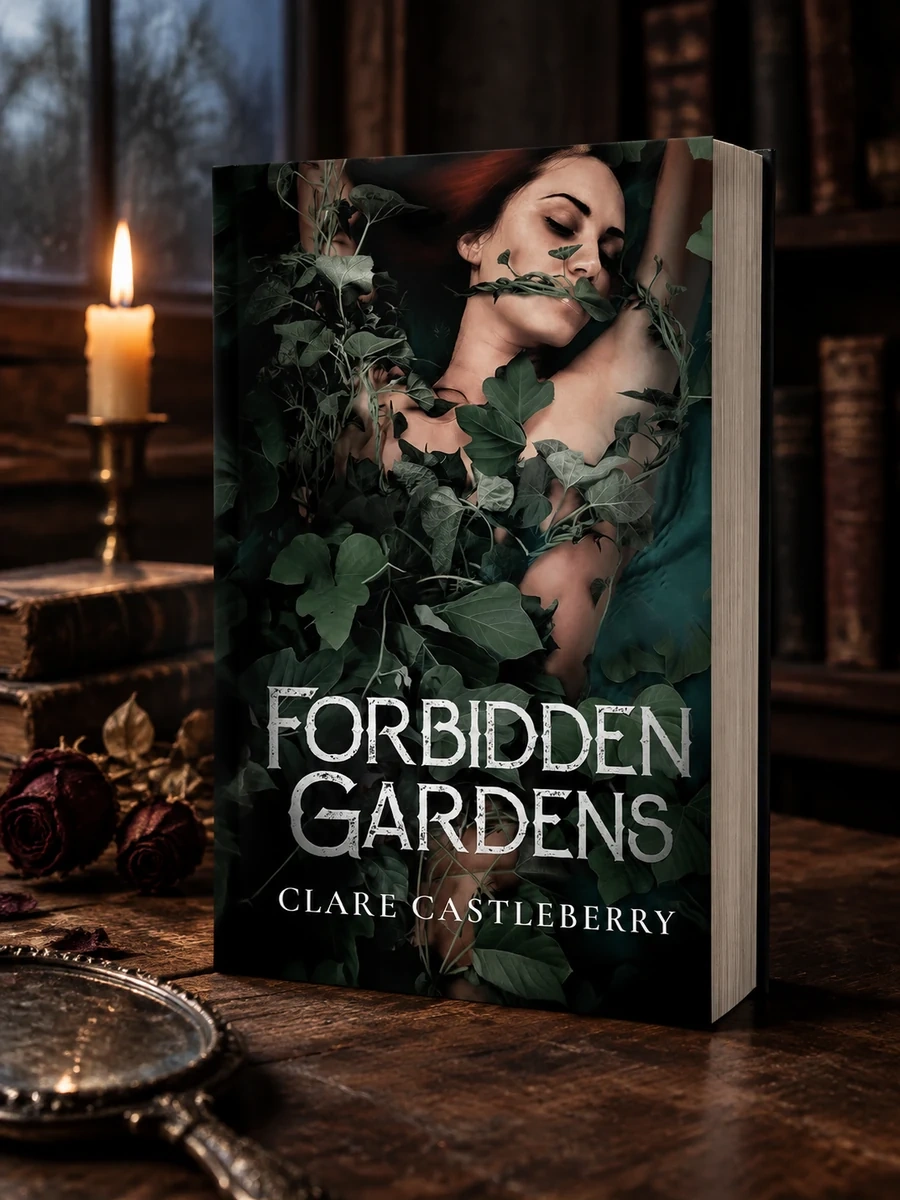
Forbidden Gardens
A gothic tale of haunted land, forbidden desire, and ambiguous murder.
Marianne leaves her destructive past behind only to return to Louisiana for love. The widower of her best friend courts her to buy the land where Azalea House once stood. Her return triggers spectral disturbances tied to her family's history. As she explores new aspects of her sexuality, a lover dies under shocking circumstances. The narrative questions whether Marianne is a killer or a victim of haunting forces. Castleberry uses the setting of Louisiana and the legacy of Azalea House to build tension. The story focuses on psychological dread rather than jump scares. It blends gothic tropes with modern explorations of identity and desire. The ending leaves the source of danger open to interpretation, challenging the reader to decide if the horror is real or imagined.
The story is set in Louisiana and draws on the American gothic tradition. It engages with themes of family legacy and the haunting power of place. The narrative reflects contemporary interests in psychological horror and the exploration of sexuality within dark settings.


📝 Description: Forbidden Gardens
💎 Our verdict on Forbidden Gardens
📖 Why choose it
Why this book is worth reading
Readers seeking atmospheric depth and intellectual engagement will find Forbidden Gardens rewarding. It appeals to those who enjoy gothic romance intertwined with psychological horror, offering a nuanced exploration of trauma and desire. The book is ideal for audiences comfortable with ambiguity, as it challenges readers to interpret the source of horror without providing clear answers. It suits fans of Louisiana-set mysteries and stories where the boundary between mental instability and supernatural reality remains blurred. Those who prefer slow-burn tension and emotional complexity over action will appreciate Castleberry’s focus on inherited trauma and spectral disturbances.
⭐ Reader reviews
Reader rating
Castleberry crafts a compelling psychological dread that lingers long after reading, effectively blending gothic tropes with modern themes of identity. The narrative succeeds in creating an unsettling atmosphere where the reader is constantly questioned about Marianne’s agency versus supernatural influence. Her prose grounds the horror in specific emotional weight and place, making the Louisiana setting a character in itself. This work is best suited for readers who appreciate slow-burn tension and ambiguous endings. It avoids jump scares in favor of deep, lingering unease. Fans of psychological horror and gothic fiction will find much to admire in its exploration of desire and haunting legacy.
📖 Read on the blog
✍️ More books by this author Clare Castleberry


🏛 Books from this publisher Winding Road Publishing LLC
You might also like
See more →
Have a question about this item?
Ask about the edition, condition, delivery or anything else — we reply by email or phone, usually within a day.
