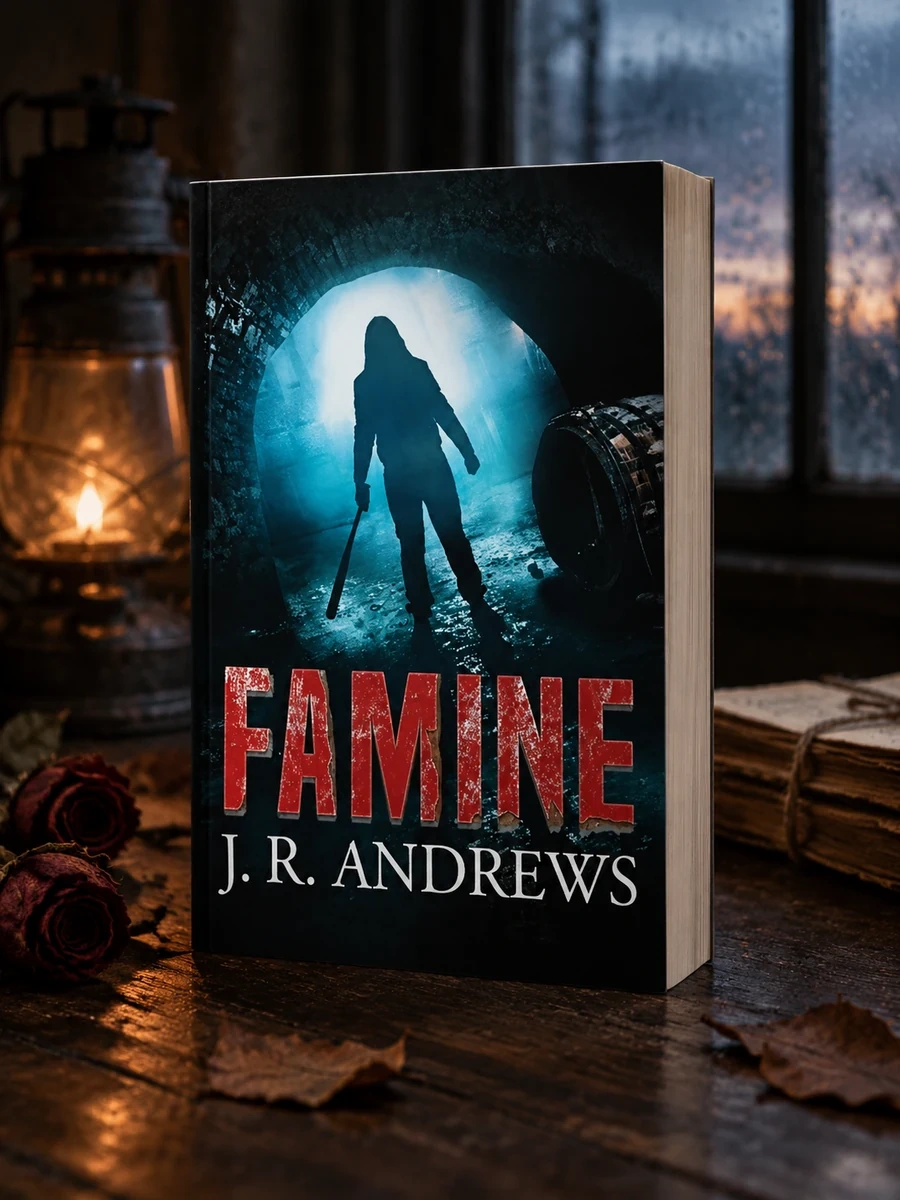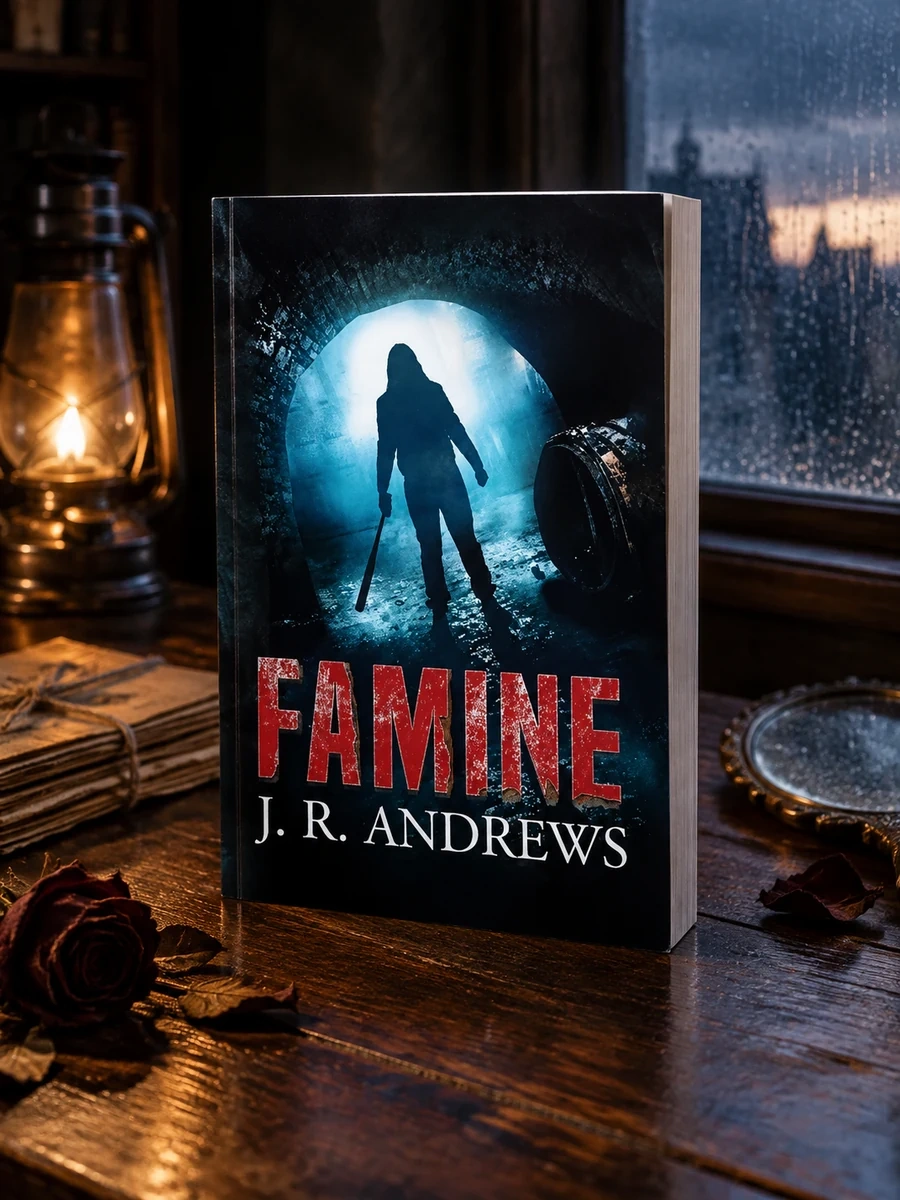

Famine
A man wakes after a decade of coma to find he is the last human.
Tom Woodford emerges from ten years of unconsciousness into a world where humanity no longer exists. He encounters Ana, who saves him from a humanoid creature, but their rescue is only the beginning of his troubles. An obsessed overlord now rules this new order and wants both Tom and Ana for himself. The tension rises as Tom realizes Ana might be hiding a crucial truth about her intentions. He must decide whether to continue running or face the dangerous forces hunting him. Andrews structures the plot around this relentless pursuit, keeping the focus on immediate survival rather than long-term world-building details. The story operates within the Charon Chronicles series, establishing the rules of this consumed world through Tom’s eyes.
Famine belongs to the post-apocalyptic horror genre, specifically the Charon Chronicles series. It engages with traditions of supernatural fiction where humanity faces extinction. The narrative reflects a modern interest in isolated survival scenarios ruled by terrifying, non-human entities. Published by Ferrousox Press, it targets readers seeking tense, action-driven stories.


📝 Description: Famine
💎 Our verdict on Famine
📖 Why choose it
Why this book is worth reading
Readers seeking intense, fast-paced survival narratives will find this book compelling. It appeals to those who enjoy underdog protagonists facing overwhelming odds in monster-filled settings. The focus on immediate physical peril and psychological tension provides a gripping experience for fans of suspenseful thriller elements within horror. It is ideal for audiences who prefer active plotting over slow-burning atmosphere, offering sustained excitement rather than gentle exploration.
⭐ Reader reviews
Reader rating
Andrews delivers a relentless pursuit narrative that prioritizes immediate survival over complex world-building. The story effectively maintains tension through Tom’s struggle against terrifying entities and the ambiguity of Ana’s intentions. The pacing ensures constant engagement, making it suitable for readers who dislike slow-burning horror. While the focus remains grounded in physical peril, the psychological stakes add depth to the confrontation with evil. This setup establishes high stakes efficiently without heavy exposition, appealing to those who favor action-oriented supernatural horror and deceptive alliances.