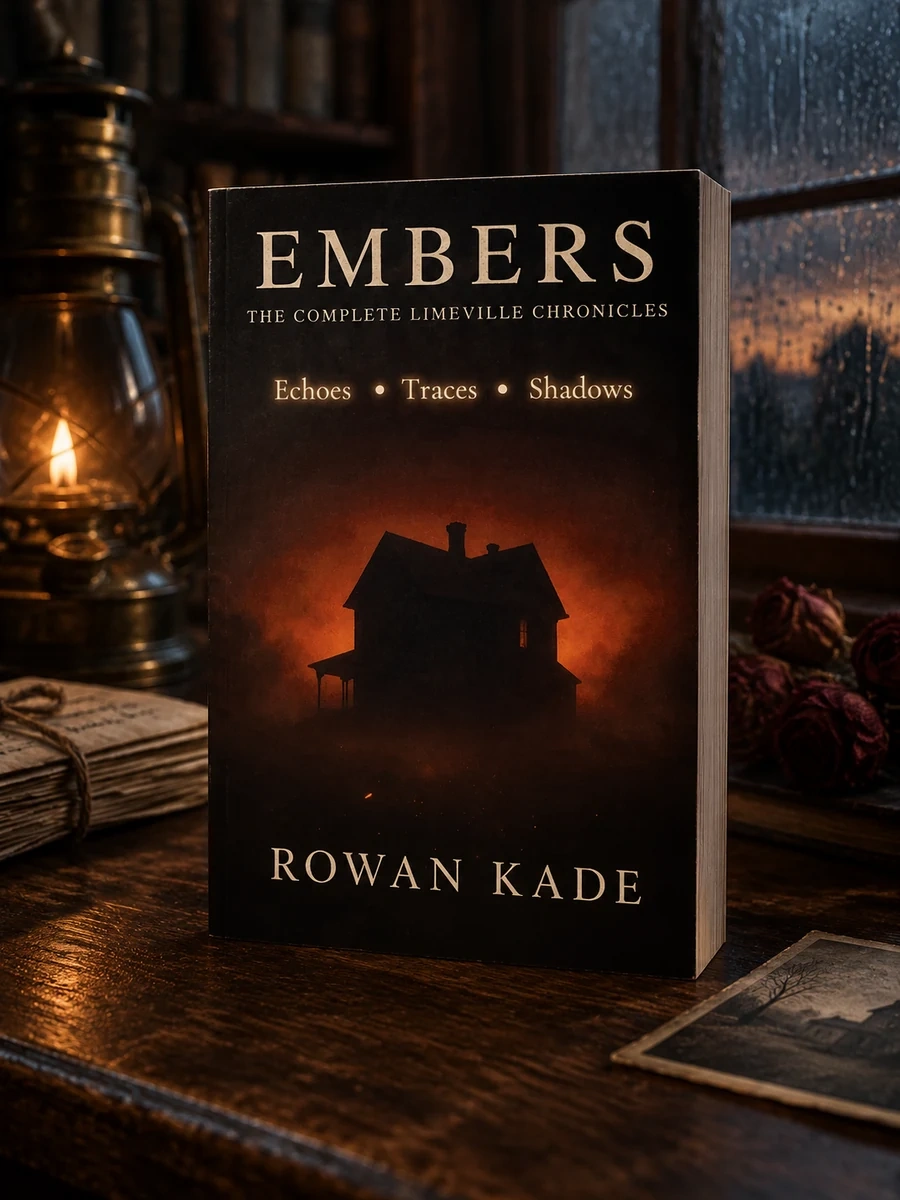
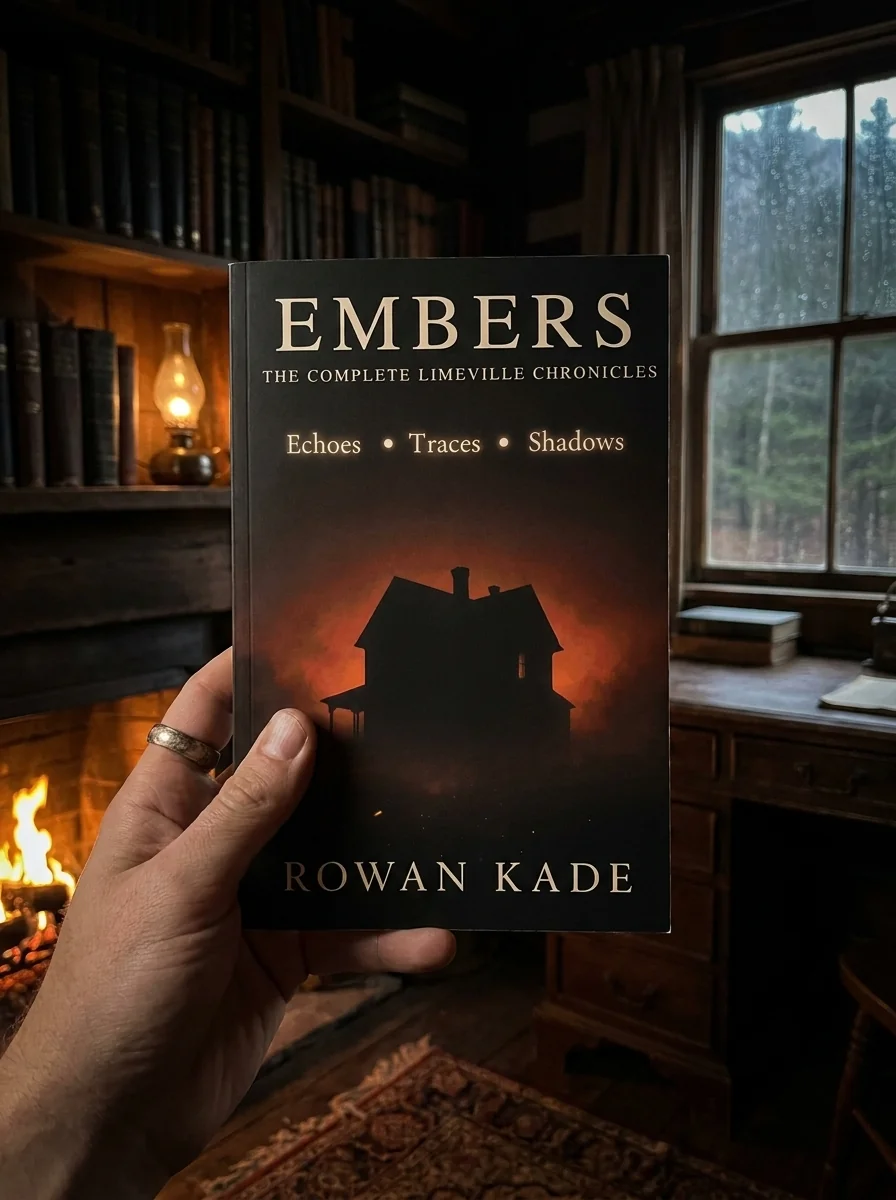
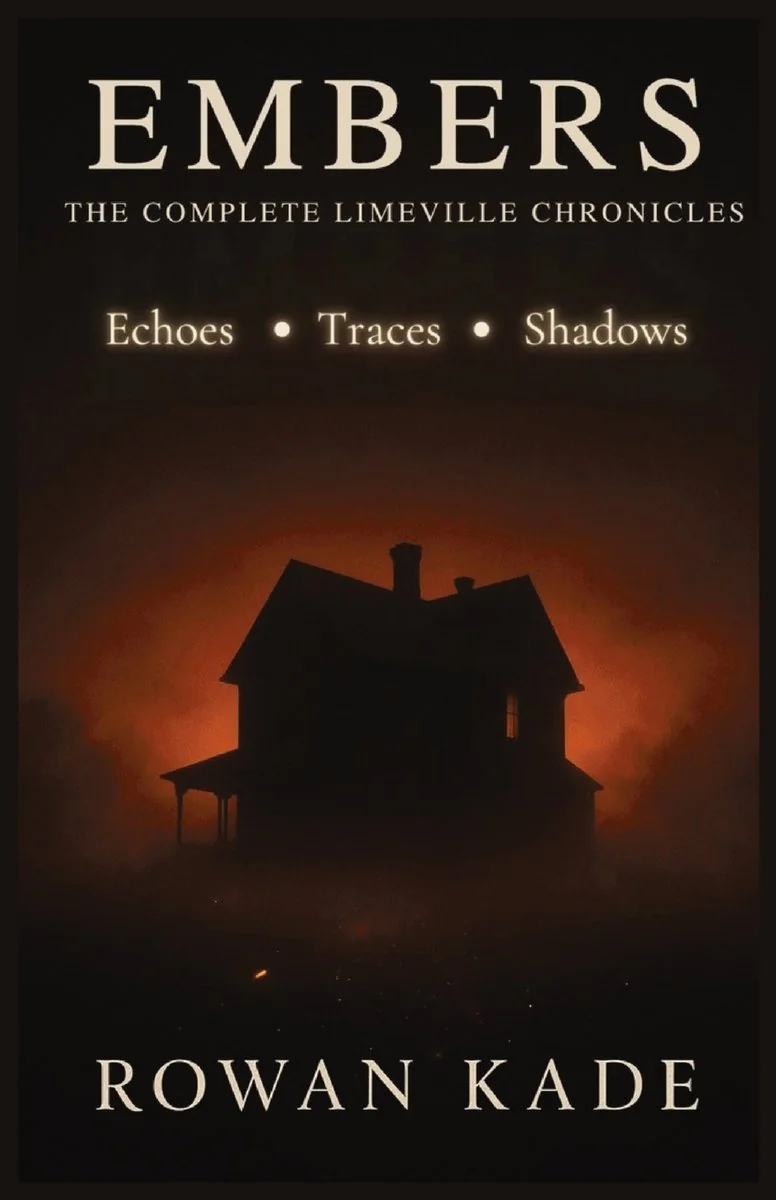
Embers: The Complete Limeville Chronicles
A complete collection of three interconnected ghost stories set in a Pennsylvania farmhouse.
Kade weaves three narratives that converge on a single location. The first thread tracks modern characters uncovering secrets. The second offers a sinister view from within the house itself. The third reveals the origin story of the haunting in the late nineteenth century. This structure creates a layered understanding of the property’s history. The author uses the farmhouse as a vessel for exploring how grief persists across generations. The stories do not rely on cheap thrills but on the psychological impact of unresolved loss.
The work sits within the American gothic tradition, specifically rural Pennsylvania settings. It engages with late nineteenth-century social expectations and the supernatural folklore surrounding old homes. The narrative draws on the period of 1888 to ground its themes of obedience and defiance in a specific historical context.


📝 Description: Embers: The Complete Limeville Chronicles
💎 Our verdict on Embers: The Complete Limeville Chronicles
📖 Why choose it
Why this book is worth reading
Readers who appreciate slow-burn supernatural tales with significant emotional depth will find much to engage them in this layered narrative. The book appeals to those interested in how past traumas influence present realities, offering a unique perspective on the psychological impact of unresolved loss rather than relying on cheap thrills or external threats. It is ideal for audiences who value character interiority and the weight of history over fast-paced action or traditional jump scares. By examining love, loss, and defiance through multiple voices observing the same haunted ground, the text provides a rich exploration of how darkness lingers after physical death, satisfying those who seek atmospheric fiction that treats grief as a tangible force.
⭐ Reader reviews
Reader rating
Kade’s work stands out for its deliberate pacing and focus on psychological horror rather than visceral scares. The three-perspective structure effectively builds a complex understanding of the farmhouse’s history, allowing the reader to witness the truth behind the haunting from distinct angles. While those seeking immediate adrenaline may find the narrative too slow, fans of gothic traditions will appreciate the atmospheric depth. The author successfully treats grief as a tangible entity, weaving modern discovery with late nineteenth-century origins to show how emotional echoes persist. This approach creates a cohesive and haunting experience that prioritizes the lingering weight of history over external threats, making it a compelling choice for literary horror enthusiasts.
You might also like
See more →



Have a question about this item?
Ask about the edition, condition, delivery or anything else — we reply by email or phone, usually within a day.
