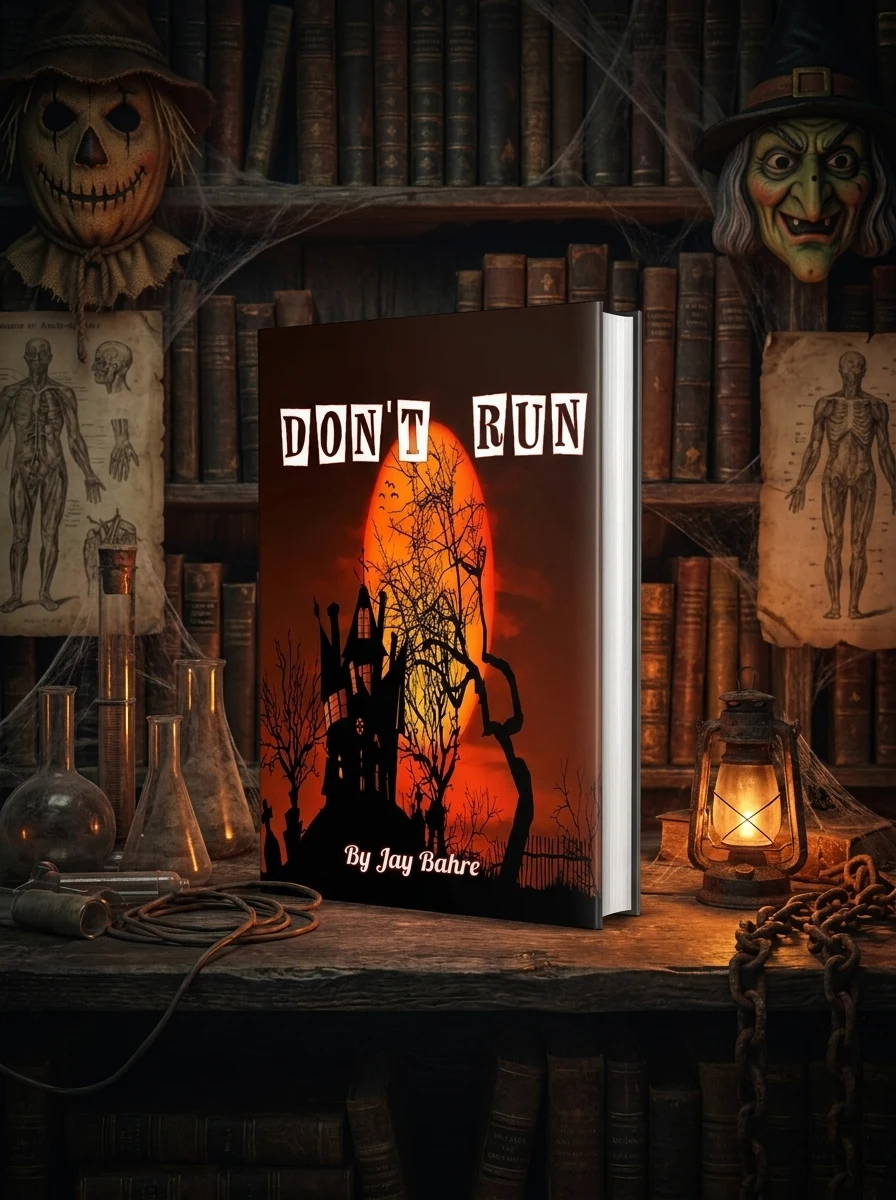
Don't Run
A 1972 Halloween tale of captivity and survival by Jay Bahre
The narrative tracks Shelly’s transition from a festive trick-or-treater to a prisoner in a dungeon. Her captors, two men from her neighborhood, justify their actions through pseudoscientific claims. The plot revolves around her struggle for survival and the psychological weight of her situation. The story emphasizes the contrast between the joy of Halloween and the horror of her reality. It is a focused account of one night that could be her last.
The story is set in 1972, a period when Halloween traditions were evolving in American culture. Shelly’s continued participation in trick or treating reflects specific generational norms of that era. The narrative uses this historical backdrop to heighten the sense of isolation and danger faced by the protagonist during a time associated with community celebration.


📝 Description: Don't Run
💎 Our verdict on Don't Run
📖 Why choose it
Why this book is worth reading
This book is ideal for readers who crave tense, character-driven horror stories rooted in a specific past. It appeals to those interested in the psychological weight of captivity and the stark contrast between holiday joy and grim reality. Fans of gothic dread and supernatural horror will appreciate the focus on Shelly’s desperate struggle against predatory forces. The narrative offers a focused account of one night that could be her last, emphasizing vulnerability rather than complex scientific explanations. It is perfect for those who enjoy subverting festive traditions into terrifying ordeals without seeking lighthearted seasonal fiction.
⭐ Reader reviews
Reader rating
Jay Bahre delivers a concentrated horror experience by focusing entirely on Shelly’s transition from trick-or-treater to prisoner. The narrative effectively utilizes the setting of 1972 Halloween to heighten the sense of dread and isolation. By centering on psychological terror rather than action, the story maintains a grim atmosphere of gothic suspense. The portrayal of captors using pseudoscientific justifications adds a layer of chilling realism to the supernatural elements. This work suits readers who prefer intense, focused narratives over sprawling plots. It is best appreciated by those who value atmospheric tension and the exploration of innocence lost to predatory forces during a culturally significant holiday.
📖 Read on the blog
🏛 Books from this publisher Independently Published








You might also like
See more →


Have a question about this item?
Ask about the edition, condition, delivery or anything else — we reply by email or phone, usually within a day.
