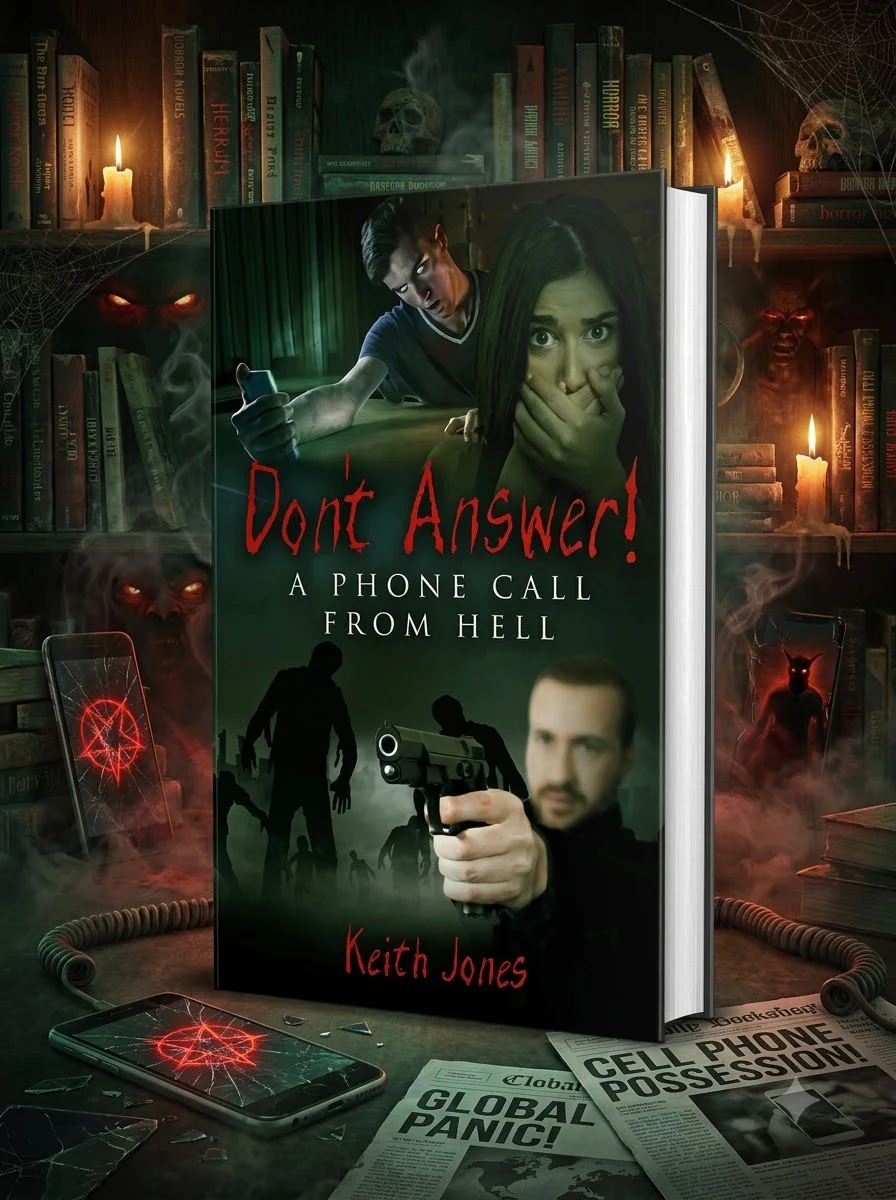
Don't Answer!: A Phone Call From Hell
A tale of demonic possession triggered by answering a cell phone.
Monster writes a concise horror narrative where the simple act of answering a call unleashes chaos. Kate watches her surroundings dissolve into madness as others succumb to strange, evil impulses. The text highlights the vulnerability of modern communication, turning a lifeline into a trap. There are no heroes with special powers here, only a protagonist trying to survive in a world that has turned hostile due to a single, mundane action. The story relies on the tension between the desire for connection and the fear of what that connection might bring.
Published independently in 2020, this work reflects contemporary anxieties about technology and supernatural intrusion. It sits within the modern horror genre, focusing on everyday objects becoming sources of fear rather than ancient curses or traditional folklore.


📝 Description: Don't Answer!: A Phone Call From Hell
💎 Our verdict on Don't Answer!: A Phone Call From Hell
📖 Why choose it
Why this book is worth reading
This narrative is ideal for readers who appreciate the visceral fear of losing control in a seemingly safe environment. It appeals to those interested in stories where modern conveniences turn into instruments of damnation, specifically targeting the vulnerability inherent in communication technology. The book offers a tense exploration of isolation, as the protagonist navigates a world where every ringtone signals potential possession. Those seeking historical gothic settings or traditional monster hunts may find this approach less engaging, but fans of contemporary tales of technological dread will find the premise compelling. It provides a sharp critique of the desire for connection when that very medium becomes a trap. The story focuses on the immediate threat of the present moment, making it a relevant and unsettling read for anyone who relies on their phone.
⭐ Reader reviews
Reader rating
The book effectively leverages the universal fear of unanswered calls to create a palpable sense of dread. By positioning the cell phone as a conduit for demonic influence, the author taps into deep-seated anxieties about technology and humanity. The narrative avoids easy solutions, focusing instead on the protagonist's struggle against a hostile world transformed by a mundane action. This approach suits readers who enjoy psychological terror grounded in realistic scenarios rather than fantastical lore. The tension between the desire for connection and the fear of its consequences is well-executed, creating a claustrophobic atmosphere. While it lacks the comfort of traditional horror resolutions, it succeeds in delivering a sharp, modern critique of digital dependency through the lens of supernatural invasion.
📖 Read on the blog
🏛 Books from this publisher Independently Published








You might also like
See more →




Have a question about this item?
Ask about the edition, condition, delivery or anything else — we reply by email or phone, usually within a day.
