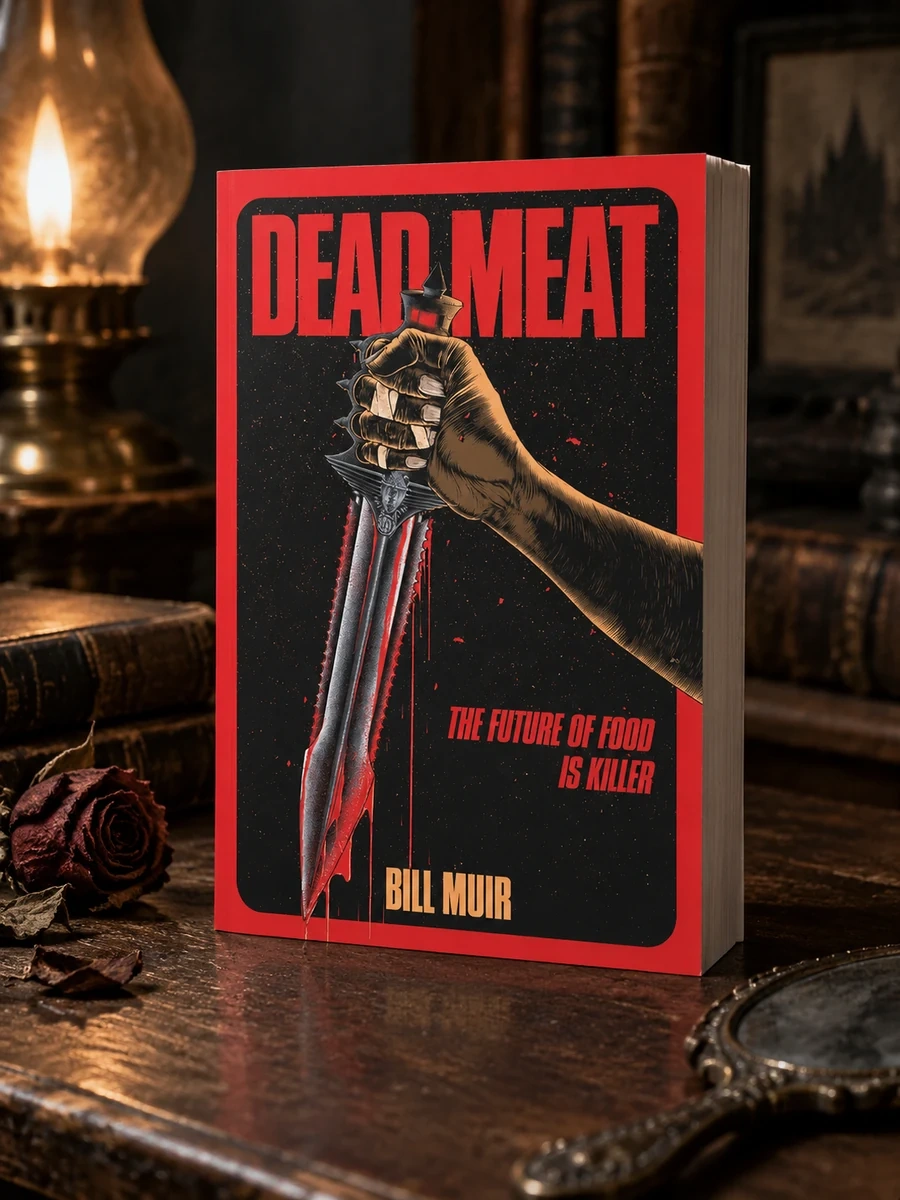
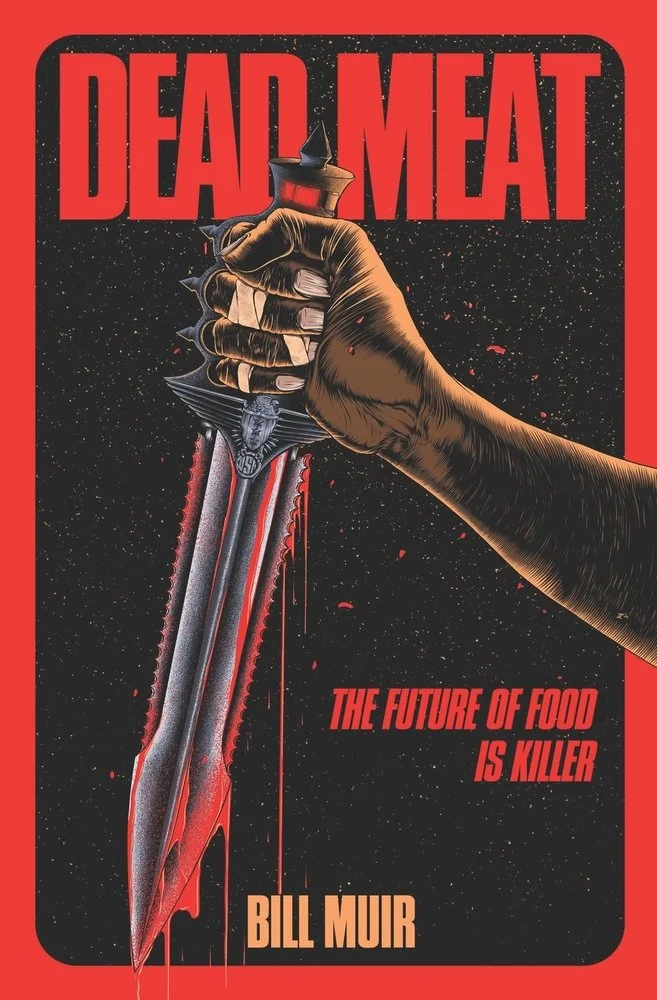
Dead Meat: The Future of Food Is Killer
A 2050 dystopia where cannibalism becomes a state-sanctioned industry.
The narrative begins with a biological catastrophe in slaughterhouses that wipes out animals and kills twenty-five percent of Americans. The resulting chaos allows for the establishment of martial law and the dissolution of democratic institutions. Kenney details how the ruling class justifies Project Carnivore, turning citizens into agricultural resources to satisfy elite desires for meat. The plot centers on the tension between this normalized horror and the resistance efforts of the Human Liberation Front. The story questions the limits of human decency when survival and power intersect with grotesque economic incentives.
Set in a near-future America of 2050, the work reflects anxieties about political instability, public health crises, and the erosion of civil liberties. It engages with contemporary fears regarding government overreach and the commodification of human life within a collapsing economic framework.


📝 Description: Dead Meat: The Future of Food Is Killer
💎 Our verdict on Dead Meat: The Future of Food Is Killer
📖 Why choose it
Why this book is worth reading
Readers interested in political horror and the intersection of economics with bodily autonomy will find this narrative compelling. It offers a stark examination of how societal norms fracture under extreme duress, specifically when survival intersects with grotesque economic incentives. Those who appreciate speculative fiction that critiques systemic brutality and the normalization of state-sanctioned violence will gain insight into the mechanisms of oppression. The book challenges audiences to confront the limits of human decency when power dynamics shift drastically. It is not for those seeking lighthearted entertainment or traditional supernatural tales, but rather for readers willing to engage with a grim exploration of authoritarianism and the commodification of life in a collapsing society.
⭐ Reader reviews
Reader rating
Kenney constructs a chilling vision of 2050 where biological catastrophe enables the rise of a corrupt police state. The narrative effectively juxtaposes the normalization of cannibalism against the resistance of the Human Liberation Front, creating tension through institutional horror rather than supernatural elements. The book excels in detailing the bureaucratic justification for atrocity, making the horror feel plausible and terrifyingly grounded in economic logic. It suits readers who enjoy dystopian critiques that examine the breakdown of societal norms under extreme duress. By focusing on systemic brutality and political maneuvering, the text avoids conventional ghost story tropes to deliver a more unsettling commentary on power and survival. This approach ensures the horror remains intellectual and visceral simultaneously.
📖 Read on the blog
🏛 Books from this publisher Independently Published








You might also like
See more →
Have a question about this item?
Ask about the edition, condition, delivery or anything else — we reply by email or phone, usually within a day.
