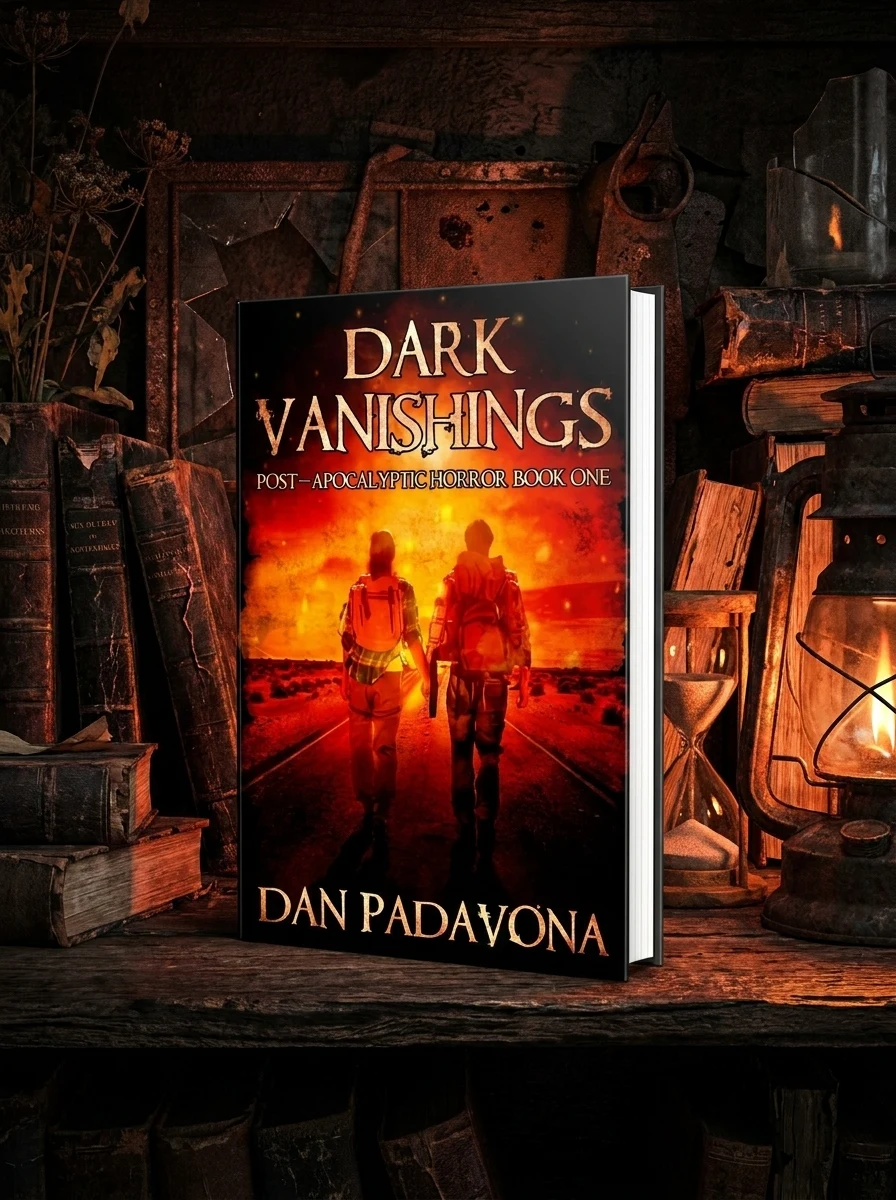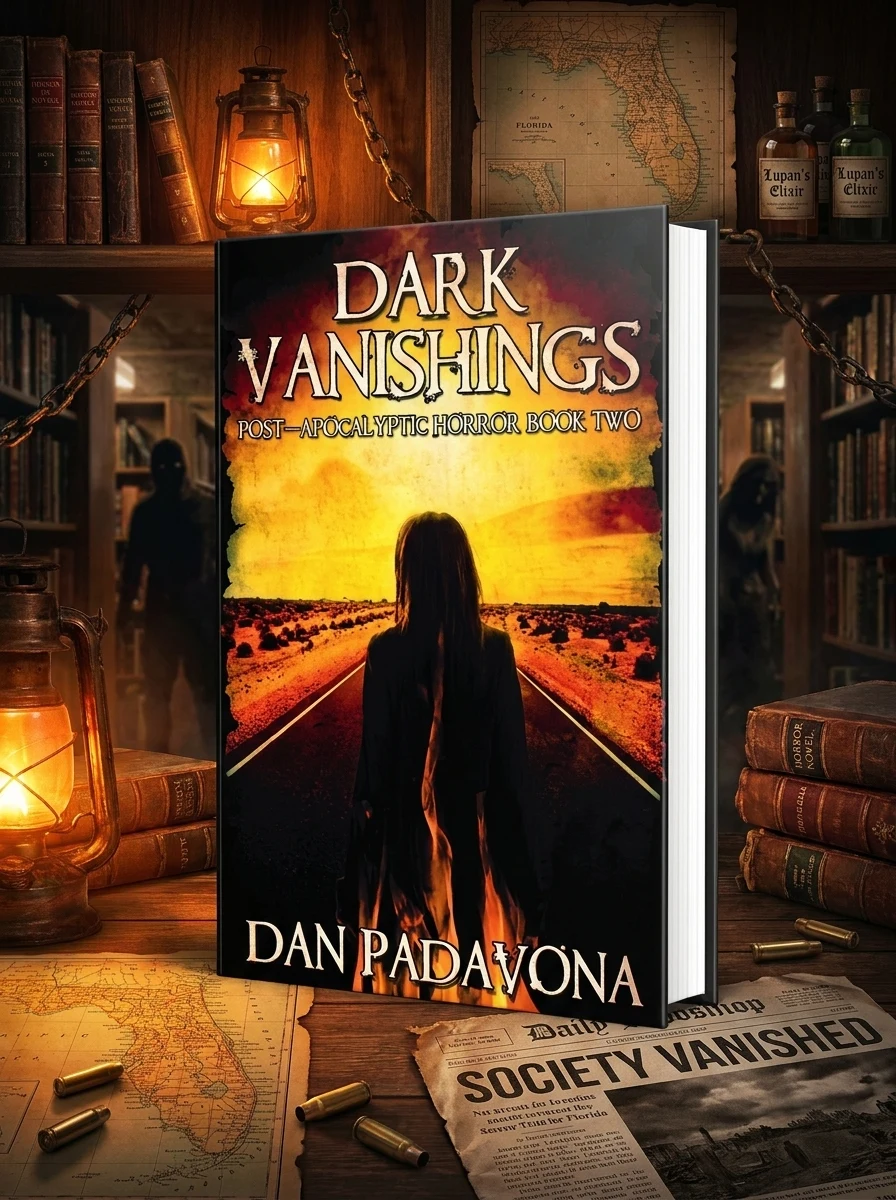

Dark Vanishings 2: Post-Apocalyptic Horror
A girl with hidden power faces a demonic army in a ruined America.
The plot centers on Tori, a young woman who discovers a terrifying internal force after defending herself and Blake from attackers. This event marks a turning point in her journey as she struggles with the implications of her new abilities. The survivors in Florida live under constant threat from Lupan, who builds a cult-like following in the north. His motives are opaque, yet his goal is explicit: eliminate Tori to secure his own position or fulfill a darker agenda. The tension arises from the uncertainty of alliances and the fear of what lies within Tori herself. Padavona explores the cost of power and the fragility of social order when civilization collapses. The story does not offer easy answers regarding the nature of evil or the source of Tori's gift.
This book sits within the post-apocalyptic horror genre, drawing on traditions of societal collapse and supernatural threats. It references the works of Dean Koontz, Hugh Howey, and Stephen King to establish its tone for American readers seeking intense, character-focused narratives in a ruined world.


📝 Description: Dark Vanishings 2: Post-Apocalyptic Horror
💎 Our verdict on Dark Vanishings 2: Post-Apocalyptic Horror
📖 Why choose it
Why this book is worth reading
Readers drawn to intense survival stories with supernatural undertones will find this narrative compelling. It suits those who enjoy character-driven plots where hidden powers create complex moral dilemmas. The book appeals to fans of ruined-world settings who prefer exploring the cost of power over technical apocalypse explanations. Those interested in the fragility of social order and the uncertainty of alliances among survivors will appreciate the tense atmosphere. It offers a journey into the unknown, focusing on internal struggles as much as external threats from demonic armies and cult-like figures.
⭐ Reader reviews
Reader rating
Padavona constructs a tense atmosphere where every interaction carries weight, effectively merging post-apocalyptic survival with cosmic horror elements. The narrative excels in exploring the psychological burden of sudden, terrifying abilities through Tori’s perspective. While it avoids easy answers regarding evil’s nature, it successfully maintains suspense through opaque motives and scarce trust among survivors. This approach suits readers who prefer character-driven plots over detailed world-building mechanics. The tone aligns well with fans of Koontz or King, offering a gritty look at humanity’s last stand. It is best for those seeking moral complexity and supernatural intensity rather than lighthearted adventure or technical exposition.