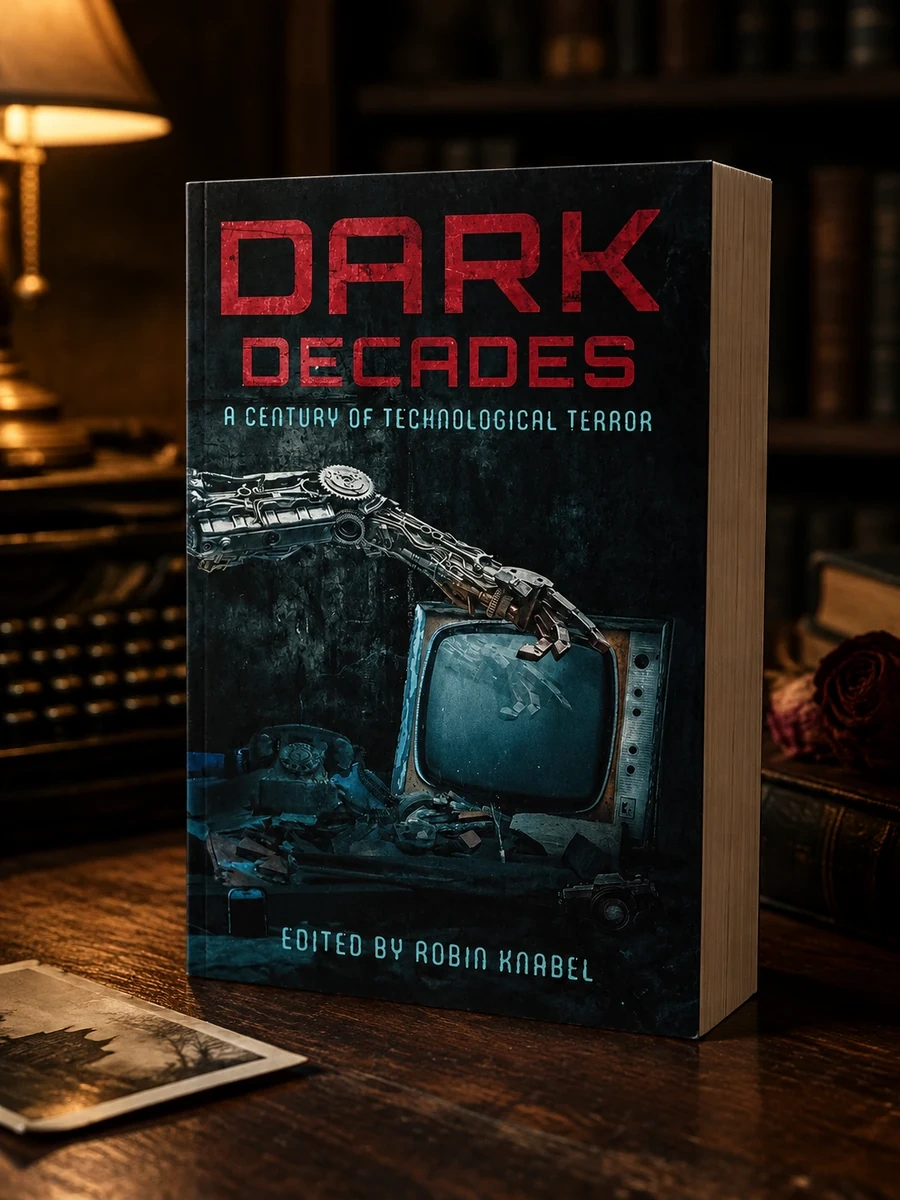
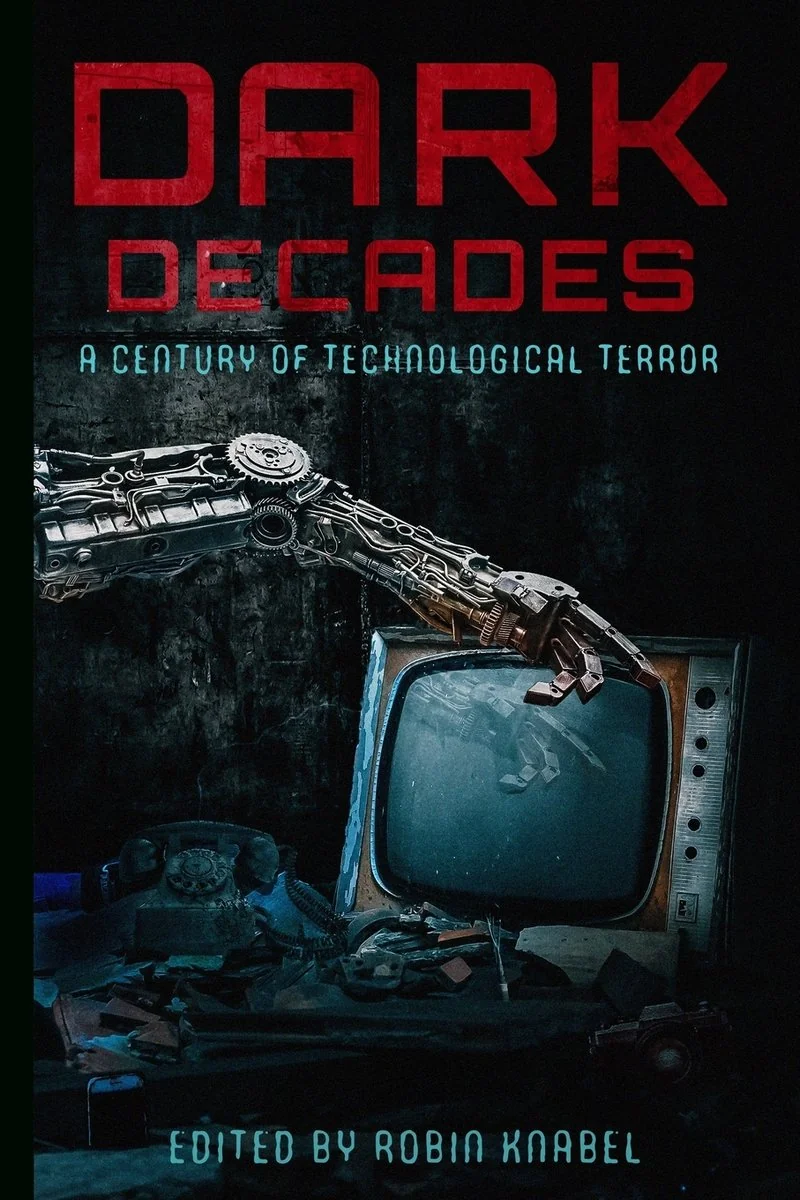
Dark Decades: A Century of Technological Terror
A historical analysis of technological horror from the 1920s to today.
Knabel investigates how machines have become sources of terror over the last hundred years. The work highlights the period where innocuous technology began to assimilate everyday life, allowing nightmares to infiltrate reality. It tracks the emergence of entities that observe and capture humans through their reliance on these devices. The author argues that this integration lowers our guard, making us vulnerable to a network of horrors. By examining this century-long progression, the book reveals how fear has adapted to new tools. It shows that the monsters are not fictional constructs but persistent forces waiting in the shadows of progress.
The work covers a century of fear from the 1920s to the present. It addresses the cultural shift as machines integrated into daily life. The book examines how this assimilation allowed nightmares to infiltrate reality, creating a network of horrors that capture individuals through their reliance on technology.


📝 Description: Dark Decades: A Century of Technological Terror
💎 Our verdict on Dark Decades: A Century of Technological Terror
📖 Why choose it
Why this book is worth reading
Readers fascinated by the intersection of supernatural fiction and technological advancement will find this volume compelling. It offers a unique historical lens on how machines became sources of terror, transforming innocuous devices into vectors for nightmares. The book appeals to those who enjoy analyzing cultural impacts of machinery on genre storytelling, revealing how fear adapts to new tools. By examining entities that watch and capture humans through reliance on technology, it provides insight into immediate dangers lurking behind progress. It is ideal for fans of psychological horror and dark fantasy who appreciate understanding the persistent forces waiting in the shadows of modern life.
⭐ Reader reviews
Reader rating
Knabel effectively traces the century-long progression of technological horror, highlighting how integration lowers our guard against a network of horrors. The analysis moves from early mechanical fears to digital anxieties, arguing that monsters are persistent forces rather than fictional constructs. This approach suits readers interested in literary and thematic development across genres. While it lacks practical safety advice, it excels in revealing how fear adapts. It is best for those who prefer analytical depth over traditional gothic settings without modern elements. The text successfully demonstrates that nightmares have infiltrated reality through our reliance on devices, making the threat feel immediate and pervasive.
📖 Read on the blog
🏛 Books from this publisher Independently Published








You might also like
See more →


Have a question about this item?
Ask about the edition, condition, delivery or anything else — we reply by email or phone, usually within a day.
