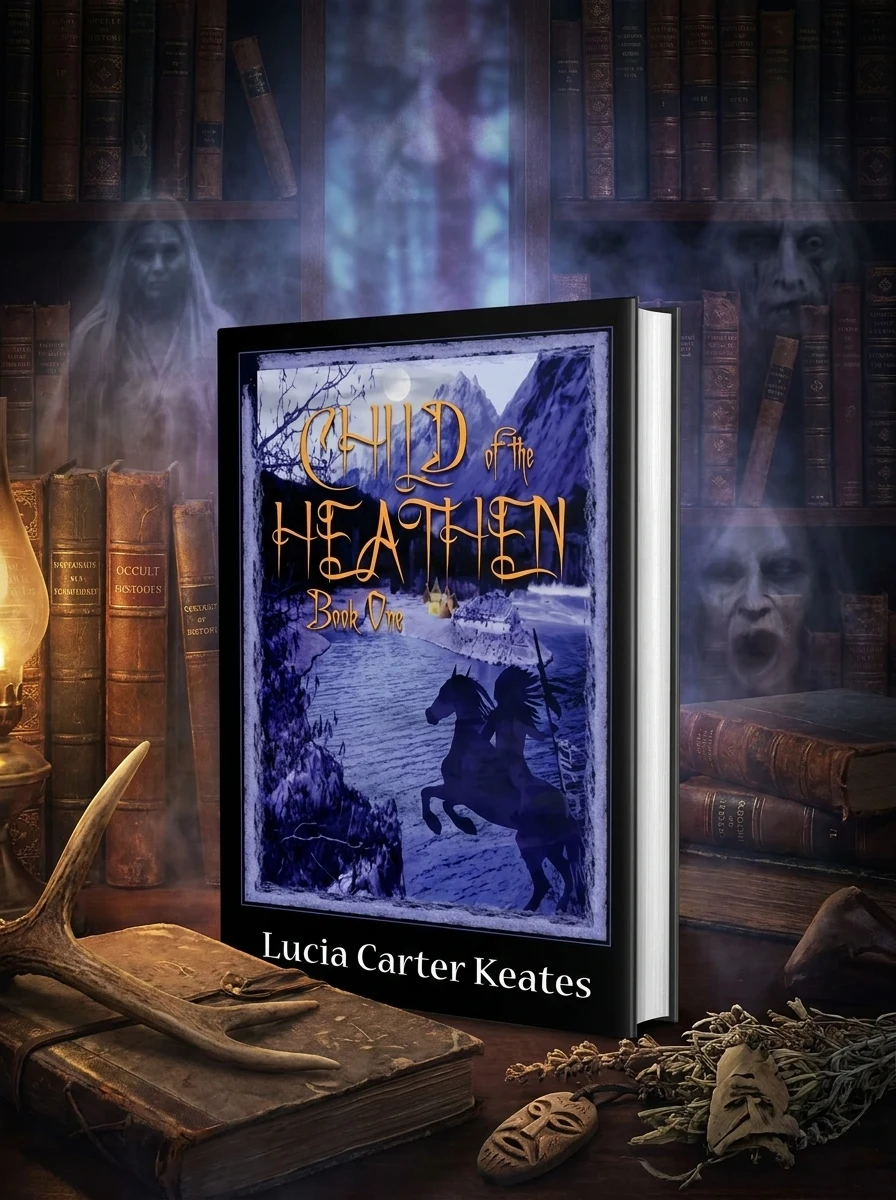
Child of the Heathen
A novel linking 1968 Maskek deaths to a 1750 soul pact.
Keates explores the legacy of Jonathan Sparkling Eyes Hare through Deacon Pierce’s perspective. The narrative shifts between 1968 and 1750 to examine the consequences of a soul contract. Deacon’s declining health forces his mother to reveal family secrets involving Damien Drew. The story investigates whether the entity involved is a demon or part of Cree legend. This structure allows readers to see how past actions dictate present dangers. The author uses the specific setting of Maskek to ground the supernatural events. The focus remains on the psychological impact of inherited curses on Deacon’s life.
The narrative is set in Maskek and draws on First Nations Cree traditions. It spans from 1750 to 1968, examining the long-term effects of a pact made by Jonathan Sparkling Eyes Hare. The work integrates indigenous legend with gothic horror elements within a specific North American context.


📝 Description: Child of the Heathen
💎 Our verdict on Child of the Heathen
📖 Why choose it
Why this book is worth reading
Readers fascinated by the psychological weight of inherited curses and the ambiguity between demonology and indigenous spirit lore will find this narrative compelling. The dual timeline structure offers a unique perspective on how past sins dictate present dangers, appealing to those who enjoy intricate plots that blend historical mystery with supernatural horror. It is ideal for audiences seeking atmospheric storytelling that grounds cosmic terror in specific cultural traditions, providing a thoughtful examination of legacy and identity within the horror genre.
⭐ Reader reviews
Reader rating
Keates effectively weaves a tense narrative that connects a 1968 series of unexplained deaths to a seventeenth-century soul pact. The alternating timelines create a claustrophobic atmosphere, emphasizing the inescapable nature of Deacon’s bloodline. By questioning whether the antagonist is a demon or a figure from Cree legend, the text adds layers of cultural complexity to standard horror tropes. This approach suits readers who appreciate gothic fiction with indigenous mythological roots over pure historical accounts. The focus on psychological decline rather than gore makes it a strong choice for fans of atmospheric dread and literary horror.
📖 Read on the blog
🏛 Books from this publisher Createspace Independent Publishing Platform



You might also like
See more →


Have a question about this item?
Ask about the edition, condition, delivery or anything else — we reply by email or phone, usually within a day.
