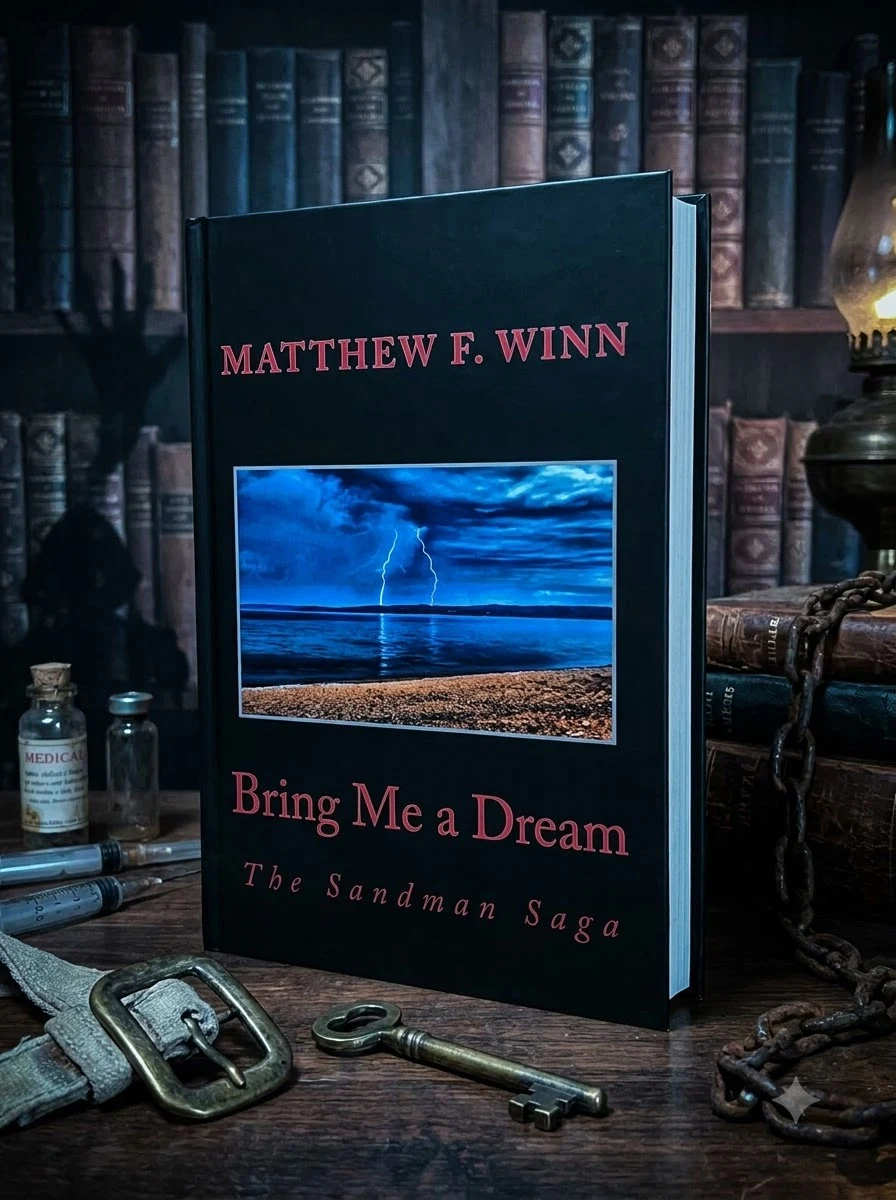
Bring Me a Dream
A serial killer escapes sedation while a victim confronts resurrected evil
The plot follows Reuben Graham, a criminally insane inmate who has been kept docile by medication for nearly a decade. When the drugs fail and he regains his freedom, Timothy Duggan experiences a sudden surge of dread. This emotion stems from a suppressed memory of a ghost he thought was dead. Duggan tries to push these thoughts away but realizes evil has returned. The story examines the intersection of institutional control and individual trauma. It highlights how past sins can resurface when safeguards are removed. Winn uses this premise to explore the fragility of mental stability. The narrative does not rely on supernatural elements but rather on psychological terror.
This work emerges from the American tradition of psychological horror and thriller fiction. It draws on the trope of the dangerous inmate in a prison for the criminally insane. The narrative reflects concerns about mental health treatment and the potential for recidivism in high-security facilities.


📝 Description: Bring Me a Dream
💎 Our verdict on Bring Me a Dream
📖 Why choose it
Why this book is worth reading
Readers who crave character-driven horror and suspenseful thrillers involving escaped convicts will find this narrative compelling. It appeals to those interested in the stark reality of criminal psychology and the lingering effects of past atrocities. The book is ideal for audiences seeking psychological dread over supernatural spectacle, offering an intimate look at how fear operates within the human psyche. Those who enjoy exploring the intersection of institutional control and individual trauma will appreciate the grounded prose and focus on repressed memory. It serves readers who want to understand the fragility of mental stability without relying on abstract concepts or complex magical systems.
⭐ Reader reviews
Reader rating
Winn crafts a tense narrative where psychological dread meets physical threat, focusing sharply on the conflict between repressed trauma and inevitable violence. The author demonstrates a clear understanding of criminal psychology, grounding the terror in immediate character experiences rather than abstract ideas. This approach creates an unsettling intimacy that keeps readers engaged with Reuben Graham’s return and Timothy Duggan’s haunted past. The story avoids supernatural elements, relying instead on the realistic horror of institutional failure and resurfacing sins. It is best suited for fans of psychological thrillers who appreciate grounded prose and deep character exploration over plot-heavy action or fantasy.
📖 Read on the blog
✍️ More books by this author Matthew F Winn








🏛 Books from this publisher Createspace Independent Publishing Platform






You might also like
See more →




Have a question about this item?
Ask about the edition, condition, delivery or anything else — we reply by email or phone, usually within a day.
