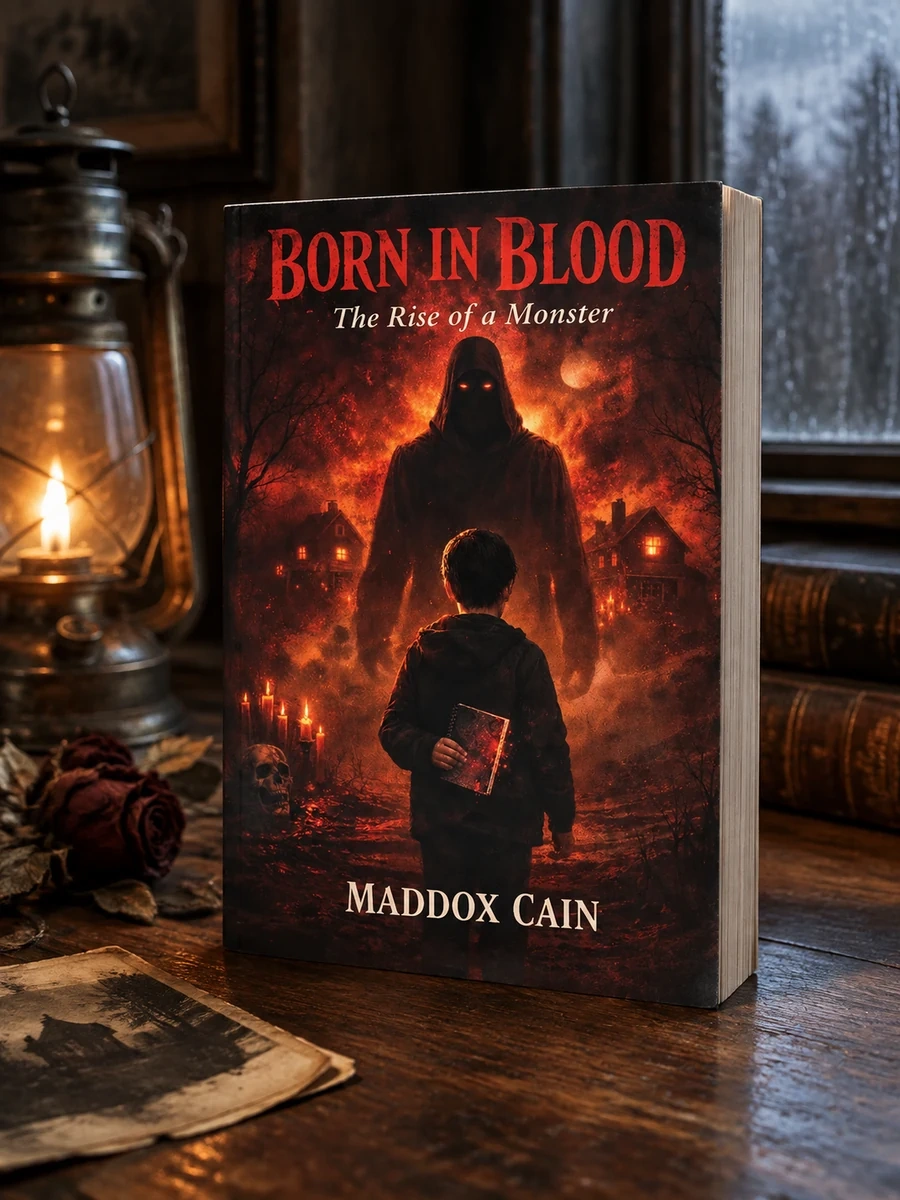
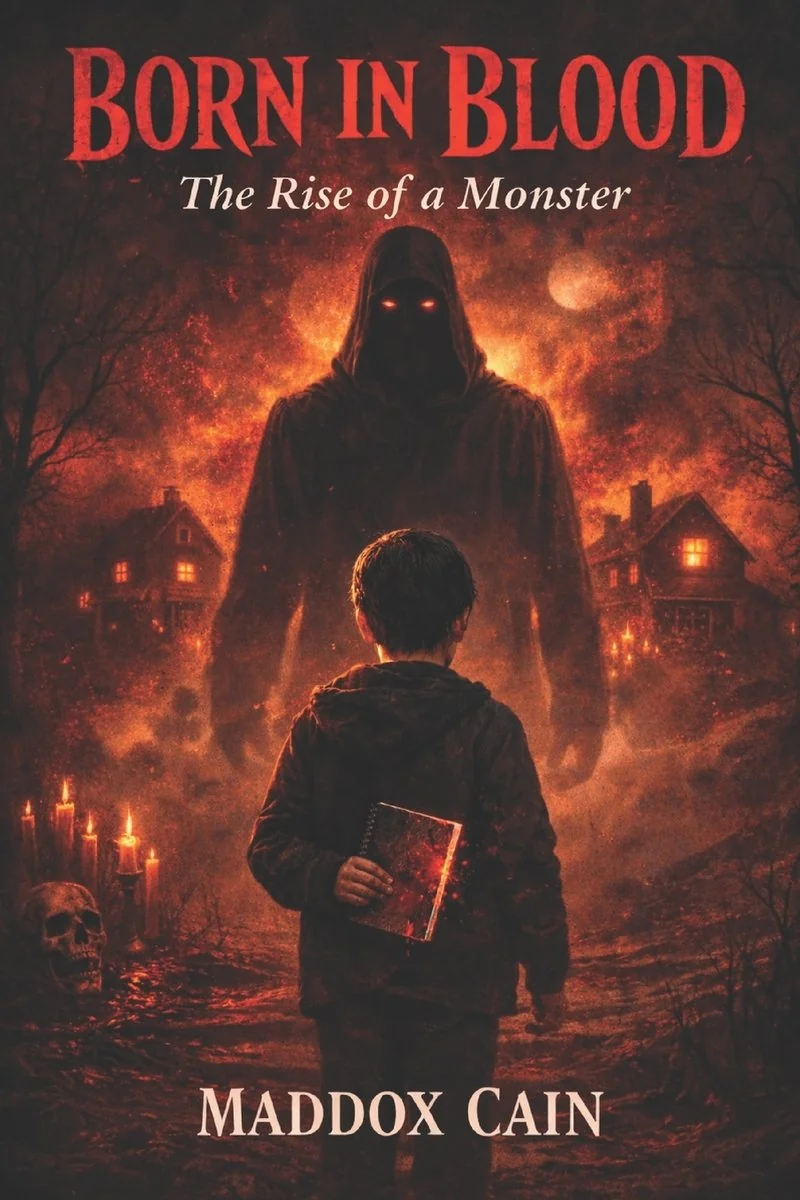
Born in Blood
A psychological examination of David Wells' inherited darkness and childhood origins.
Cain investigates the roots of David Wells’ monstrous nature through a reverse chronological lens. The narrative begins with his established identity as a perfect husband and author before peeling back layers to expose the boy beneath. Key elements include the influence of quiet rooms, careful lessons, and a persistent bloodline. The work contrasts the public truth exposed in Written in Blood with the private history that enabled it. Cain emphasizes that monsters are shaped by silence and fear rather than appearing spontaneously. This focus on inheritance provides a specific look at how darkness is passed down through generations. The description highlights the domestic setting as a crucible for evil, moving away from supernatural tropes to examine psychological conditioning. The text suggests that understanding Wells requires looking at his past, not just his present actions.
The book sits within the American tradition of domestic gothic fiction. It examines the concept of inherited evil and psychological conditioning. The narrative draws on the trope of the monster hiding in plain sight, focusing on family lineage rather than external supernatural forces.


📝 Description: Born in Blood
💎 Our verdict on Born in Blood
📖 Why choose it
Why this book is worth reading
Readers interested in the psychological mechanics of evil and the role of family lineage will appreciate Cain’s focus on origin. This book dissects the transition from boyhood to a man who hides in plain sight, mapping memory and inheritance with precision. It is ideal for those seeking to understand how darkness is taught rather than born. By avoiding sensationalism, it offers a stark examination of how silence and fear shape identity. Those who prefer detailed case studies or academic analysis may find the narrative too abstract, but enthusiasts of psychological descent will find value in peeling back the layers of David Wells’ past. It challenges the notion that monsters appear spontaneously, suggesting instead that they are crafted by domestic crucibles and persistent bloodlines.
⭐ Reader reviews
Reader rating
Cain effectively utilizes a reverse chronological lens to expose the boy beneath the perfect husband and author, revealing how quiet rooms and careful lessons forge a monster. The text avoids supernatural tropes, focusing instead on psychological conditioning within a domestic setting. By contrasting public truth with private history, it highlights how darkness is passed down through generations. The approach shifts the inquiry from what Wells became to what made him possible, drawing on gothic themes of inherited sin. While abstract for some, the work succeeds in examining the quiet formation of evil without sensationalism. It appeals to readers who value structural integrity and psychological depth over visceral shock, offering a compelling look at the origins of monstrous nature.
📖 Read on the blog
🏛 Books from this publisher Independently Published








You might also like
See more →




Have a question about this item?
Ask about the edition, condition, delivery or anything else — we reply by email or phone, usually within a day.
