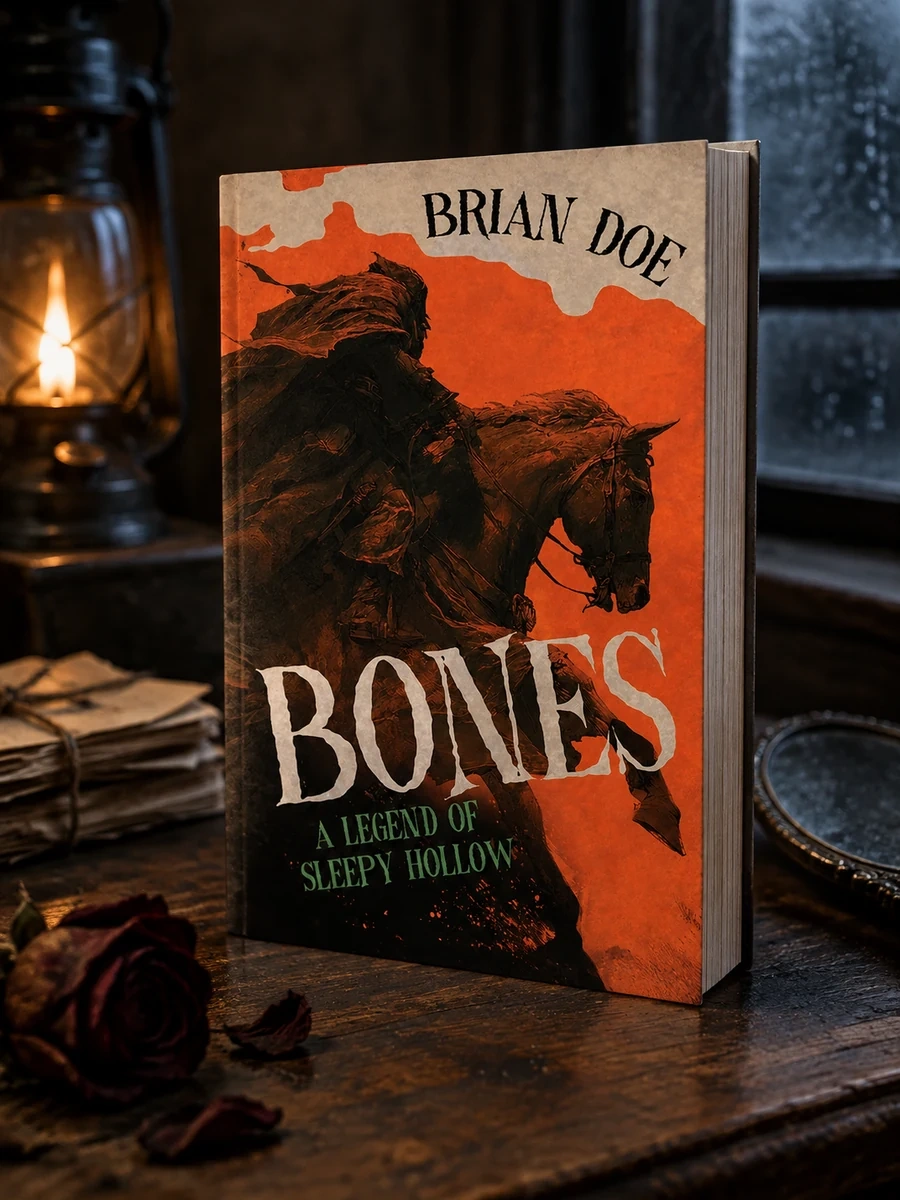
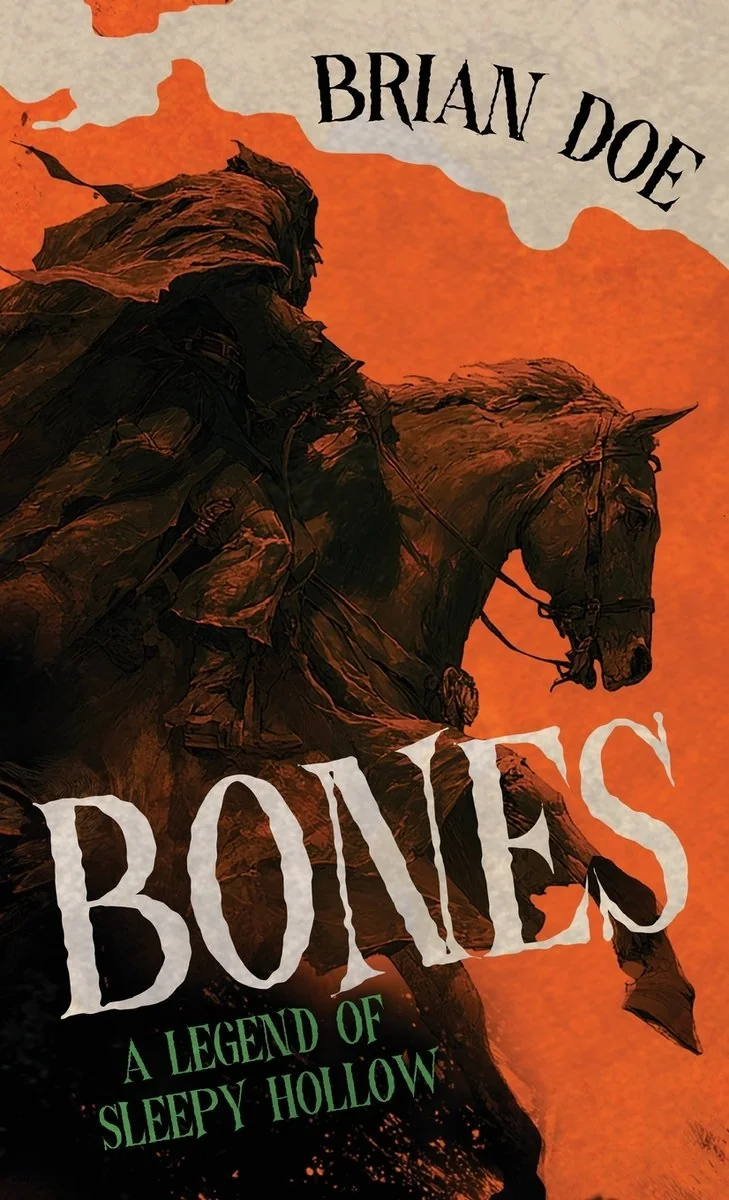
Bones: A Legend of Sleepy Hollow
A dark reimagining of the Headless Horseman legend focusing on Brom Bones.
This novel shifts focus from the missing schoolteacher to the man accused of his murder. Brom Bones faces daily agony in his marriage to Katrina Van Tassel. Their relationship is strained by neglect and six children. Aucker Van Acker, a young boy, believes he saw Brom plant the body under a bridge. His nightmares compel him to unload his conscience. This act sets off a harrowing plot to erase Brom from existence. The Headless Horseman serves as the instrument of this dreadful revenge. Sleepy Hollow becomes a place of trembling fear. The story explores how spite and misery can manifest into supernatural horror. It is not a simple ghost story but a study of guilt and consequence.
This work draws on the American gothic tradition established by Washington Irving’s Sleepy Hollow legend. It reinterprets the folklore surrounding the Headless Horseman for a contemporary audience. The narrative is published by Irving, linking it to its literary roots.


📝 Description: Bones: A Legend of Sleepy Hollow
💎 Our verdict on Bones: A Legend of Sleepy Hollow
📖 Why choose it
Why this book is worth reading
Readers who appreciate dark, character-driven horror will find this novel compelling as it explores the corrosive nature of guilt and marital strife. It suits those interested in twisted retellings of folklore where supernatural elements serve as metaphors for psychological deterioration. The book offers a chilling study of consequence, appealing to audiences who prefer atmospheric dread over sensationalism. By focusing on Brom Bones' internal agony, it provides a unique perspective on a familiar legend, making it ideal for fans of literary horror that examines how past sins manifest in terrifying ways.
⭐ Reader reviews
Reader rating
Brian Doe delivers a chilling account of guilt and supernatural retribution by centering the Headless Horseman legend on Brom Bones. The narrative effectively builds tension through Brom’s miserable marriage and the haunting confession of young Aucker Van Acker. Doe avoids sensationalism, opting instead for psychological dread that examines how spite manifests into horror. This approach suits readers who enjoy dark twists on folklore and character-driven stories. However, those seeking a faithful retelling of Irving’s original may find the focus on personal misery too narrow. The text successfully merges traditional gothic themes with modern psychological analysis, creating a tense exploration of consequence. It is a strong entry for fans of atmospheric horror that prioritizes internal conflict over external action.
You might also like
See more →




Have a question about this item?
Ask about the edition, condition, delivery or anything else — we reply by email or phone, usually within a day.
