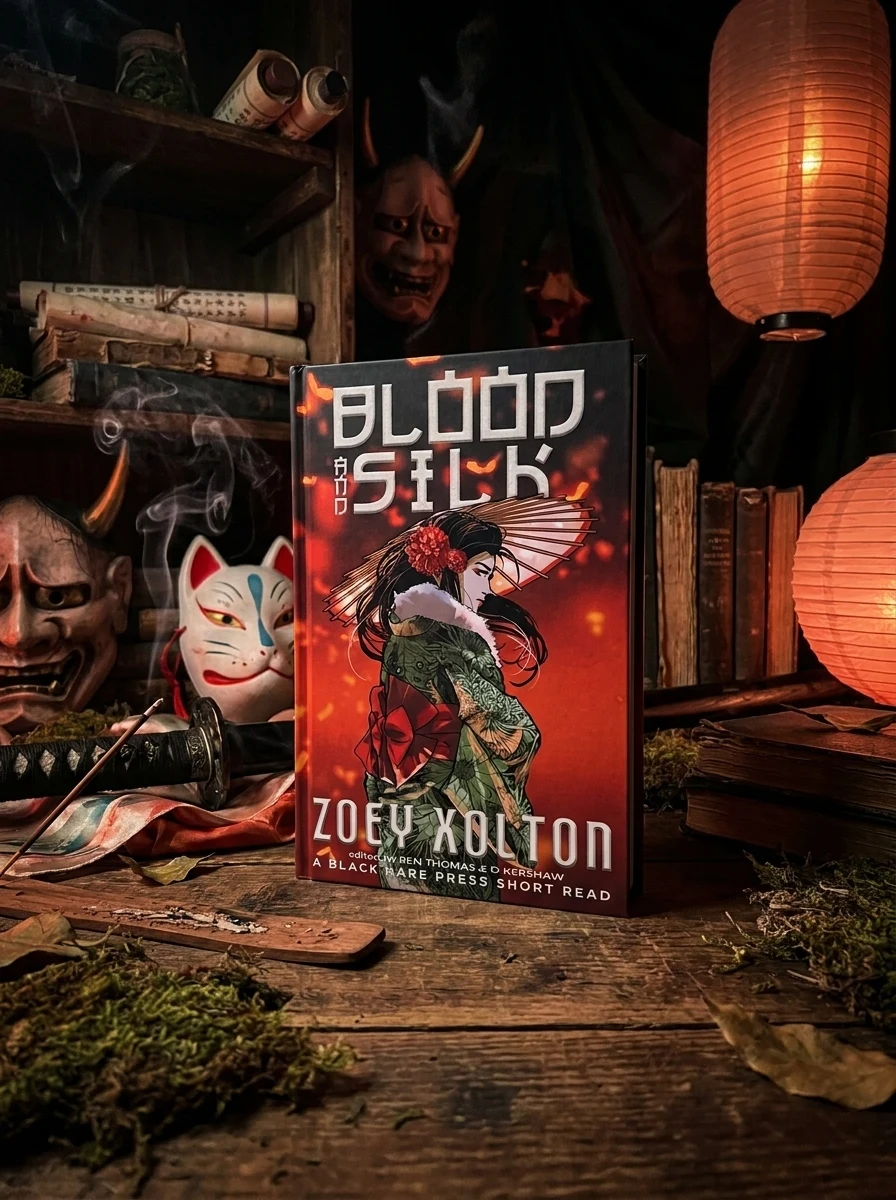

Blood and Silk
A novel about a farmer's son facing real yokai in Edo period Japan.
Takashi leaves his farming family for wealth and marriage, ignoring his mother's warning. He enters Edo Japan under the Tokugawa Shogunate, where social order is rigid yet culture thrives. The protagonist discovers that yokai are not myths but lethal realities. Xolton uses this premise to explore themes of deception and survival in a society ruled by three hundred Daimyo. The narrative focuses on the consequences of straying from established paths. It provides a horror perspective on historical isolationism. The story highlights the gap between Takashi's humble beginnings and the dangerous opportunities he pursues. Readers encounter a world where beauty hides deadly intent.
The book is set in Edo period Japan under the Tokugawa Shogunate. This era featured strict social order and isolationist policies while supporting three hundred Daimyo. The setting emphasizes the flourishing of arts and culture amidst political control, creating a backdrop for supernatural events.


📝 Description: Blood and Silk
💎 Our verdict on Blood and Silk
📖 Why choose it
Why this book is worth reading
Readers fascinated by atmospheric horror rooted in specific historical contexts will find this narrative compelling. It appeals to those interested in the intersection of Japanese folklore and societal critique, offering a perspective on how deception operates within rigid class structures. The book is ideal for audiences who enjoy psychological dread over fast-paced action, as it prioritizes the slow realization that lethal beauty masks danger. Fans of gothic traditions where social order creates terror will appreciate the exploration of consequences from straying from established paths. It serves those seeking a grounded look at period fears rather than modern settings.
⭐ Reader reviews
Reader rating
Xolton effectively blends historical isolationism with supernatural threats, presenting yokai as tangible obstacles rather than mere myths. The narrative excels in depicting the stark contrast between Takashi’s humble farming roots and the deceptive elegance of Edo society. By focusing on the gap between appearance and lethal reality, the story creates a persistent sense of unease. This approach suits readers who prefer period drama and cultural specificity over modern conveniences or rapid action sequences. The work stands out for its grounded examination of social hierarchy and the peril inherent in pursuing wealth and marriage beyond one’s station. It offers a chilling reminder that in this world, beauty often conceals deadly intent.
📖 Read on the blog
🏛 Books from this publisher Blackharepress








You might also like
See more →



Have a question about this item?
Ask about the edition, condition, delivery or anything else — we reply by email or phone, usually within a day.
