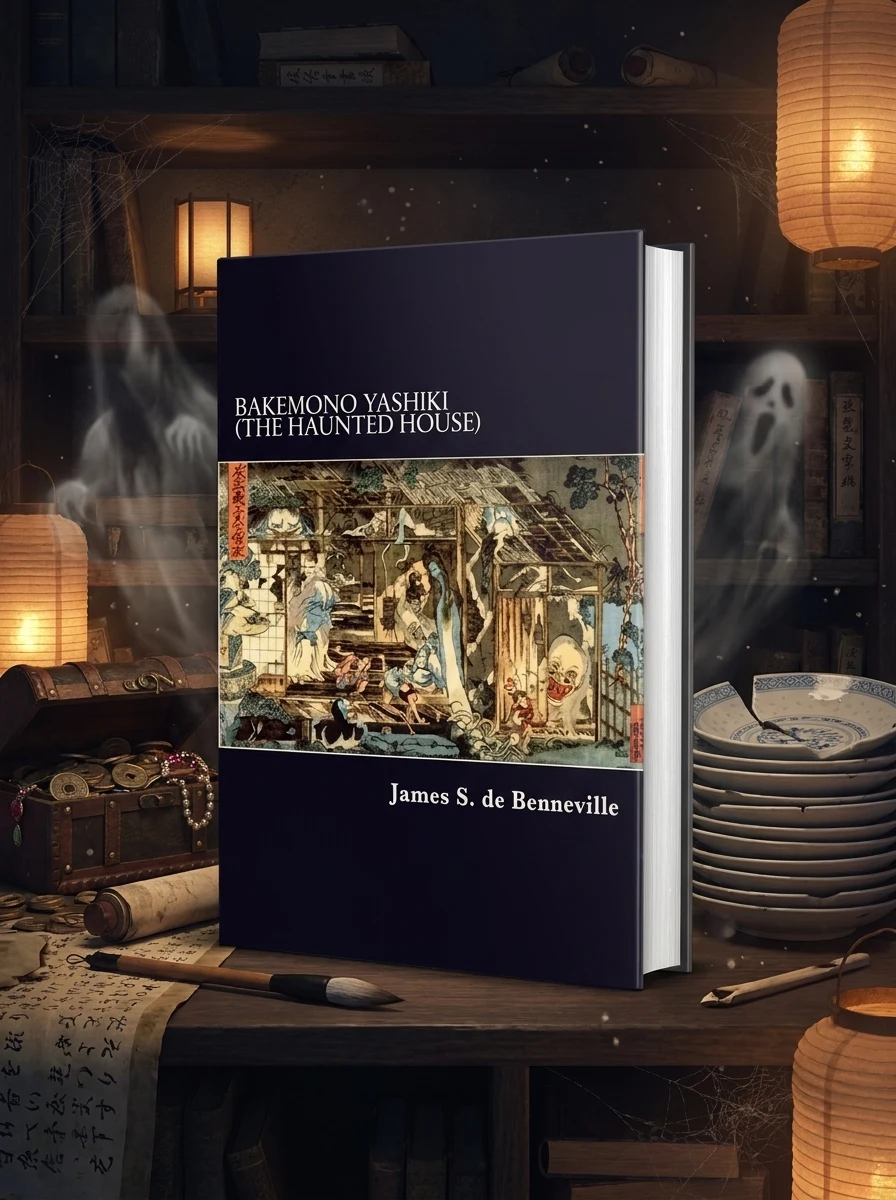
Bakemono Yashiki (The Haunted House): Tales of the Tokugawa II
A collection of Japanese ghost stories compiled from James S. de Benneville's research.
Struik curates tales that reflect the social and spiritual anxieties of the Tokugawa era. The narratives focus on the intersection of the living and the dead, often triggered by moral failings or unresolved grievances. De Benneville’s original fieldwork provides the foundation for these accounts, which are presented here in a format accessible to English speakers. The stories do not rely on jump scares but rather on the lingering unease of broken social contracts and the persistence of memory beyond death. Okiku’s story illustrates how reputation can be destroyed by a single accusation, while the tale of the Dish Mansion at Bancho shows how love can turn into resentment when hindered by societal barriers. The collection serves as an archive of these specific cultural fears.
The stories originate from Japan during the Tokugawa period, a time of strict social hierarchy and distinct folk traditions. James S. de Benneville collected these narratives while living in the country, capturing local beliefs about the supernatural. The collection reflects the specific cultural attitudes toward honor, duty, and the afterlife prevalent in that historical era.


📝 Description: Bakemono Yashiki (The Haunted House): Tales of the Tokugawa II
💎 Our verdict on Bakemono Yashiki (The Haunted House): Tales of the Tokugawa II
📖 Why choose it
Why this book is worth reading
Readers interested in cross-cultural horror traditions and gothic literature will find this collection a valuable resource for understanding the intersection of the living and the dead. It appeals to those who appreciate classic ghost stories rooted in specific historical contexts rather than generic scares. The book offers a unique perspective on how moral failings and unresolved grievances manifest as supernatural events, providing insight into broken social contracts. By presenting de Benneville’s fieldwork in an accessible format, it allows English-speaking audiences to engage with the lingering unease of Japanese folklore without losing the original cultural specificity.
⭐ Reader reviews
Reader rating
Struik curates these narratives with a focus on the persistence of memory beyond death, avoiding jump scares in favor of psychological depth. The collection effectively highlights themes of familial duty and social stratification, as seen in the tales of Okiku and the Dish Mansion. It succeeds as an archive of specific cultural fears, ensuring readers understand the historical context behind each supernatural event. This approach makes it ideal for scholars of folklore and fans of atmospheric horror who seek substance over shock value.