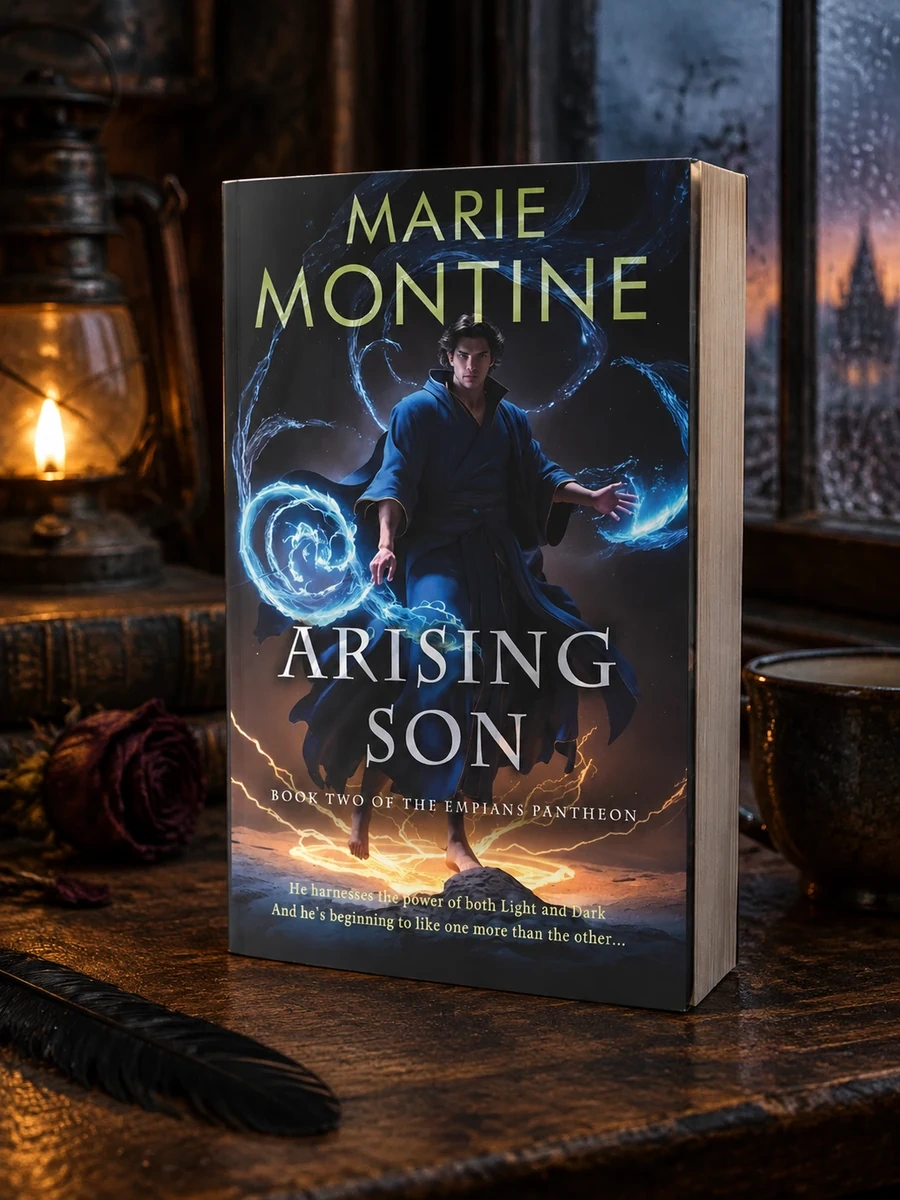
Arising Son
Ryan battles inner darkness in this supernatural sequel set after the Great War.
This novel serves as the second entry in The Empians Pantheon series. It takes place two decades after the events of Mourning Grey. Ryan faces a crisis that triggers his destructive potential. His healing gifts contrast sharply with his capacity for annihilation. He must confront the source of this darkness. The plot reveals secrets regarding both parents. This discovery reshapes his understanding of his identity. The narrative emphasizes the burden of power. It explores how past wars influence present conflicts. Ryan's quest for help drives the story forward. The book examines the duality of human nature through a supernatural lens. It asks whether one can control their inherent darkness. The resolution depends on truth and acceptance. Montine uses this framework to discuss legacy and fate.
The story is part of The Empians Pantheon series. It follows Mourning Grey by twenty years. The setting references the Great War. This context shapes the characters' experiences. The narrative draws on supernatural fiction traditions. It blends personal drama with magical elements. The work reflects on the long-term effects of conflict.


📝 Description: Arising Son
💎 Our verdict on Arising Son
📖 Why choose it
Why this book is worth reading
Readers who enjoy complex character studies within supernatural frameworks will find this compelling. It appeals to those interested in the duality of human nature, specifically how healing and destruction coexist. Fans of psychological horror that delve into family secrets and inherited fate will appreciate the exploration of Ryan's internal struggle. The book offers a serious examination of power as both gift and curse, suitable for audiences seeking depth over lighthearted entertainment.
⭐ Reader reviews
Reader rating
Montine delivers a fearless descent into darkness, balancing Ryan’s healing gifts with his capacity for annihilation. The narrative effectively uses the post-war setting to amplify themes of legacy and identity. While the tone remains consistently dark, it avoids gratuitous shock in favor of philosophical inquiry. This installment succeeds by grounding supernatural elements in emotional reality. It is best suited for readers who appreciate intricate plots involving hidden lineage and moral ambiguity. Those seeking a straightforward horror experience may find the introspective pacing challenging, but fans of gothic tragedy will find the resolution satisfying.
📖 Read on the blog
✍️ More books by this author Marie Montine


🏛 Books from this publisher Independently Published






You might also like
See more →
Have a question about this item?
Ask about the edition, condition, delivery or anything else — we reply by email or phone, usually within a day.
