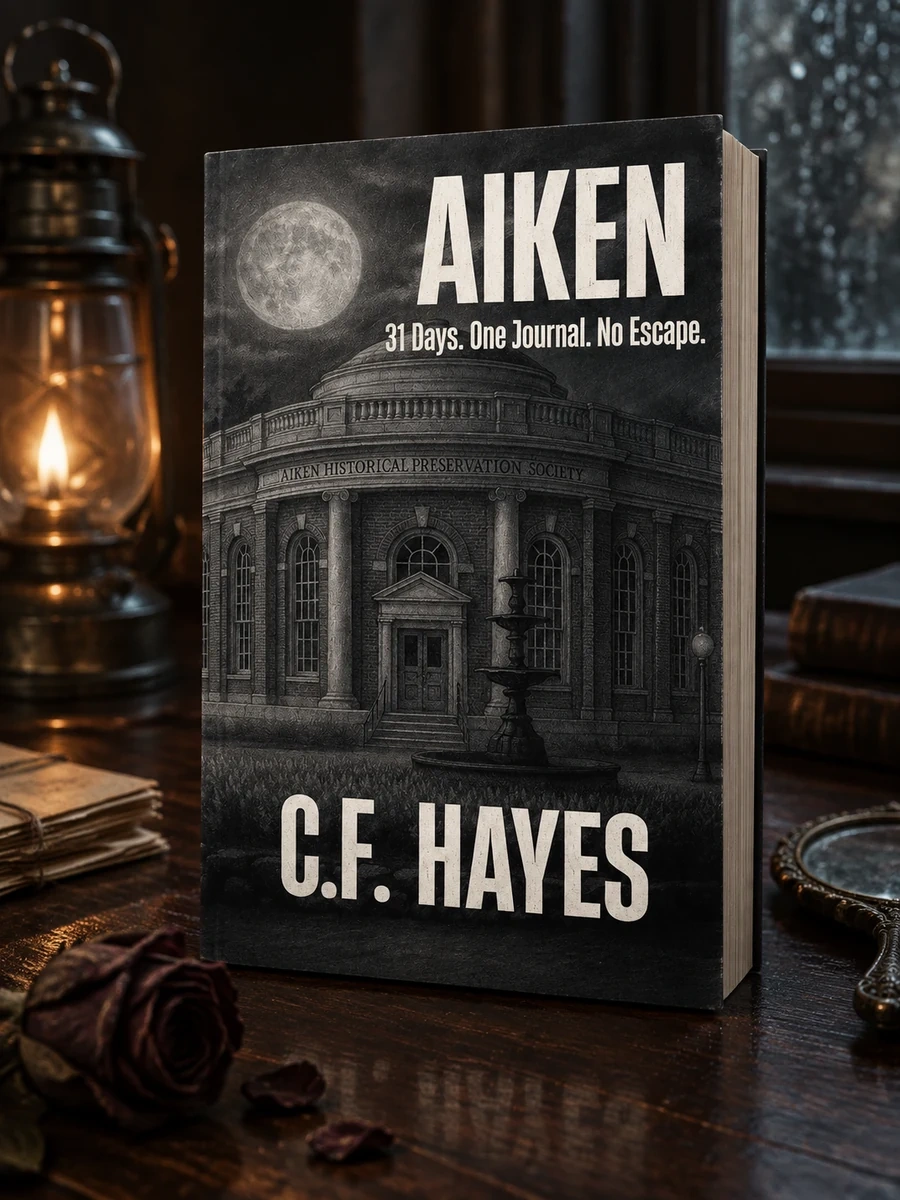
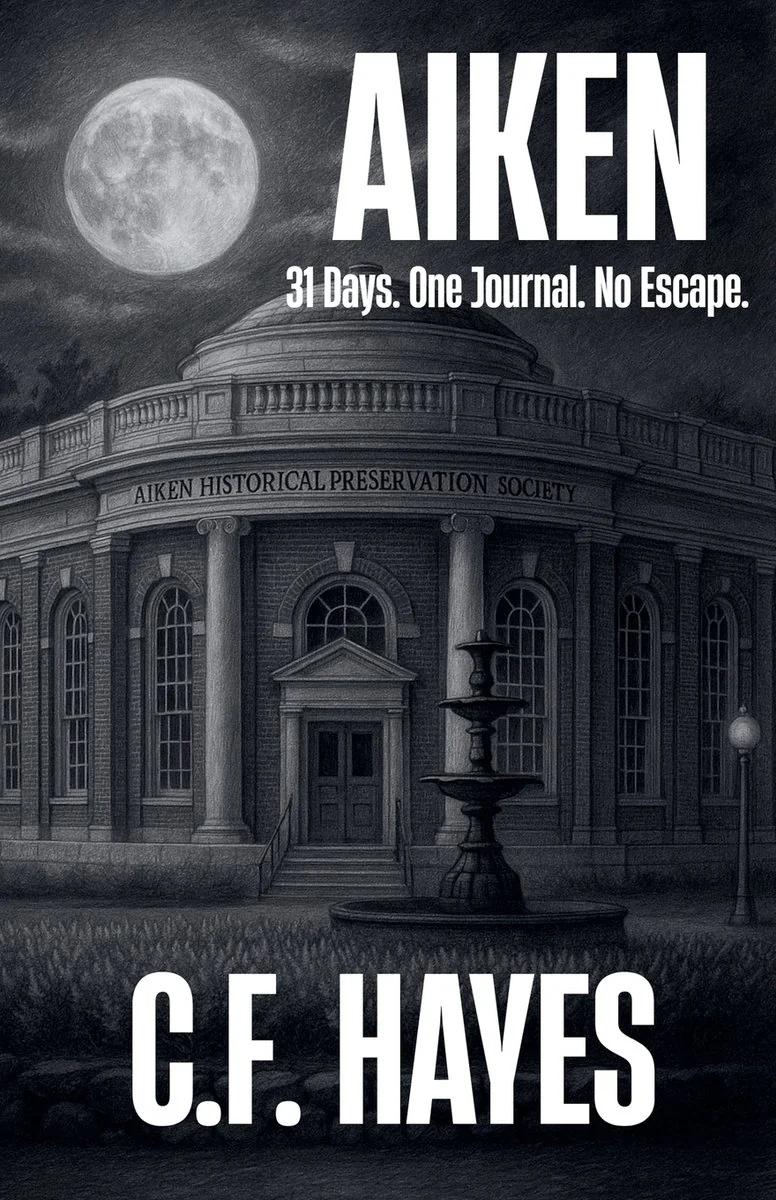
Aiken
A found journal of thirty-one days in a haunted South Carolina post office basement.
Sara Clayborne accepts a preservationist role in Aiken, South Carolina, anticipating historical research but encountering supernatural terror instead. Her workplace is located in the basement beneath the old post office. Immediate disturbances include auditory hallucinations, ceiling footsteps, and a man disappearing from above. Each evening, an unseen observer watches her via reflection. The journal format exposes an ancient entity aware of her identity. Hayes employs this structure to escalate tension across thirty-one days. The plot emphasizes mental deterioration over physical conflict. Readers experience Sara’s descent into fear through her personal logs. No clear resolution or escape is provided. The terror stems from isolation and the specific dangers inherent to the haunted location.
The book draws on Southern Gothic traditions, setting its narrative in Aiken, South Carolina. It utilizes the found journal format to explore themes of isolation and supernatural dread within a specific American regional context. The story is published by Platform & Teller LLC in 2025, continuing the lineage of atmospheric horror fiction.


📝 Description: Aiken
💎 Our verdict on Aiken
📖 Why choose it
Why this book is worth reading
Readers seeking atmospheric dread over visceral gore will find this novel deeply compelling. It appeals to those who enjoy psychological horror that emphasizes mental deterioration and isolation rather than physical conflict. The unique framing device of a found journal in a specific historical location offers an immersive experience for fans of gothic fiction and cosmic terror. Those interested in the slow, inevitable loss of sanity within a confined, haunted space will appreciate the escalating tension and the focus on auditory and visual disturbances that invade the protagonist's reality.
⭐ Reader reviews
Reader rating
Hayes masterfully constructs a sense of claustrophobic unease through Sara’s daily logs, effectively merging Southern Gothic aesthetics with psychological horror. The narrative excels in its subtle escalation of terror, using mundane workplace elements like reflections and ceiling noises to create profound dread. By focusing on mental unraveling rather than explicit violence, the book offers a sophisticated reading experience for enthusiasts of atmospheric tension. It suits readers who prefer slow-burn narratives where the environment itself becomes the antagonist. The lack of resolution adds to the lingering discomfort, making it a potent choice for those who appreciate ambiguity and the exploration of ancient, indifferent entities.
📖 Read on the blog
✍️ More books by this author C F Hayes


You might also like
See more →



Have a question about this item?
Ask about the edition, condition, delivery or anything else — we reply by email or phone, usually within a day.
