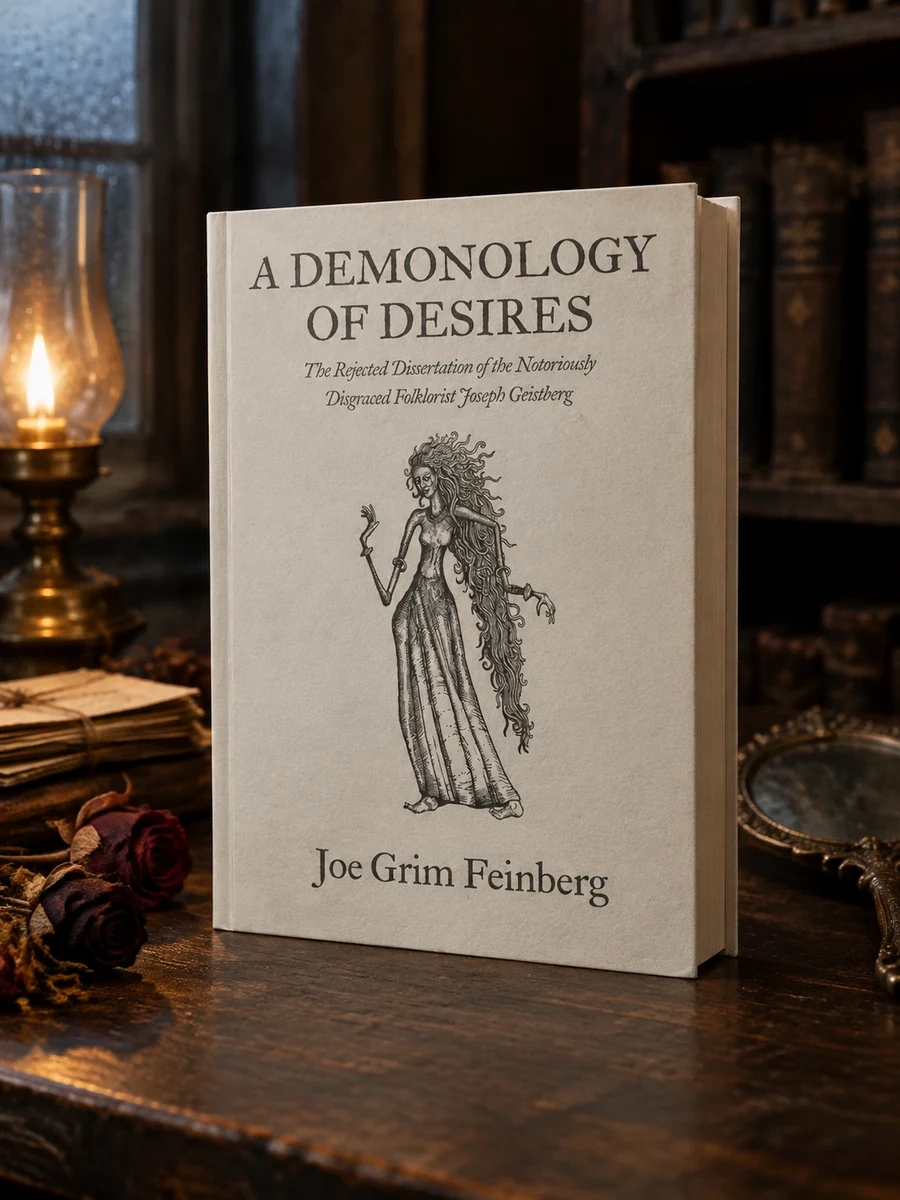
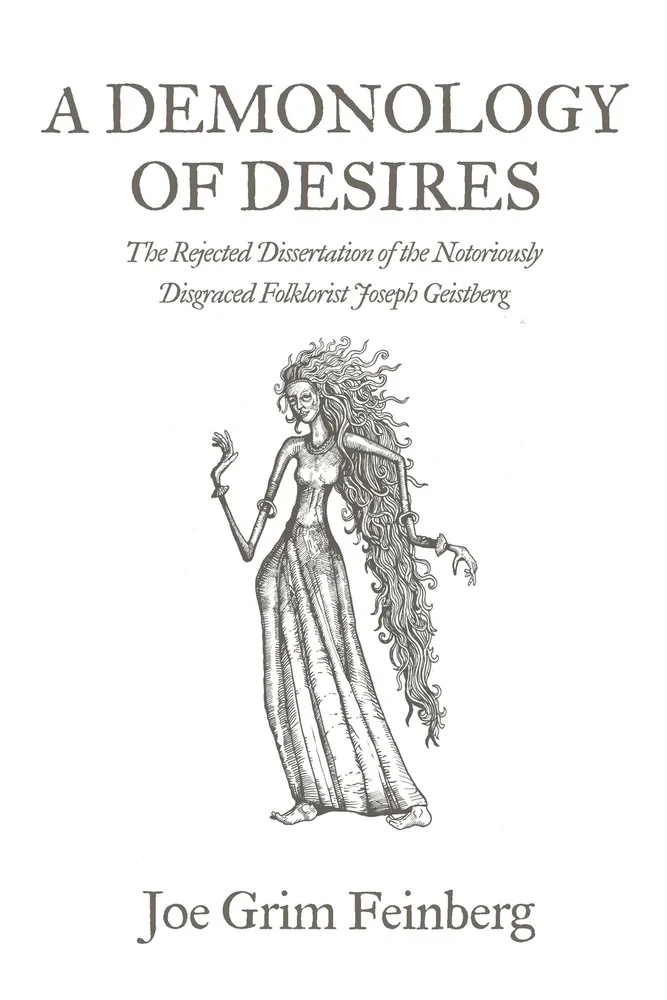
A Demonology of Desires
A fictional dissertation by Joseph Geistberg exploring global demons and hags.
This work functions as a thriller debut that examines the life of Joseph Geistberg through his rejected academic papers. The story begins with the discovery of these documents in his apartment on December 31, 2022. Feinberg constructs a narrative where Geistberg claims to have encountered pale mountain demons in Communist China and ghostly sky spirits in the South Pacific. The text also includes reports of suffocating hags in Slovakian villages and nefarious experiments beneath Prague. A key mystery involves the repeated appearance of women with identical names in these accounts. The author uses these specific locations and entities to create a cohesive yet unsettling atmosphere. The book does not offer easy answers about the truth of these claims but rather presents them as part of Geistberg's complex legacy.
The narrative draws on folklore from Communist China, the South Pacific, Slovakian villages, and Prague. It is set against the backdrop of a disgraced folklorist's academic career, published by Sul Books in 2025.


📝 Description: A Demonology of Desires
💎 Our verdict on A Demonology of Desires
📖 Why choose it
Why this book is worth reading
Readers who appreciate the intersection of folkloric study and psychological horror will find this text rewarding. It offers a unique perspective on global demons, from pale mountain spirits to suffocating hags, without providing easy answers about their reality. The fragmented structure appeals to those interested in the anatomy of obsession and the unreliable narrator. It is ideal for audiences who enjoy atmospheric unease over traditional plot resolution. The book challenges boundaries between research and confession, making it a compelling choice for enthusiasts of cosmic and psychological horror who seek depth and complexity in their reading material.
⭐ Reader reviews
Reader rating
Feinberg constructs a cohesive yet unsettling atmosphere through disparate reports of global folklore. The narrative effectively blurs the line between scholarly research and personal delusion, particularly through the recurring motif of women with identical names. While the fragmented nature may challenge readers seeking conventional horror plots, it succeeds in building deep unease. The specific details regarding Slovakian hags and Prague experiments create a rich tapestry of dread. This debut is best suited for those who enjoy exploring psychological unraveling alongside supernatural elements. It offers a sophisticated examination of obsession that rewards patience with its atmospheric depth and intellectual engagement with mythological traditions.
You might also like
See more →







Have a question about this item?
Ask about the edition, condition, delivery or anything else — we reply by email or phone, usually within a day.
