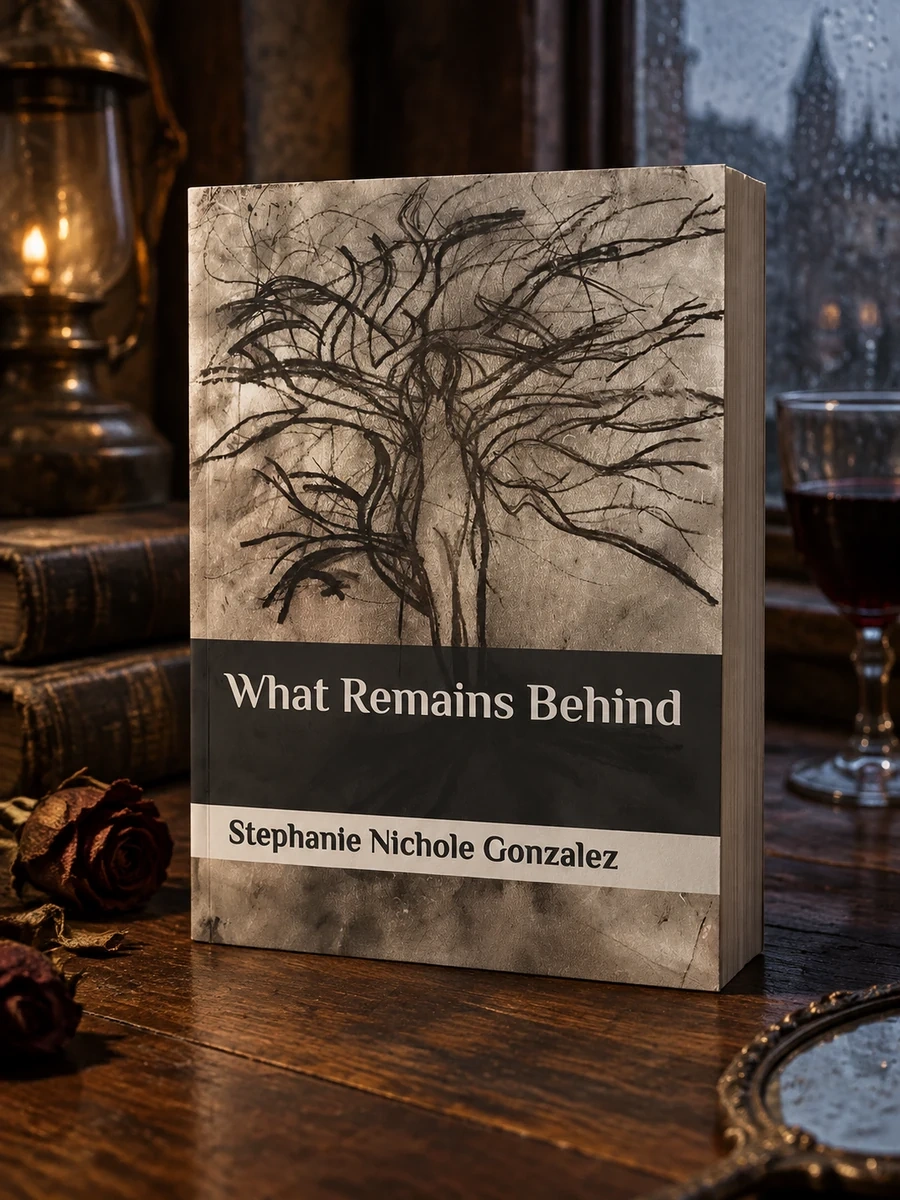
What Remains Behind
A woman escapes her past only to face haunting tragedies in a new Connecticut town.
Amery Watson carries the weight of a difficult history, including early abandonment and the death of her mother. Her attempt to restart life in Avon is disrupted by recurring tragedy. The text investigates if these events stem from madness or supernatural forces. Gonzalez uses the setting of Connecticut to ground the horror in a familiar American landscape. The story does not offer easy answers regarding Amery's sanity. It focuses on the lingering impact of trauma and the fear of the unknown. This approach appeals to readers who enjoy slow-burn psychological tension over jump scares.
The narrative is set in Avon, Connecticut, following a move from Los Angeles. It engages with American gothic traditions by placing supernatural dread within domestic spaces. The story reflects contemporary anxieties about mental health and the search for safety after trauma.


📝 Description: What Remains Behind
💎 Our verdict on What Remains Behind
📖 Why choose it
Why this book is worth reading
Readers who prefer slow-burn psychological tension over immediate jump scares will find this book rewarding. It appeals to those interested in the lingering impact of trauma and the fear of the unknown. The narrative offers a grounded exploration of grief, making it suitable for fans of gothic fiction who enjoy ambiguous endings. Those who appreciate horror that questions sanity versus supernatural forces will engage deeply with Amery’s internal struggle. The book does not provide easy answers, inviting readers to sit with discomfort and uncertainty. It is ideal for audiences seeking atmospheric dread rooted in personal history rather than external monsters.
⭐ Reader reviews
Reader rating
Gonzalez effectively grounds cosmic and psychological horror in the familiar landscape of Connecticut, creating a sense of unease that feels both immediate and timeless. The narrative structure mirrors Amery’s internal turmoil through external tragic events, blurring the line between madness and haunting. This approach suits readers who enjoy gothic fiction and ghost stories where the past refuses to stay buried. The text avoids offering easy resolutions, which may frustrate some but will resonate with those valuing atmospheric depth. It is a compelling study of loss, focusing on how grief manifests in the present. The horror stems from the intersection of personal history and supernatural dread, making it a strong choice for fans of literary horror who prefer ambiguity over clarity.
📖 Read on the blog
🏛 Books from this publisher Independently Published








You might also like
See more →
Have a question about this item?
Ask about the edition, condition, delivery or anything else — we reply by email or phone, usually within a day.
