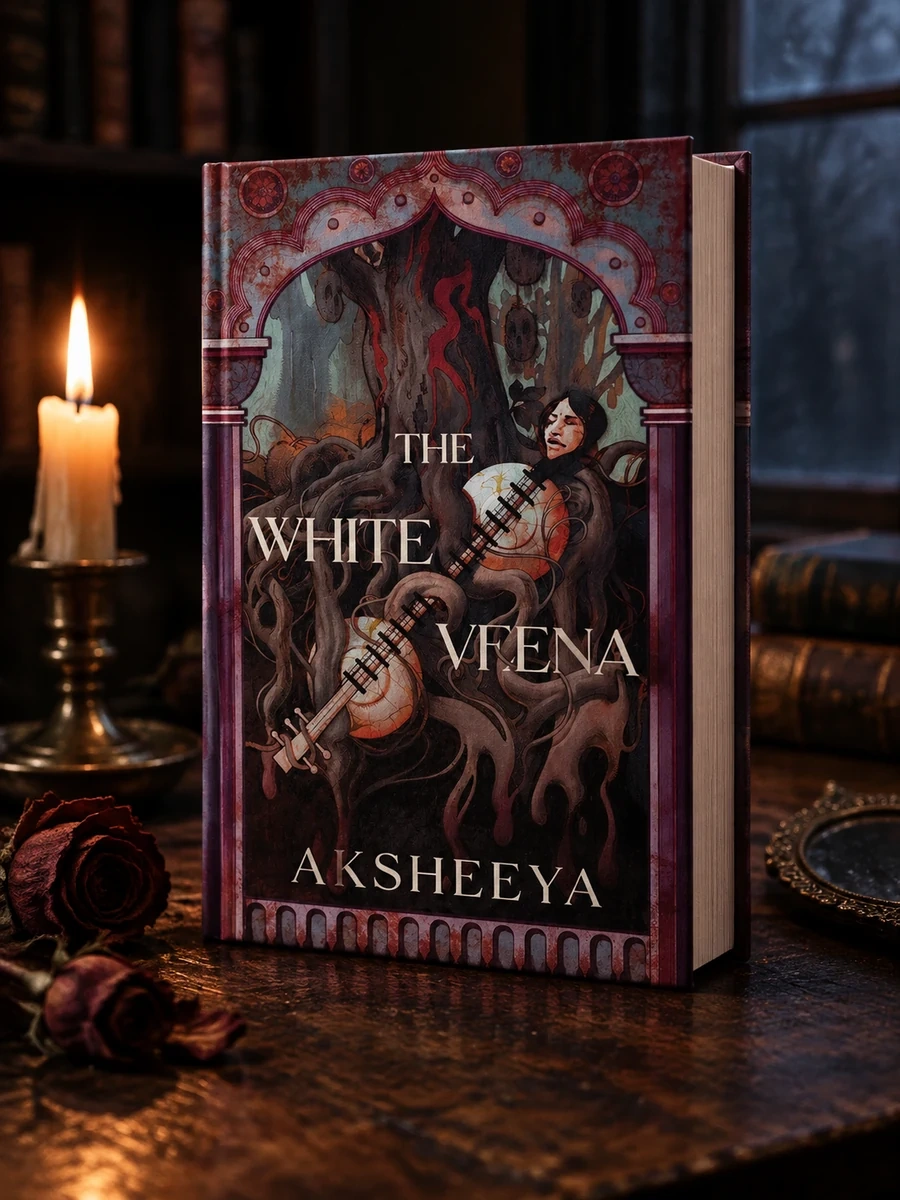
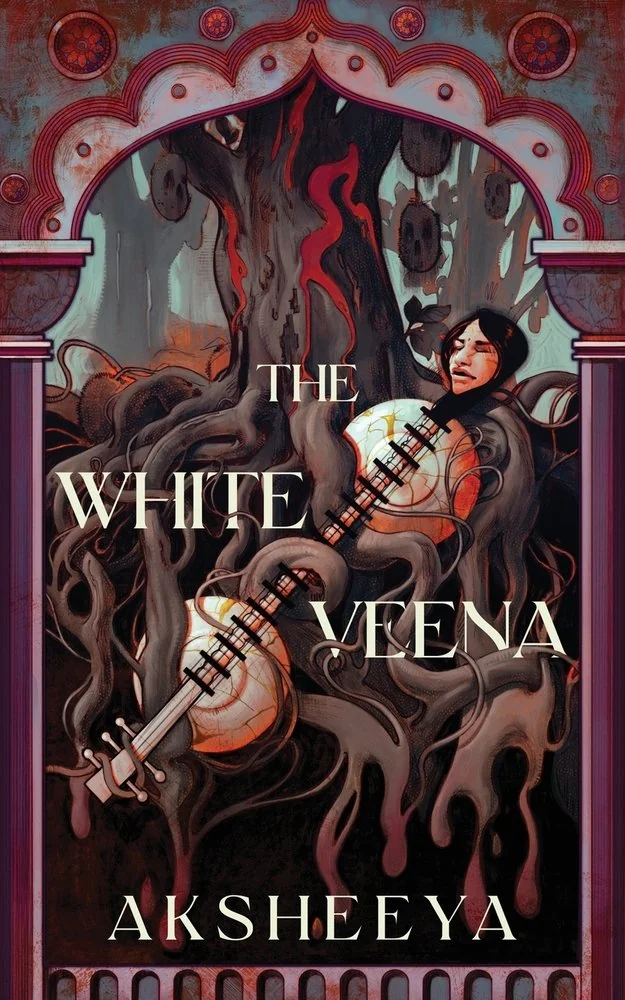
The White Veena
A novel about a carved white veena and its bloody history.
This work explores how a single object can bridge the gap between the present and a violent past. The protagonist’s fascination with the veena leads to revelations about love and loss. Aksheeya uses the instrument as a focal point for examining the costs of artistic creation. The story avoids traditional exposition, relying instead on the protagonist’s sensory experiences to convey history. This method allows the reader to feel the weight of the past rather than simply hearing about it.
The story is set in Thanjavur, a city with deep musical traditions. It draws on local folklore and the history of classical instruments to create a sense of place. The narrative reflects the cultural significance of music in South Indian society while subverting it through supernatural horror.


📝 Description: The White Veena
💎 Our verdict on The White Veena
📖 Why choose it
Why this book is worth reading
Readers who appreciate atmospheric gothic fiction and supernatural tales will find this work deeply engaging due to its unique approach to historical revelation. The book is ideal for those interested in exploring the intersection of artistic creation and personal tragedy, as it uses a singular object to bridge the gap between present fascination and violent past. By relying on sensory experiences rather than traditional exposition, the narrative allows readers to feel the weight of history intimately. It suits audiences seeking lighthearted accounts less than those drawn to dark tones, offering a profound examination of how objects carry emotional burdens. The story’s focus on intense romance and musical passion provides a compelling entry point for fans of psychological horror who value sensory immersion over linear plotting.
⭐ Reader reviews
Reader rating
Aksheeya delivers a haunting exploration of art born from suffering through the lens of a carved white veena. The prose excels in conveying the emotional impact of dreams and sensory details, creating an intimate connection with the subject matter without resorting to heavy exposition. This method effectively grounds supernatural elements in the tangible setting of Thanjavur, enhancing the gothic atmosphere. The narrative’s refusal to offer a linear historical record invites readers on a personal journey into the past, making it particularly suitable for fans of psychological horror and ghost stories. While those seeking purely historical accounts may find the dark tone unsettling, enthusiasts of atmospheric storytelling will appreciate the vivid depiction of love, loss, and the bloody costs of artistic creation.
📖 Read on the blog
🏛 Books from this publisher Graveside Press







You might also like
See more →

Have a question about this item?
Ask about the edition, condition, delivery or anything else — we reply by email or phone, usually within a day.
