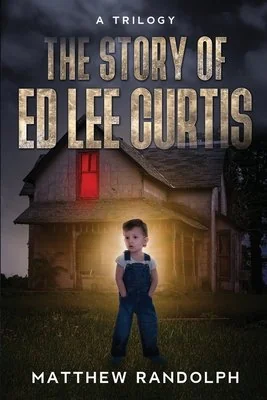
The Story Of Ed Lee Curtis
A consolidated trilogy exploring the psyche of a serial killer and his violent life.
Randolph combines three separate books into one manuscript to trace the development of Ed Lee Curtis from childhood trauma to criminal activity. The first part establishes his sociopathic nature through personal narration. The second part complicates this image by introducing romantic entanglements and psychological confusion. The third part places him in mob-related scenarios, culminating in a resolution that defies standard genre expectations. This structure allows for a comprehensive examination of a disturbed individual’s life choices and their consequences.
This work belongs to the American tradition of psychological horror fiction, focusing on the internal motivations of violent offenders rather than external supernatural threats. It draws on the trope of the disturbed protagonist, presenting a gritty, realistic look at criminal behavior and its origins.


📝 Description: The Story Of Ed Lee Curtis
💎 Our verdict on The Story Of Ed Lee Curtis
📖 Why choose it
Why this book is worth reading
Readers with a deep interest in criminal psychology and dark character studies will find this consolidated trilogy compelling. It offers a comprehensive examination of a disturbed individual’s life choices, tracing the development of Ed Lee Curtis from childhood trauma to violent activity. The narrative provides a first-person perspective that allows for an understanding of his sociopathic nature and reasoning. Those seeking to explore the complexities of a love-starved psychopath’s mind, rather than traditional horror tropes or supernatural elements, will appreciate this psychological thriller filled with unexpected twists and chaotic criminal underworld scenarios.
⭐ Reader reviews
Reader rating
Matthew del Randolph structures this collection as a complete trilogy, offering a thorough exploration of Ed Lee Curtis’s psyche through descriptive dialogue and personal narration. The work succeeds in detailing the circumstances driving his actions, moving from sociopathic origins to romantic entanglements and mob-related chaos. It serves best for readers interested in the trials of a violent offender and the intricacies of criminal psychology. While it lacks supernatural horror, its focus on human depravity provides a unique entry into dark character studies. The consolidated format allows for a continuous examination of his thought processes, making it a valuable resource for those who prefer psychological realism over genre conventions.