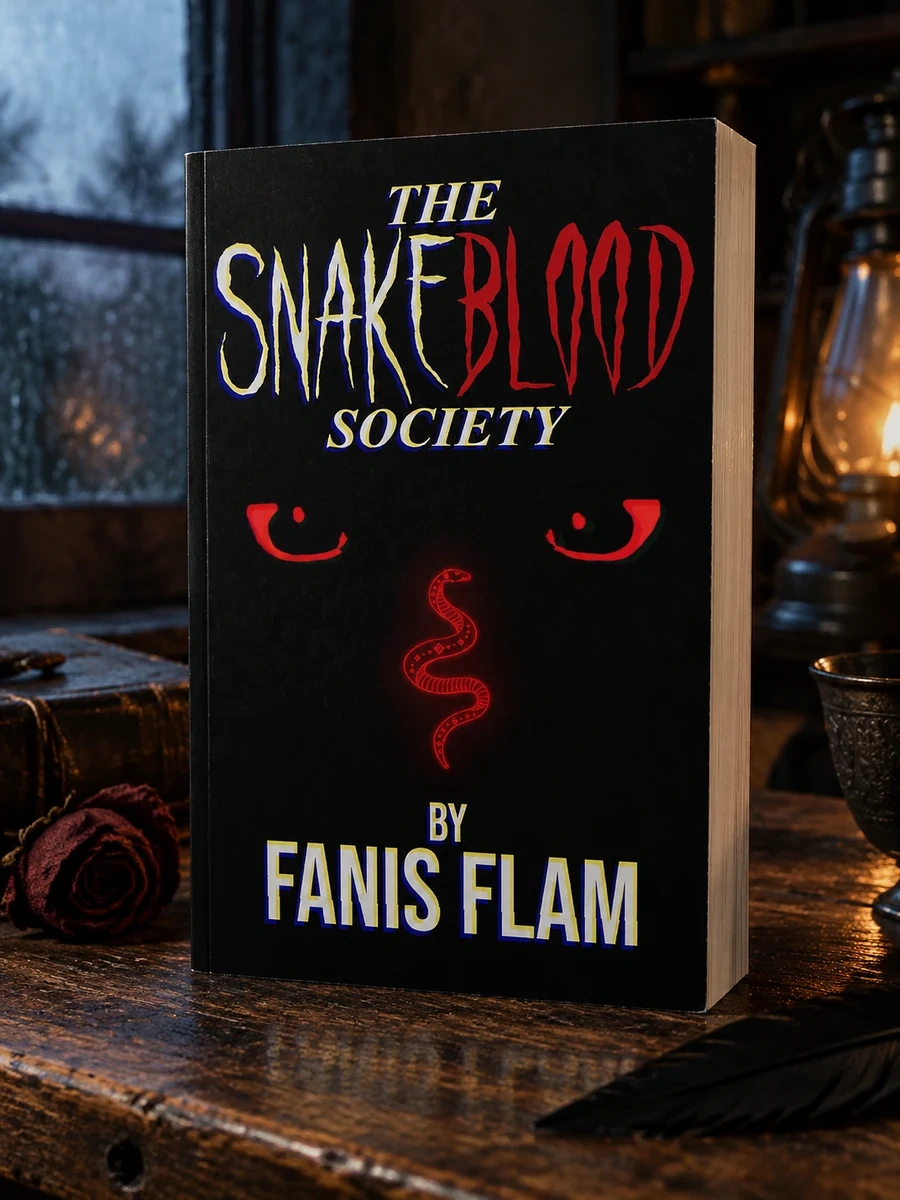

The Snakeblood Society
Nina Wilson fights the Snakeblood Society to stop a mind-slaving conspiracy in Black Rose City.
This novel follows Nina Wilson as she battles a cult and a stalker named Mr. One. The plot centers on her quest to understand her past and abilities while preventing a city-wide mental enslavement plan. Rebel uses the setting of Black Rose City to explore themes of control and identity. The narrative structure mirrors Nina's fracturing sanity, creating a tense atmosphere. The book is suitable for readers who enjoy psychological horror and dystopian conspiracies.
The story is set in Black Rose City, a location defined by power outages and chaos. It draws on the traditions of psychological horror and dystopian fiction. The narrative continues the timeline established in Alex Raven: Ghosts Don't Lie. This places the work within a specific era of supernatural thriller literature focused on urban decay and mental instability.


📝 Description: The Snakeblood Society
💎 Our verdict on The Snakeblood Society
📖 Why choose it
Why this book is worth reading
Readers who enjoy psychological horror and dystopian conspiracies will find this book compelling due to its intense exploration of control and identity. Nina Wilson’s battle against the Snakeblood Society offers a tense atmosphere where sanity is constantly under siege, appealing to those who like mind-bending thrillers. The narrative structure mirrors the protagonist's fracturing psyche, creating a visceral experience for fans of dark fantasy and true crime adjacent narratives. It suits audiences who prefer brutal confrontations over romanticized horror, providing a gritty look at mental enslavement without offering easy resolutions or comfort.
⭐ Reader reviews
Reader rating
Rebel constructs a potent narrative where identity becomes a battlefield against a cult seeking city-wide mental enslavement. The text excels in maintaining tension between Nina’s fractured sanity and the external threat of the Snakeblood Society, creating a claustrophobic atmosphere that mirrors her psychological deterioration. By avoiding romanticization, the author presents a brutal confrontation with control, appealing strongly to fans of psychological horror. While it may not suit those preferring traditional ghost stories without political undertones, it offers a compelling descent into the darkest corners of the human mind for readers invested in dystopian conspiracies and the erosion of self.