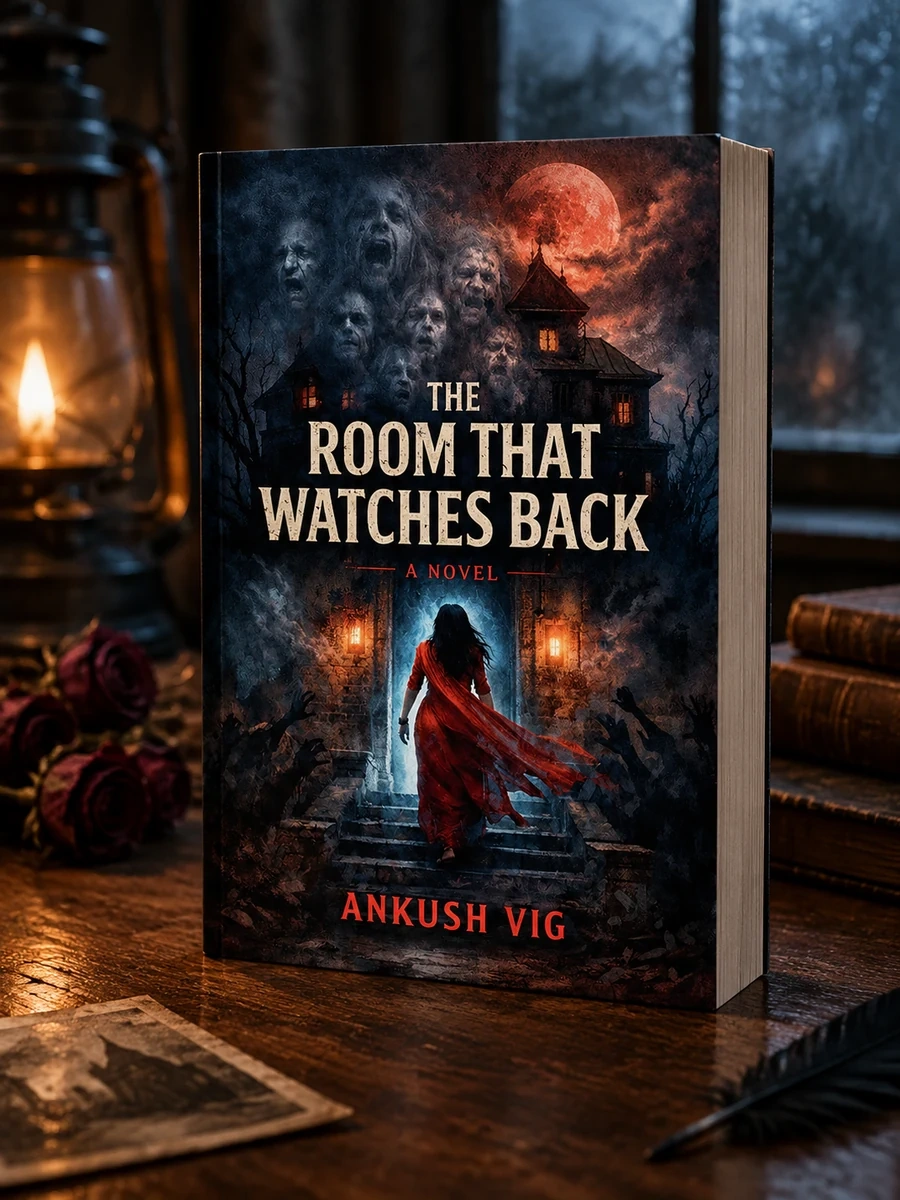
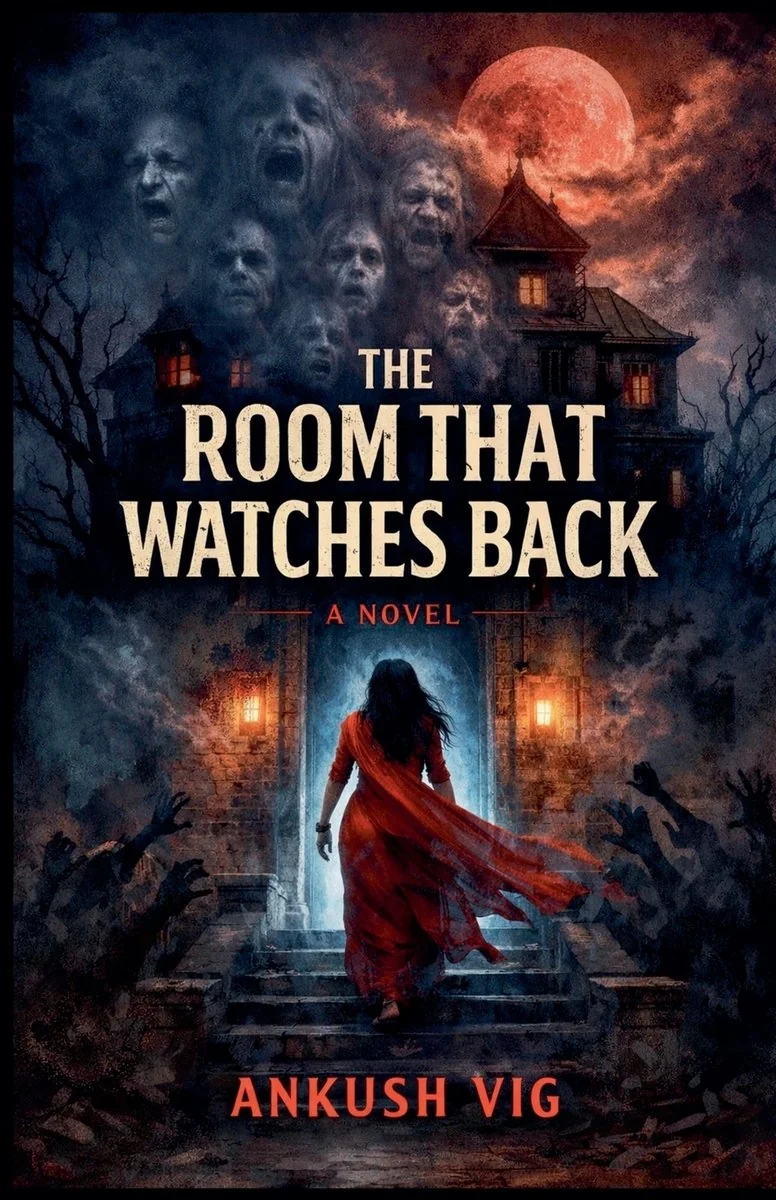
The Room That Watches Back
A house remembers a ritual that demands Meera's final sacrifice.
The story tracks Rajeev and Meera as they confront a century-old property that waits for them. The narrative highlights specific details such as sixty whispering souls beneath the foundation and a hymn left unfinished. Vig draws on traditions of haunted houses where the structure itself is the antagonist. The plot unfolds through the son's interactions with unseen entities and the mother's involuntary humming. This approach creates a sense of dread rooted in family dynamics and past sins. The book examines how guilt reincarnates and binds individuals to specific locations. Readers looking for detailed accounts of supernatural intrusion will find this compelling.
The narrative is set in a century-old house that holds memories from sixty years ago. It draws on the tradition of haunted homes where architecture retains trauma. The story focuses on a ritual chamber and chains beneath the foundation, suggesting a specific historical context for the haunting.


📝 Description: The Room That Watches Back
💎 Our verdict on The Room That Watches Back
📖 Why choose it
Why this book is worth reading
Readers seeking immersive domestic horror and tales of inescapable fate will find this narrative compelling. The book appeals to those interested in the psychological weight of guilt and the concept of reincarnation binding individuals to specific locations. It offers a distinct exploration of haunted spaces where architecture holds memory, providing a sense of dread rooted in family dynamics. Those who enjoy detailed accounts of supernatural intrusion within a slow-burn atmosphere will appreciate the focus on Meera’s involuntary humming and her son’s interactions with unseen entities. The text suits audiences who prefer atmospheric tension over fast-paced action without psychological depth.
⭐ Reader reviews
Reader rating
Vig constructs a compelling narrative where the house itself is the primary antagonist, waiting patiently for its next victim. The work excels in establishing dread through specific phenomena like walls retaining memories and chains moving at night, rather than relying on jump scares. By linking Meera’s personal history to the property’s demands, Vig creates a sense of inevitable doom that resonates with fans of psychological horror. The exploration of how guilt reincarnates adds depth to the standard haunted house trope. This book is best suited for readers who appreciate atmospheric tension and thematic weight over quick thrills.
📖 Read on the blog
✍️ More books by this author Ankush Vig


You might also like
See more →


Have a question about this item?
Ask about the edition, condition, delivery or anything else — we reply by email or phone, usually within a day.
