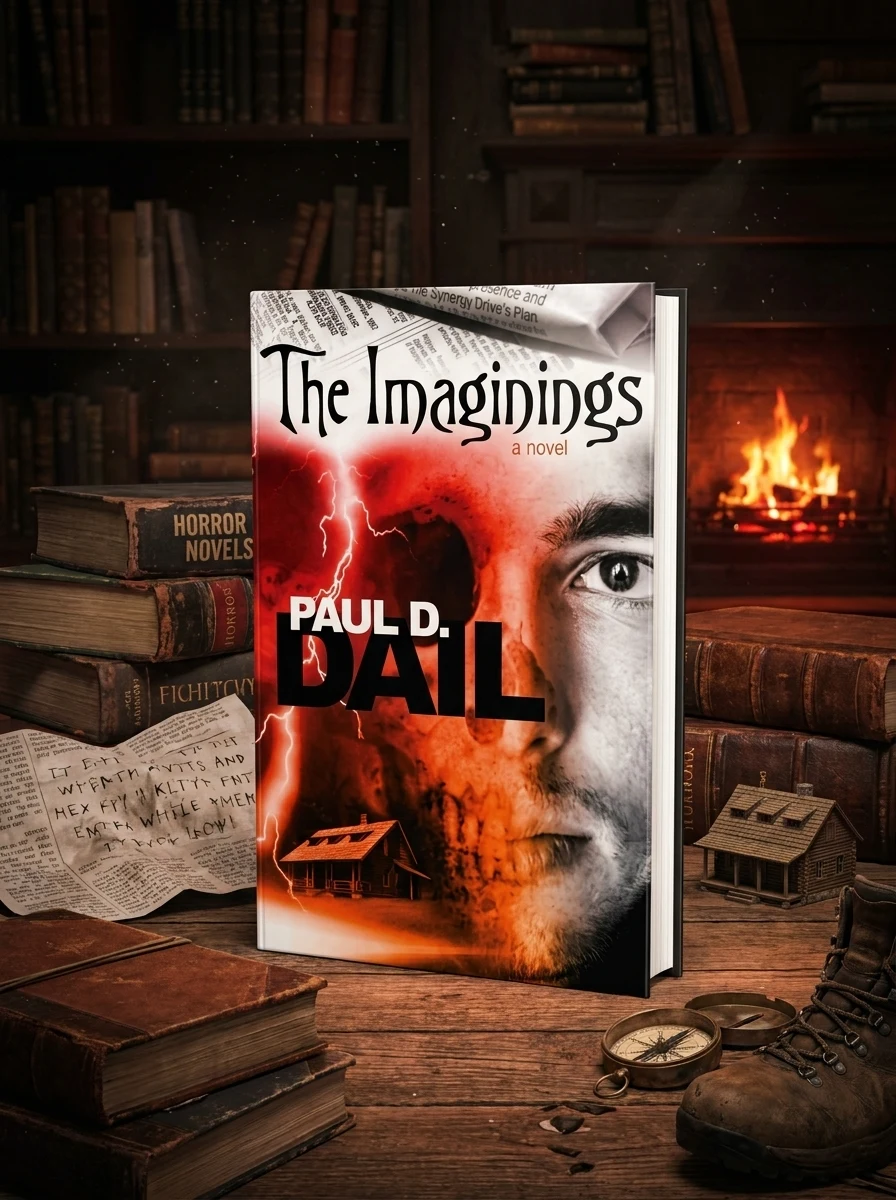
The Imaginings
A man haunted by his brother's suicide fights a supernatural entity threatening a stranger's daughter.
David Blithe flees after meeting the entity that drove his brother Peter to kill himself. He seeks shelter at the Marrick family's Montana home, where his connection to their daughter Jeannie becomes apparent. The plot centers on David's fight against a malevolent power that endangers everyone around him. Dail examines how such experiences affect the mind and the effort required to stay sane when confronting an unknown evil.
Published by de Los Diablos Books, Inc. in 2014, this work fits within the contemporary American horror tradition. It draws on gothic themes of isolation and inherited guilt, placing modern characters in remote settings like Colorado mountains and Montana cabins to heighten the sense of vulnerability against unseen forces.


📝 Description: The Imaginings
💎 Our verdict on The Imaginings
📖 Why choose it
Why this book is worth reading
Readers who appreciate the intersection of deep personal trauma and supernatural dread will find this book compelling. It is ideal for those who prefer psychological terror over jump scares, offering a nuanced exploration of grief and madness. The narrative appeals to fans of remote-set mysteries where isolation amplifies fear. It suits those willing to navigate moral ambiguity and unresolved endings in pursuit of atmospheric tension. By focusing on the mind's struggle against an unknown evil, it provides a unique perspective for horror enthusiasts seeking substance alongside scare.
⭐ Reader reviews
Reader rating
Dail crafts a tense atmosphere where grief fuels supernatural conflict, effectively blurring the lines between psychological breakdown and genuine haunting. The remote Montana setting enhances the sense of isolation, making the protagonist's internal battle feel immediate and visceral. While the lack of clear answers may frustrate traditionalists, the book excels in its examination of sanity under duress. It is best suited for readers who value mood and character depth over plot resolution. The moral gray zone adds complexity, rewarding those who enjoy dissecting the nature of evil. Ultimately, it delivers a haunting experience that lingers long after the final page.
You might also like
See more →






Have a question about this item?
Ask about the edition, condition, delivery or anything else — we reply by email or phone, usually within a day.
