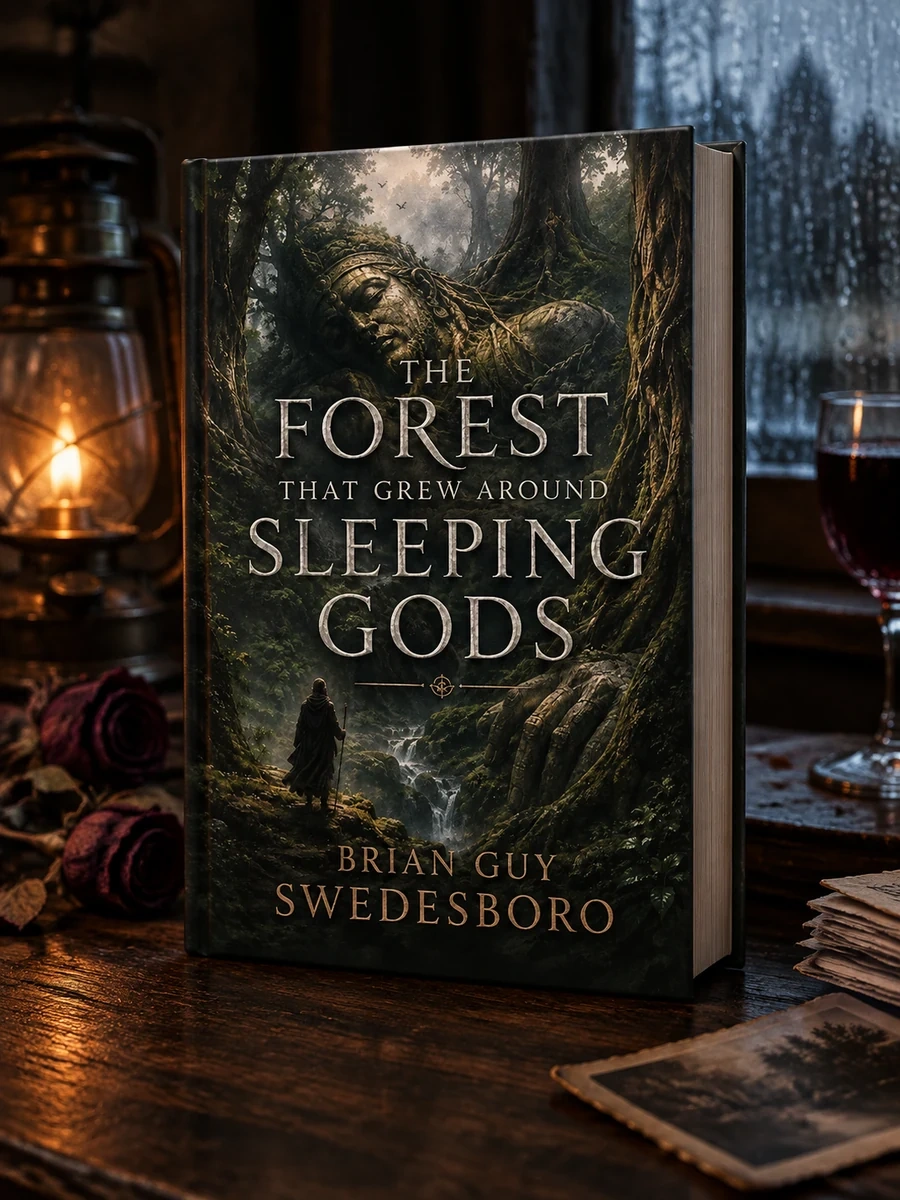
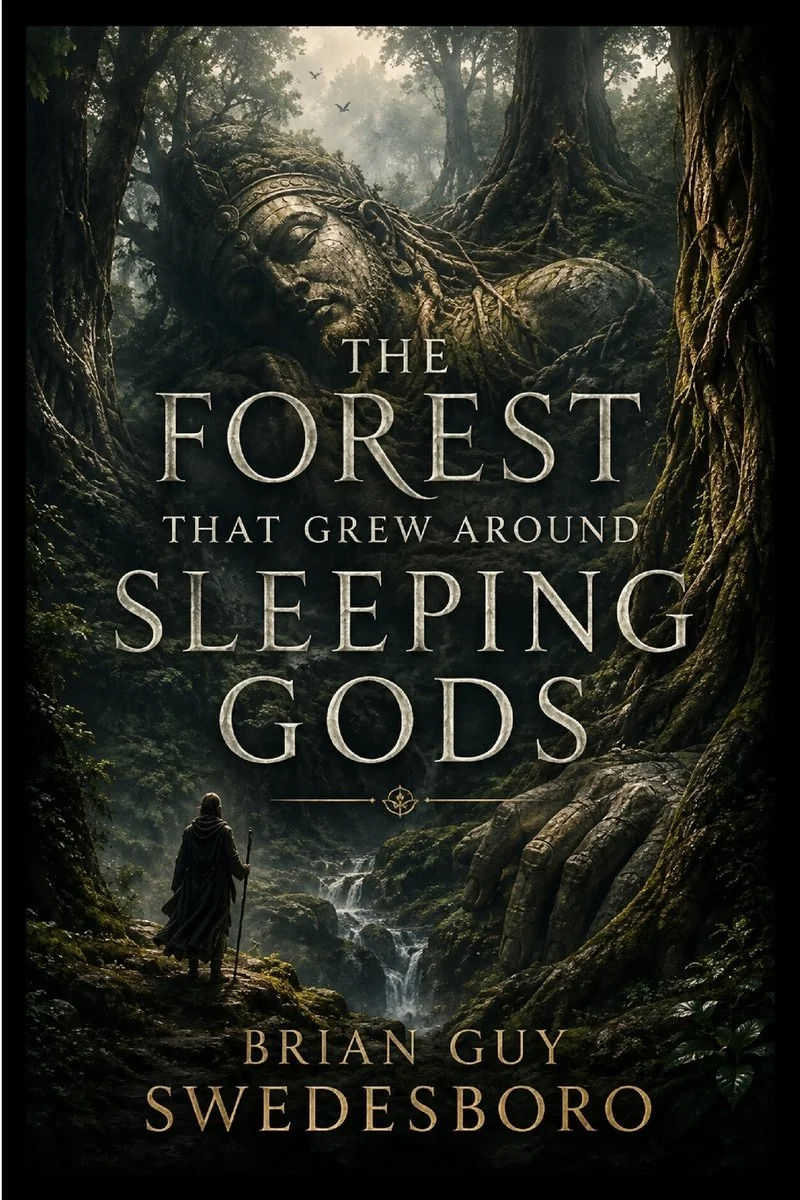
The Forest That Grew Around Sleeping Gods
A novel about a woman stopping cosmic gods via her dark heritage.
The narrative follows a young woman with a mystical link to the earth as an impenetrable woodland consumes a village. This forest exists to feed ancient, awakening deities. The protagonist faces a critical choice regarding her dark heritage. She must determine if embracing this lineage will keep the cosmic horrors imprisoned. The story explores the tension between human survival and supernatural obligation. It does not offer easy answers or heroic victories. Instead, it presents a grim scenario where nature itself becomes an antagonist. The text relies on atmospheric description rather than complex world-building. Readers interested in the psychological weight of ancestral duty will find this compelling.
This work sits within the modern horror genre, published in 2026 by Brian Guy Swedesboro. It draws on gothic and supernatural fiction traditions prevalent in contemporary American bookshops. The setting implies a rural or isolated community threatened by ancient forces.


📝 Description: The Forest That Grew Around Sleeping Gods
💎 Our verdict on The Forest That Grew Around Sleeping Gods
📖 Why choose it
Why this book is worth reading
Readers seeking atmospheric dread over action will find this compelling. The narrative prioritizes the psychological weight of ancestral duty, offering a grim scenario where survival requires embracing one's dark lineage. Those interested in the tension between human existence and supernatural obligation will appreciate the lack of easy answers. The book suits collectors of modern horror literature who prefer character-driven internal conflict against cosmic threats rather than extensive world-building or appendices.
⭐ Reader reviews
Reader rating
Swedesboro delivers a potent tale where nature itself becomes the antagonist, consuming a village to feed awakening gods. The prose remains clear and atmospheric, effectively conveying the encroaching woods without relying on complex mechanics. This approach highlights the protagonist's internal struggle regarding her heritage, creating a sense of inescapable cosmic dread. While it lacks fast-paced action or heroic victories, its strength lies in exploring ecological terror through a gothic lens. The focus on the burden of duty rather than detailed maps ensures the narrative remains tight and emotionally resonant for fans of psychological horror.
You might also like
See more →






Have a question about this item?
Ask about the edition, condition, delivery or anything else — we reply by email or phone, usually within a day.
