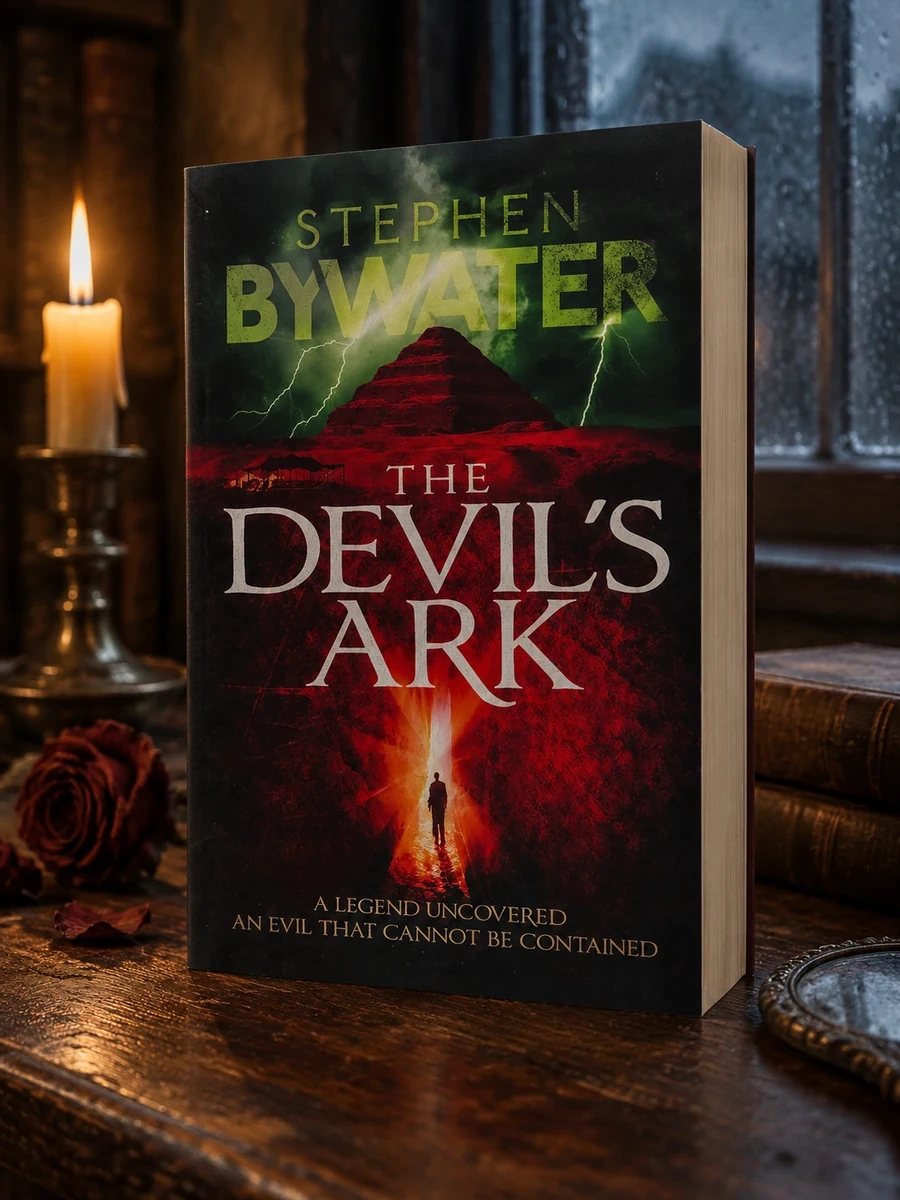

The Devil's Ark (UK)
A WWI veteran faces supernatural terror while photographing a dig in Mesopotamia.
The novel follows Harry Ward, who seeks refuge in Mesopotamia after losing his mind and faith during the Great War. Working as a photographer for an archaeological team outside Mosul, he hopes to leave his traumatic memories behind. Instead, the dig site reveals a temple with a dark secret. Bywater uses this setting to explore the intersection of historical conflict and ancient evil. The protagonist must confront a terror that rivals the violence he witnessed in the trenches. The story relies on atmosphere and psychological pressure rather than action sequences.
The narrative is set in Mesopotamia, specifically near Mosul, during the early twentieth century following the Great War. It draws on the historical period of archaeological exploration in that region and the psychological aftermath experienced by soldiers returning from conflict zones.


📝 Description: The Devil's Ark (UK)
💎 Our verdict on The Devil's Ark (UK)
📖 Why choose it
Why this book is worth reading
Readers who appreciate gothic fiction that blends historical trauma with supernatural elements will find this narrative deeply engaging. It appeals to those interested in stories set in Mesopotamia during the early twentieth century, offering a unique perspective on the psychological weight of the past. The book is ideal for audiences seeking atmospheric dread over action-driven plots. By focusing on the protagonist's internal struggle against primal fears rather than easy resolutions, it provides a heavy, immersive experience. Those who enjoy exploring the intersection of war memories and ancient terrors will gain from its intense psychological pressure and rich historical setting.
⭐ Reader reviews
Reader rating
Stephen Bywater crafts a compelling narrative rooted in the aftermath of the Great War, focusing on Harry Ward’s retreat to Mesopotamia. The author successfully weaves together the horrors of conflict with primal fears lurking within the human psyche. The story relies on atmosphere and psychological pressure rather than action sequences, creating a suffocating sense of dread. It suits readers who appreciate gothic fiction that blends historical trauma with supernatural elements. While not for those seeking lighthearted adventure or academic reports, it offers a profound look at lost faith and near-death experiences. The balance of dread and lust against echoes of past sorrow makes this a standout work for fans of psychological horror.
📖 Read on the blog
✍️ More books by this author Stephen Bywater


🏛 Books from this publisher Headline



You might also like
See more →




Have a question about this item?
Ask about the edition, condition, delivery or anything else — we reply by email or phone, usually within a day.
