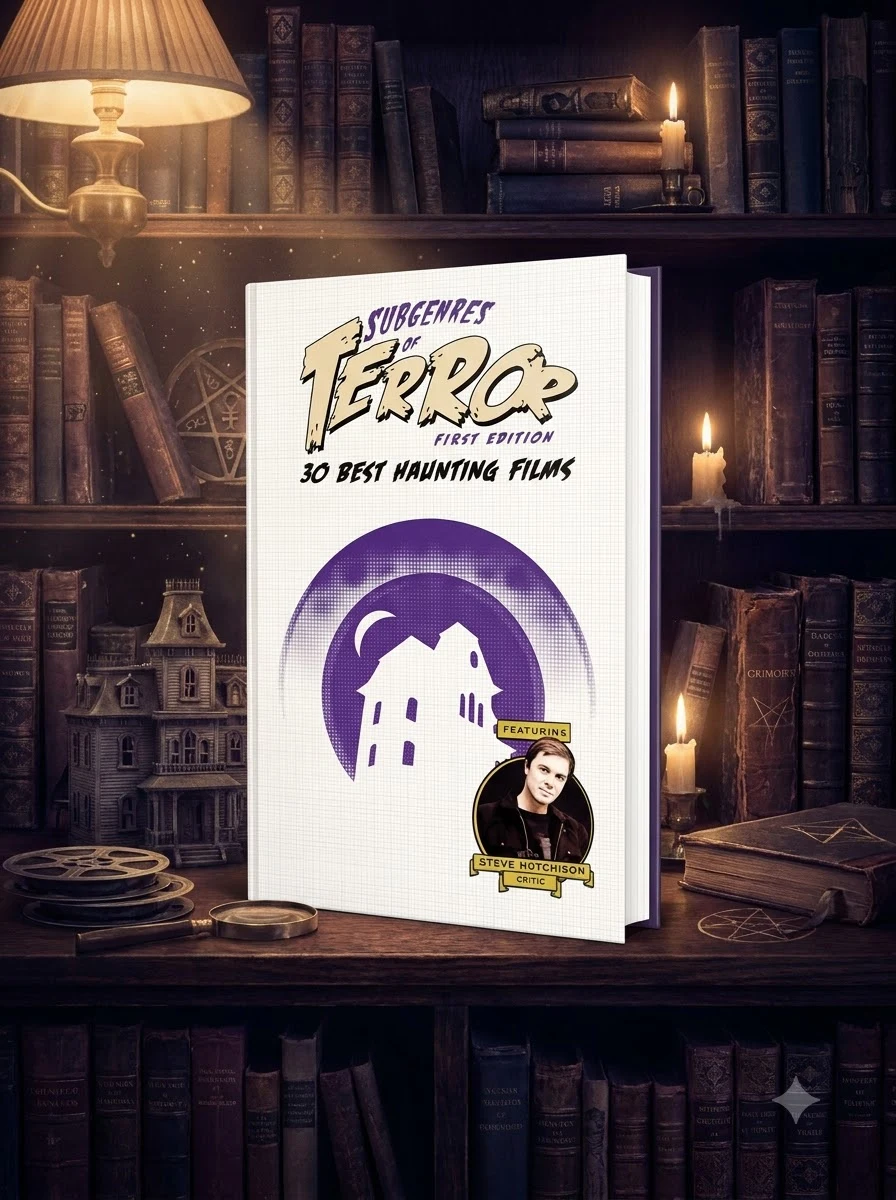

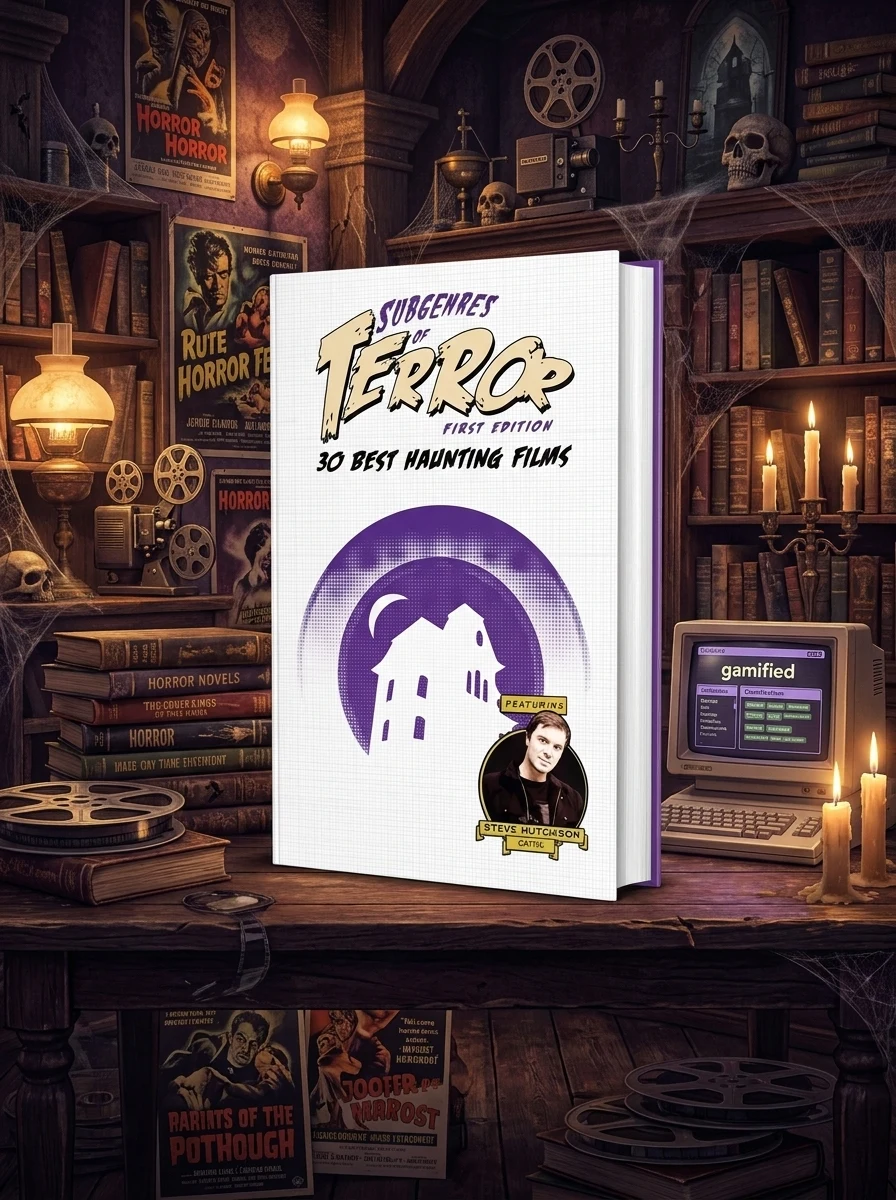
Subgenres of Terror: 30 Best Haunting Films
A classified guide to 30 franchise and public domain horror films using gamified data.
Hutchison uses the Tales of Terror database to sort thirty haunting movies into logical groups. This method prioritizes inherent properties over traditional metrics like director or year. The result is a collection where films relate to each other through shared structural traits. Readers gain insight into how franchise and public domain works overlap in their use of terror. The inclusion of color interior images supports the textual analysis. This approach helps creators understand genre patterns by examining how specific elements recur across different titles. It provides a clear map for those studying the mechanics of fear in cinema.
Published in 2016 by Createspace, this work reflects a mid-2010s interest in data-driven media analysis. It bridges the gap between academic study and fan culture by using gamification tools to organize horror cinema for creators and students.


📝 Description: Subgenres of Terror: 30 Best Haunting Films
💎 Our verdict on Subgenres of Terror: 30 Best Haunting Films
📖 Why choose it
Why this book is worth reading
This volume serves students, authors, and filmmakers who require a systematic framework for categorizing horror cinema. By utilizing the Tales of Terror database, Hutchison groups films based on inherent properties rather than traditional metrics like release date or director. This approach allows readers to compare titles through logical similarities and shared structural traits. Those interested in the mechanics of fear will find value in seeing how franchise and public domain works overlap. It provides a clear map for understanding genre patterns, making it essential for creators analyzing how specific elements recur across different haunting narratives without relying on arbitrary rankings.
⭐ Reader reviews
Reader rating
Hutchison offers a structured analysis that distinguishes itself by focusing exclusively on franchise entries and public domain movies. The use of gamified data to sort thirty films into logical groups provides a unique perspective on genre evolution. While it lacks the narrative flow of traditional film criticism, its strength lies in its practical utility for understanding horror mechanics. Readers seeking chronological histories or critical essays on independent productions will find this less relevant. However, those studying the intersection of different traditions within haunting narratives will appreciate the clear categorization and the inclusion of color images to support the textual analysis of these structural similarities.
📖 Read on the blog
📖 From the series “Subgenres of Terror, 1st Edition (Color)”


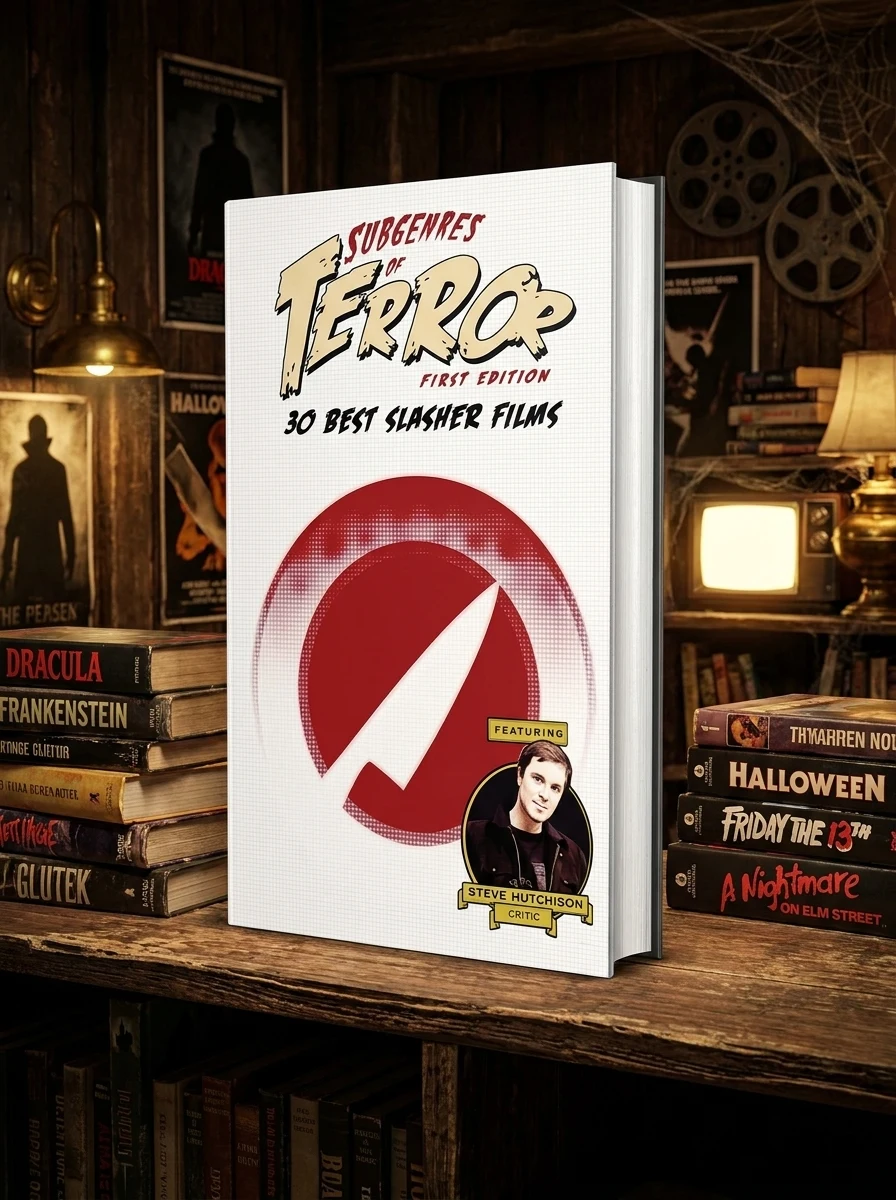
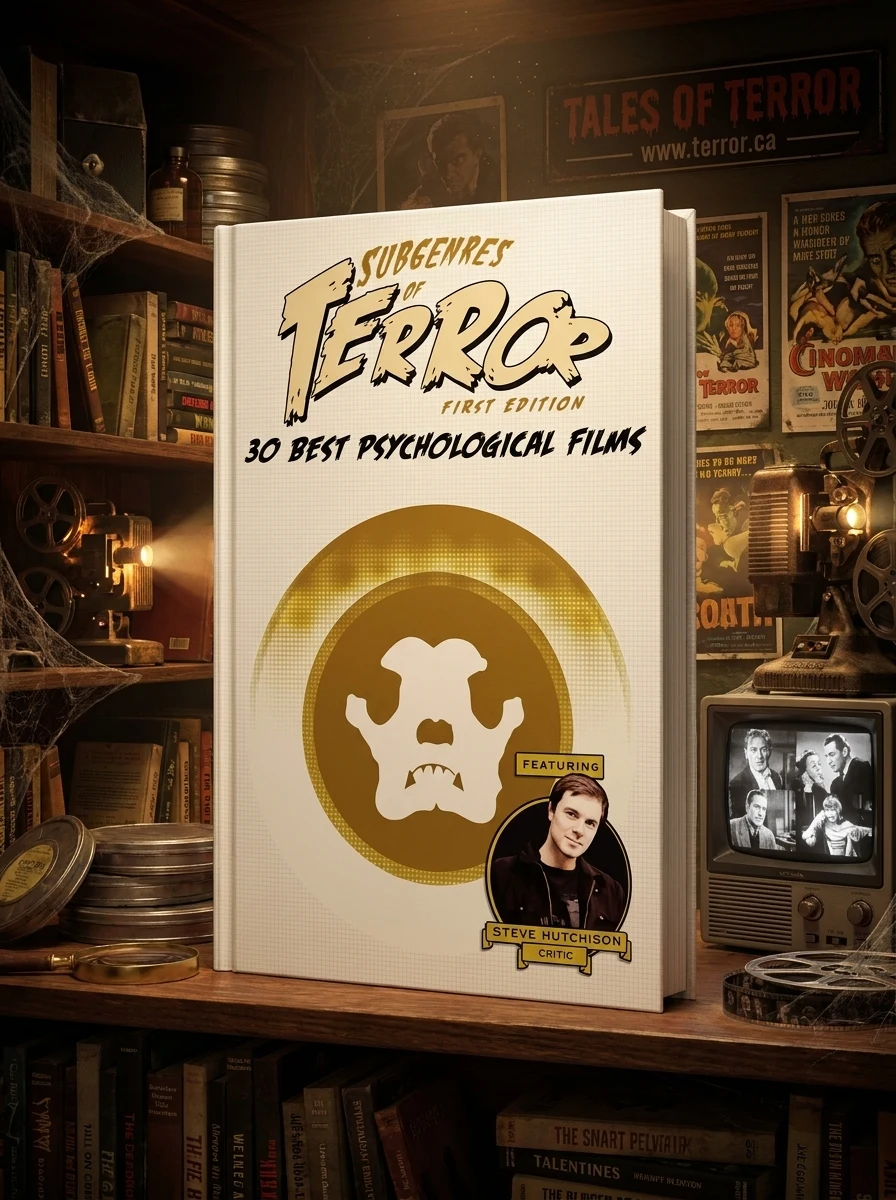
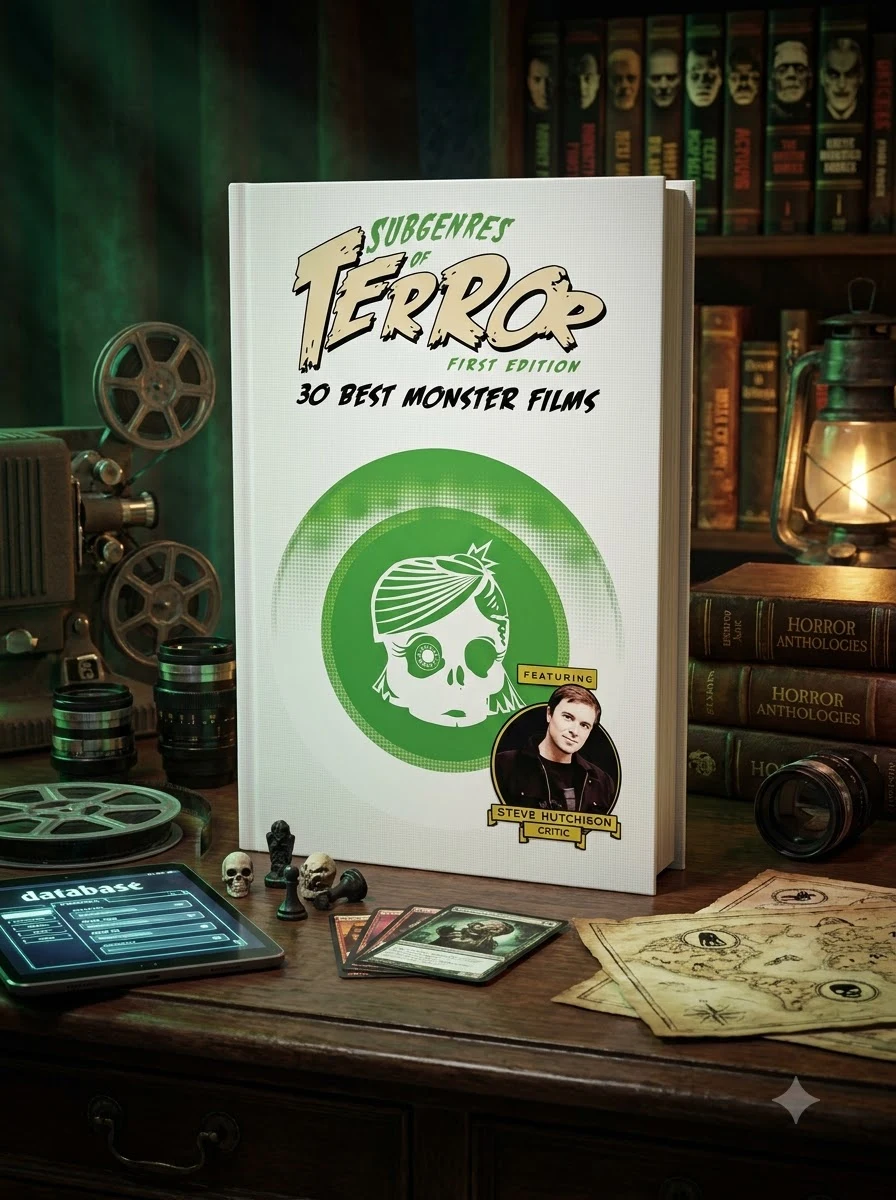
✍️ More books by this author Steve Hutchison
🏛 Books from this publisher Createspace Independent Publishing Platform






You might also like
See more →


Have a question about this item?
Ask about the edition, condition, delivery or anything else — we reply by email or phone, usually within a day.
