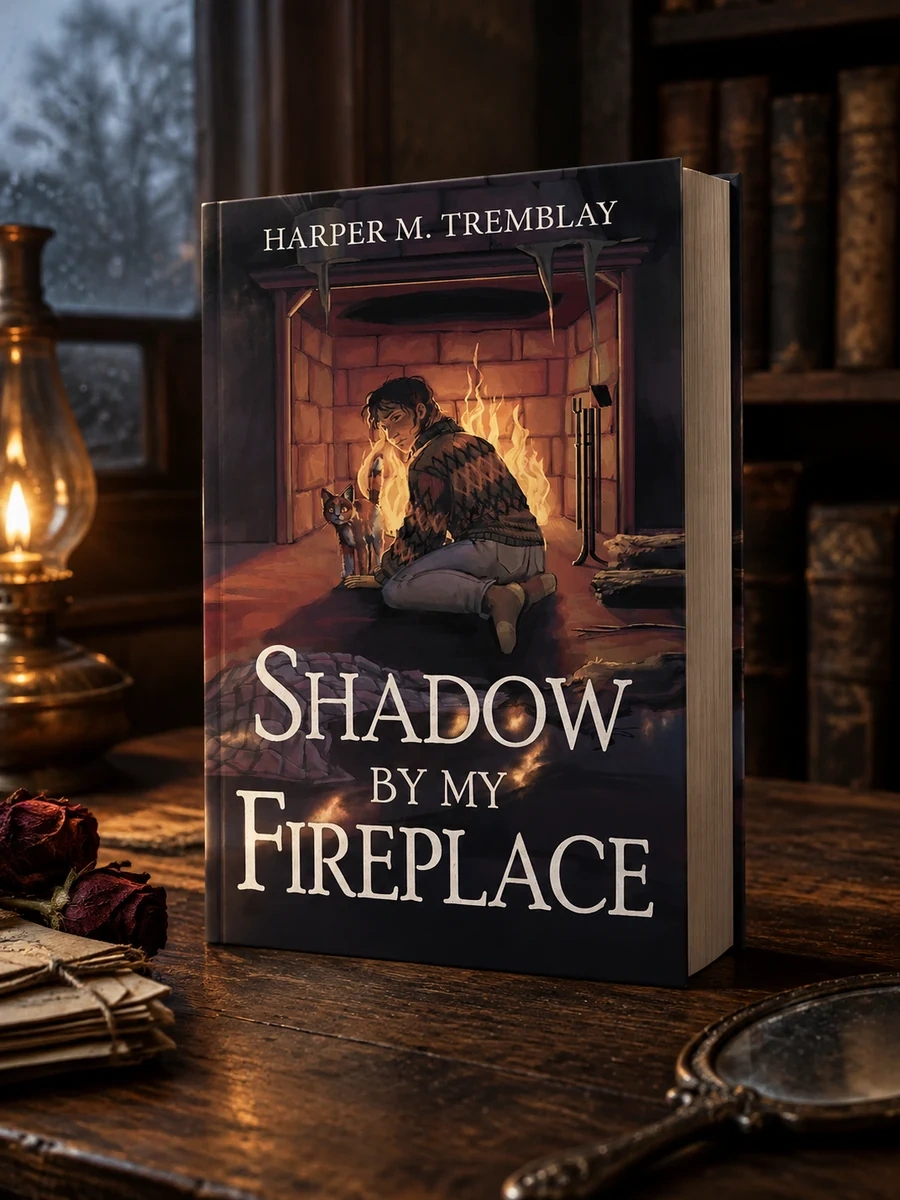
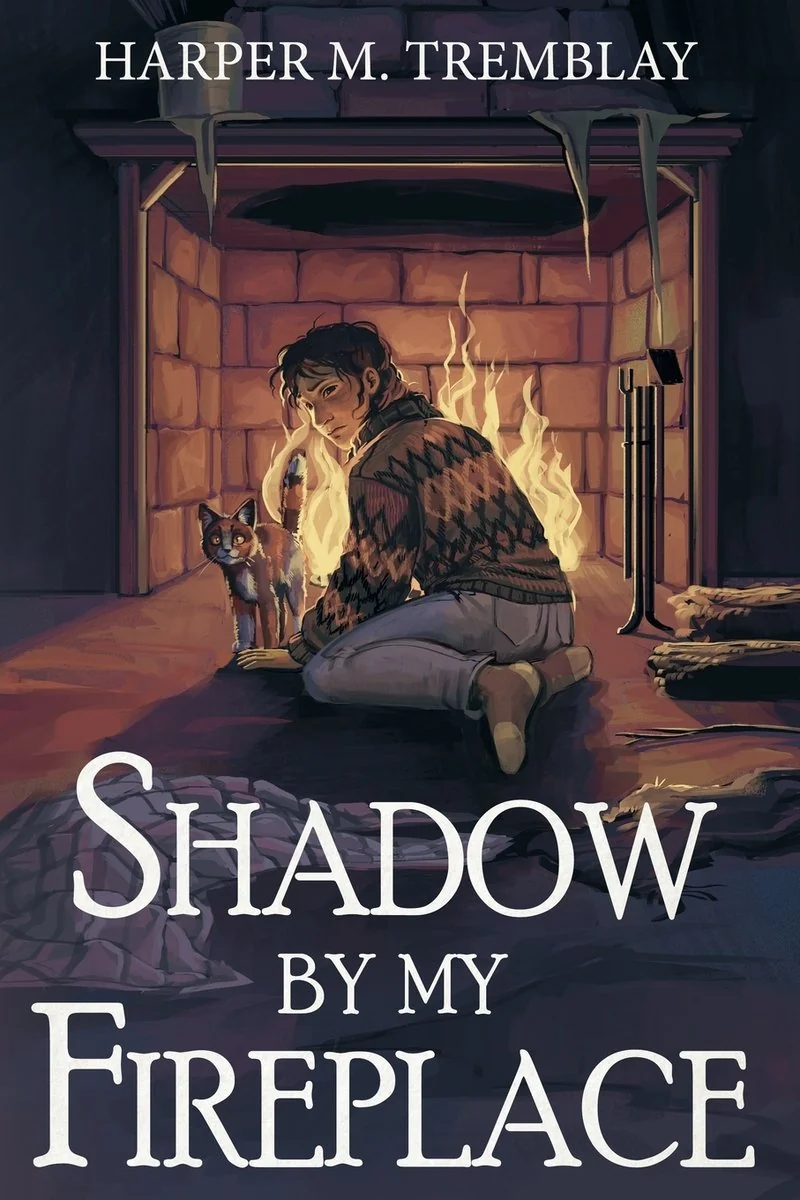
Shadow By My Fireplace
A reclusive man saves a stranger, uncovering a dark past in this gothic tale.
The narrative follows Cyril Galanos after he rescues a collared man named Shadow from the woods. Tremblay details how Cyril’s isolated life in his cabin becomes complicated by the presence of this wounded guest. The story examines the rocky road to recovery for Shadow, whose previous existence was a special kind of hell. Cyril’s efforts to heal him force him to confront his own troubled history. The book focuses on the psychological dynamics between caregiver and patient rather than external threats. It is organized around their daily interactions and the gradual revelation of Shadow’s background. Readers will find the tension arises from Cyril’s internal struggle as he balances his need for solitude with his urge to help. The setting remains confined to the cabin and immediate hunting spots, emphasizing intimacy and claustrophobia.
Published by Whumpy Printing Press on May 19, 2026, this work fits within the contemporary horror and gothic fiction genres. It draws on traditions of domestic unease and supernatural mystery without specifying historical periods.


📝 Description: Shadow By My Fireplace
💎 Our verdict on Shadow By My Fireplace
📖 Why choose it
Why this book is worth reading
Readers who appreciate slow-burn psychological tension and gothic atmospheres will find value in this narrative. It offers a deep dive into the complexities of caregiving and the intrusion of trauma into isolated lives, appealing to those who prefer character studies over action. The book is ideal for audiences seeking intimate, claustrophobic settings where emotional weight drives the plot. It suits fans of horror that examines the boundaries of empathy and the costs of confronting one’s past through the lens of another’s suffering.
⭐ Reader reviews
Reader rating
Tremblay constructs a tense, claustrophobic atmosphere by confining the narrative to a woodland cabin, effectively utilizing the setting to amplify psychological dread. The focus on the rocky road to recovery for both Cyril and Shadow allows for a nuanced exploration of empathy and trauma. By prioritizing internal conflict over external threats, the text delivers a compelling character study that highlights the burden of caregiving. This approach suits readers who enjoy gothic fiction and psychological horror. However, those seeking fast-paced action or traditional monster hunting may find the pace too deliberate. The strength lies in its intimate observation of domestic space and the gradual revelation of Shadow’s background.