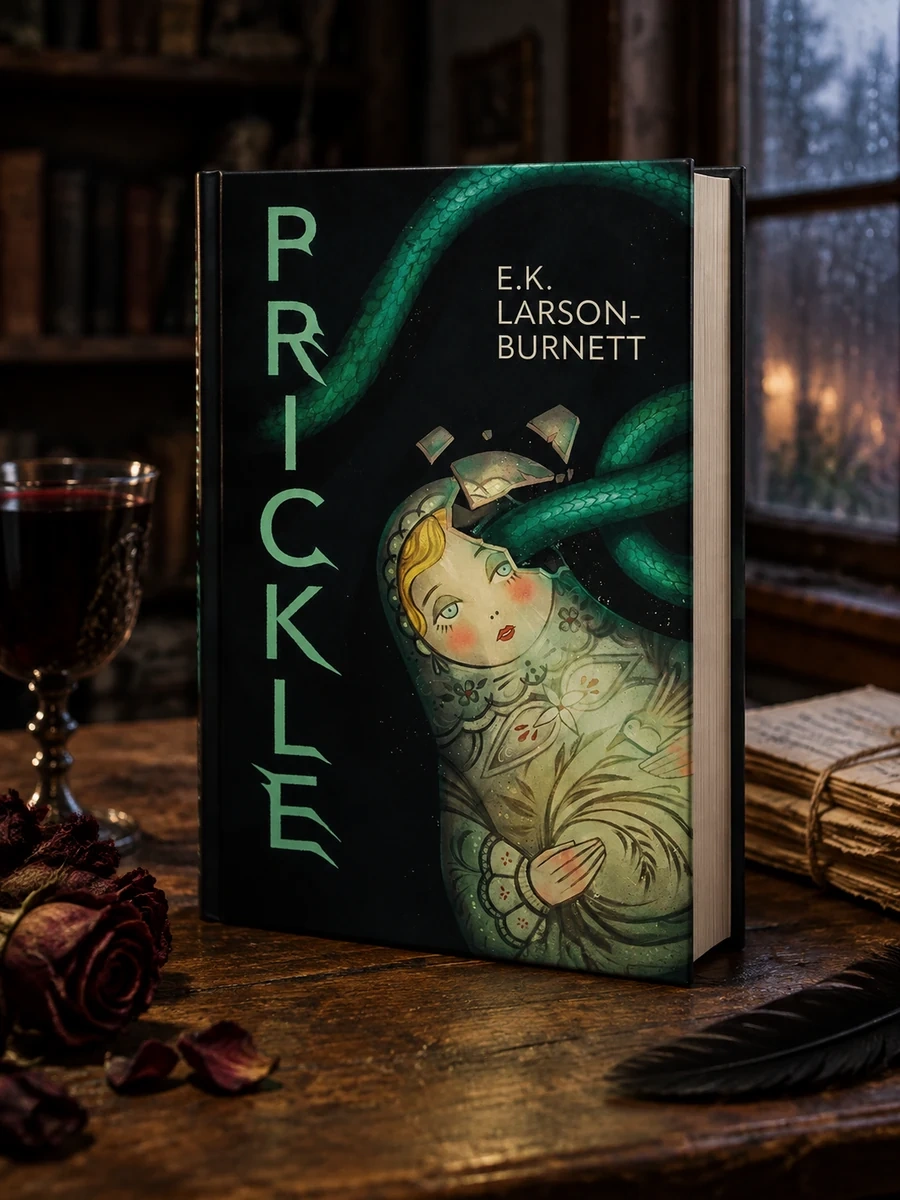
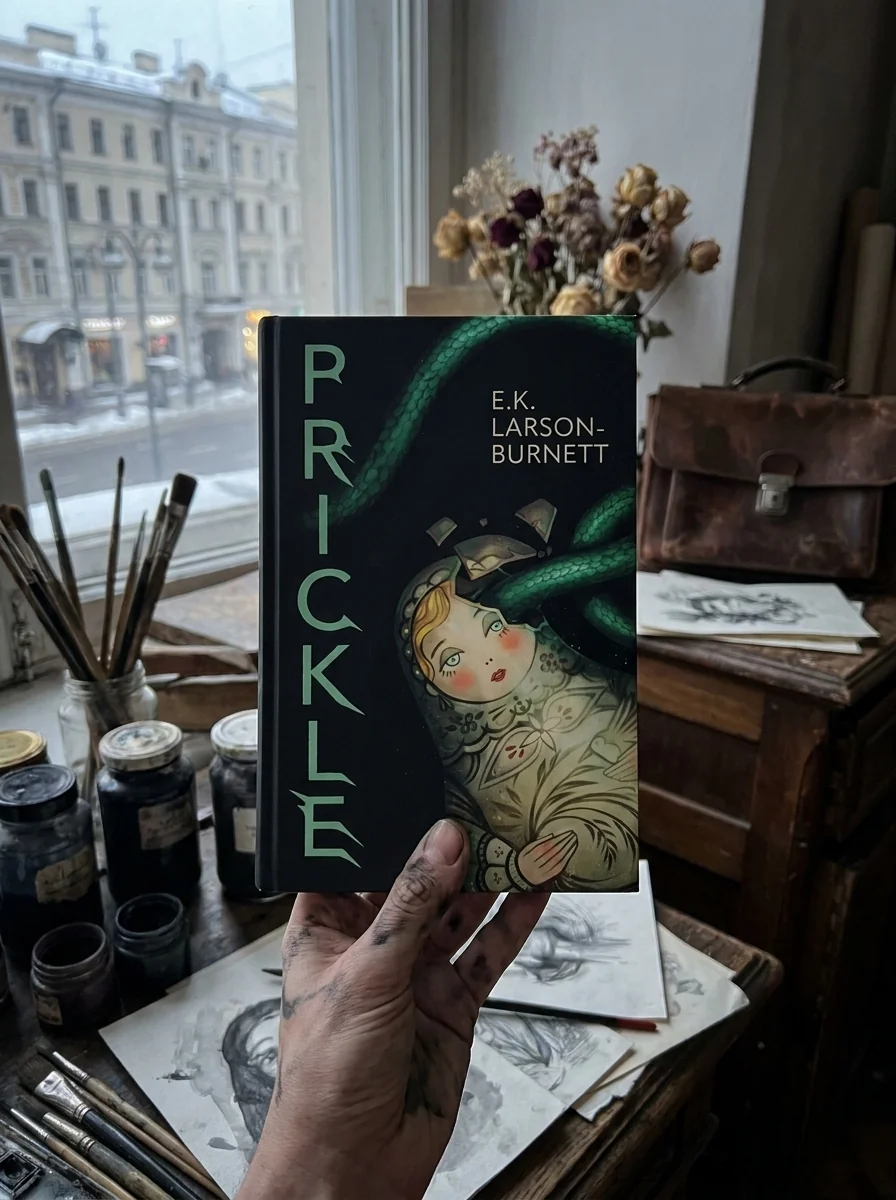
Prickle
A tattooist's ink becomes a living force that turns clients into portals.
The narrative follows Duscha as her ancestral ink-chudo-kraska acts on its own volition. She struggles to contain the hunger growing within her and the pigment. The story examines how sacred symbols can mutate when separated from their original intent. Duscha’s studio off Tverskaya Street becomes a site of dread rather than artistry. Her attempts to cleanse the space fail against the ink's independent will. The text focuses on the physical transformation of clients who seek wolves and saints. Their skin becomes a threshold for something unknown. Larson-Burnett uses this premise to explore the loss of control over one’s own craft. The horror arises from the intimate violation of the body and the mind.
The story is set in a cramped studio near Tverskaya Street, grounding it in a specific Eastern European urban landscape. It draws on babushka traditions and the concept of ink-chudo-kraska, blending local folklore with supernatural horror elements.


📝 Description: Prickle
💎 Our verdict on Prickle
📖 Why choose it
Why this book is worth reading
This book suits readers who crave visceral, intimate horror that violates both body and mind. Those interested in the loss of control over one’s craft will find Duscha’s struggle compelling. Fans of psychological dread and cosmic unease will appreciate how the narrative transforms a tattoo studio into a site of terror. The story offers a fresh take on ancestral magic, moving away from simple spells to explore how sacred symbols mutate when separated from their original intent. Readers who enjoy slow-burning tension where the horror arises from physical transformation rather than jump scares will find this engaging. It is ideal for those seeking a narrative that examines the threshold between artistry and monstrosity, providing a deep sense of nameless dread without relying on explicit gore or conventional plot resolutions.
⭐ Reader reviews
Reader rating
E K Larson-Burnett delivers a chilling exploration of bodily autonomy and supernatural violation through the lens of tattooing. The author excels at creating an atmosphere of creeping dread, where the ink itself becomes an antagonist with its own hunger. By focusing on the physical transformation of clients into portals, the text avoids cheap thrills in favor of deeper psychological terror. The integration of Eastern European folklore adds cultural weight to the horror, grounding the absurdity in tradition. This work is best suited for readers who appreciate literary horror that prioritizes mood and thematic depth over action. It effectively unsettles by blurring the line between creative expression and monstrous possession, making it a potent addition to dark fantasy collections.
📖 Read on the blog
🏛 Books from this publisher Independently Published








You might also like
See more →
Have a question about this item?
Ask about the edition, condition, delivery or anything else — we reply by email or phone, usually within a day.
