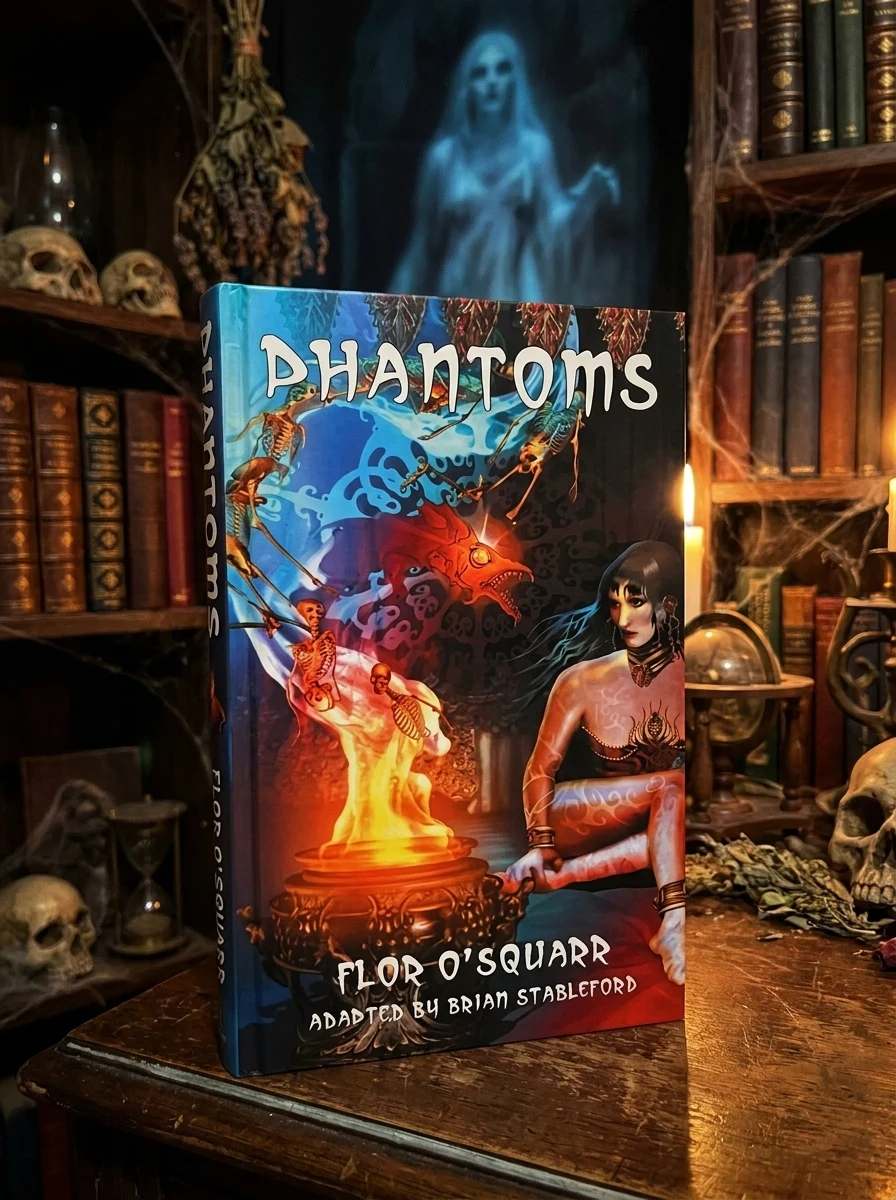
Phantoms
A psychological study of haunting where denial masks fear.
The book focuses on a narrator who suffers from apparitions but refuses to accept their supernatural nature. He attributes these experiences to hallucinations, claiming his psychology is guilt-free. His attempts to rationalize the events become tangled and unconvincing. The text explores how the mind constructs explanations for terrifying phenomena. It highlights the struggle between acknowledging fear and maintaining a facade of control. The narrative does not provide easy answers but instead shows the complexity of self-deception. Readers interested in the mechanics of fear and denial will find this approach compelling.
Published in 1885, Phantoms sits within the late Victorian era of supernatural fiction. It reflects a time when psychological explanations began to compete with traditional ghost stories. The work emerges from a period where rationality was often tested by the unknown.


📝 Description: Phantoms
💎 Our verdict on Phantoms
📖 Why choose it
Why this book is worth reading
Readers interested in the mechanics of fear and denial will find this approach compelling, particularly those who enjoy early psychological horror and gothic fiction that questions the reliability of perception. The narrative does not provide easy answers but instead shows the complexity of self-deception, making it ideal for audiences who appreciate the struggle between acknowledging fear and maintaining a facade of control. Those seeking straightforward action or clear resolutions may find this less appealing, but fans of unreliable narrators and tales where the mind constructs explanations for terrifying phenomena will engage deeply with the tension between supernatural belief and rational denial.
⭐ Reader reviews
Reader rating
O'Squarr constructs a scenario where the protagonist ties himself in knots while trying to dismiss the reality of ghosts, offering a nuanced exploration of mental stability. The text highlights how the mind constructs explanations for terrifying phenomena, creating a compelling study of haunting where denial masks fear. By relying on an unreliable account, the narrative forces the reader to question what is real, blurring the line between madness and the paranormal. This approach suits readers who enjoy psychological depth over external thrills. While it may not appeal to those seeking clear resolutions, it stands as a sophisticated example of late nineteenth-century literary trends that prioritize internal conflict.
📖 Read on the blog
🏛 Books from this publisher Hollywood Comics



You might also like
See more →

Have a question about this item?
Ask about the edition, condition, delivery or anything else — we reply by email or phone, usually within a day.
