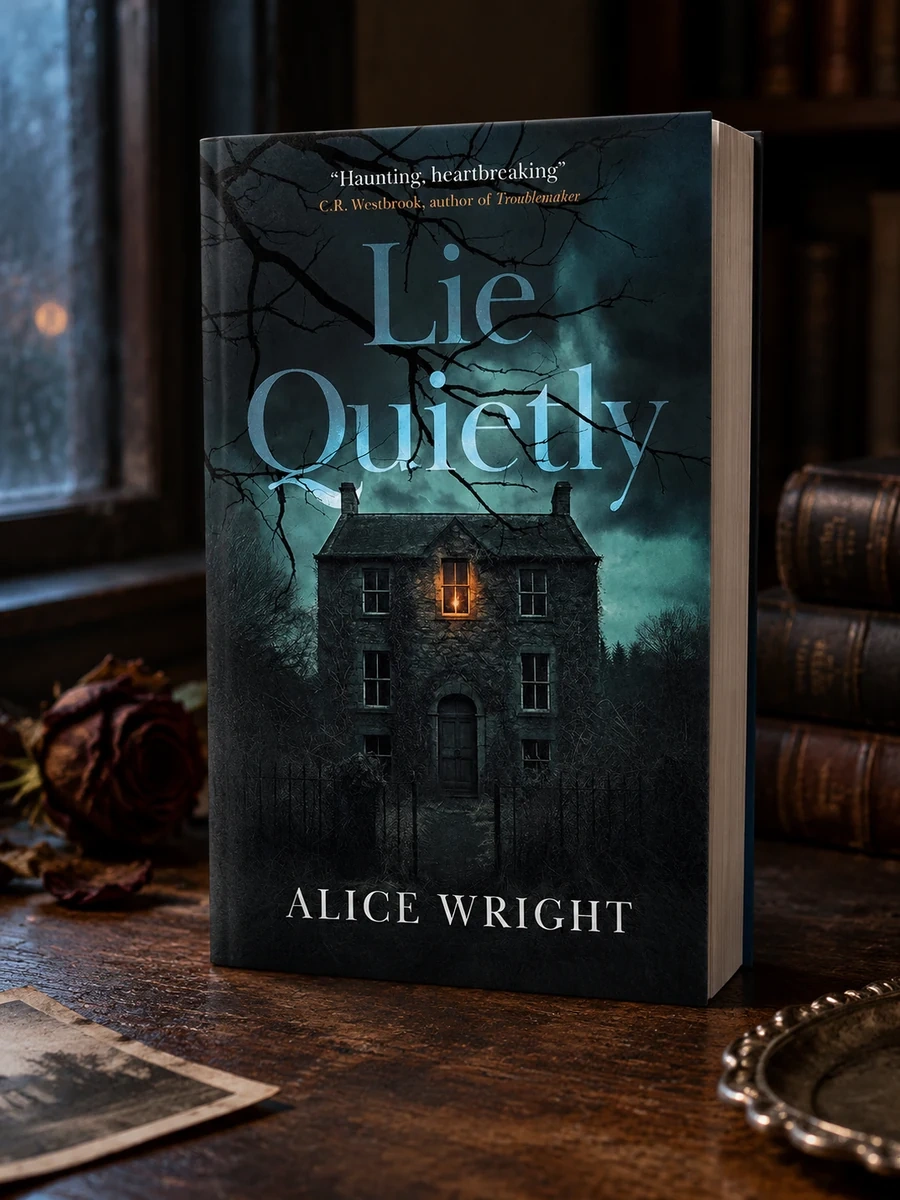
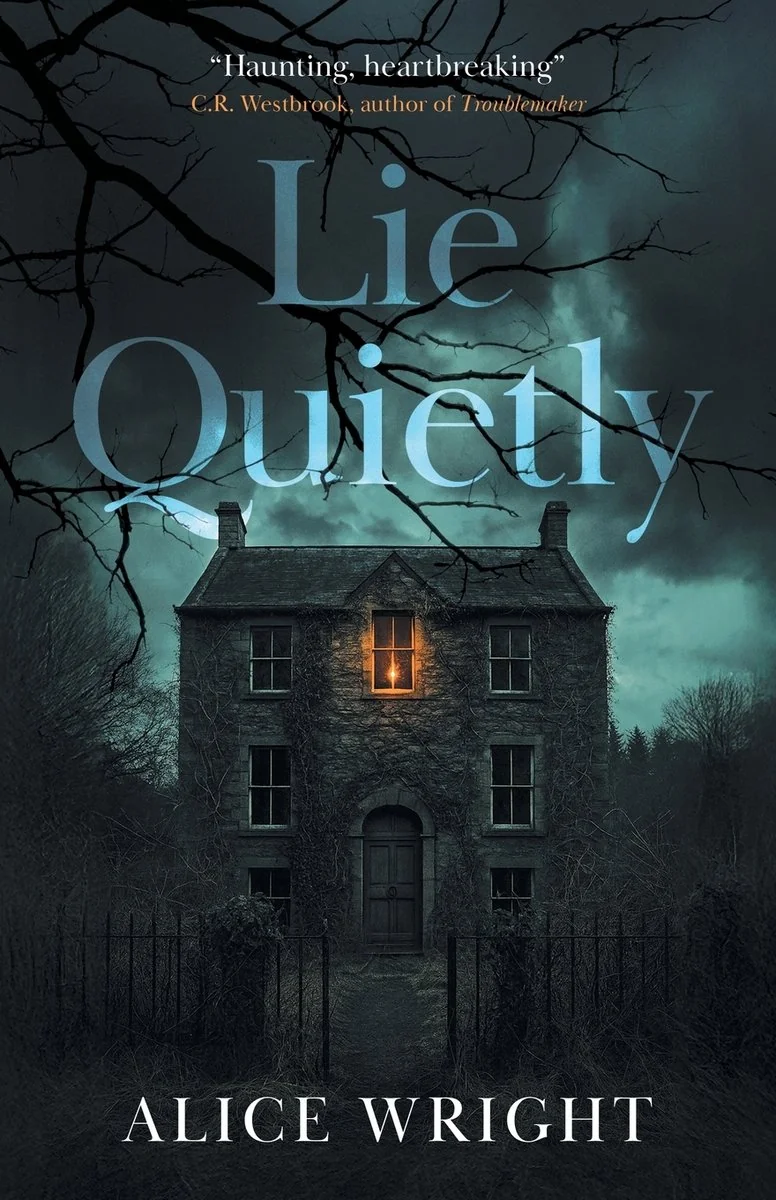
Lie Quietly
A dual-timeline gothic novel about a haunted house and a village’s dark secrets.
Wright structures her narrative across two distinct eras to show how historical trauma affects future generations. The 1959 timeline establishes the origin of the haunting through the tragic fate of Jackey and Annie. The 2009 timeline follows Hannah’s arrival in Robbers Bridge, where she encounters resistance from locals and supernatural disturbances within the house. The plot focuses on uncovering the truth behind the tragedy that echoes through the decades. Wright uses the setting of the moors and the isolated village to amplify the sense of entrapment. The story examines how secrets can fester and transform into something vengeful. It is a study of how place holds memory and how the past actively interferes with the present.
The novel is set in the fictional village of Robbers Bridge, surrounded by moors. It contrasts the traditional, superstitious ways of 1959 with the modern search for a fresh start in 2009. The story draws on British gothic fiction traditions and explores the impact of close-knit community dynamics on individual lives.


📝 Description: Lie Quietly
💎 Our verdict on Lie Quietly
📖 Why choose it
Why this book is worth reading
Readers seeking atmospheric, slow-burn horror will find Lie Quietly a compelling choice due to its intricate exploration of grief and memory. Alice Wright effectively uses the dual-timeline structure to demonstrate how historical trauma actively interferes with the present, creating a mood of lingering dread rather than relying on sudden shocks. The novel appeals to those who enjoy family sagas infused with supernatural elements, particularly those fascinated by the concept that places hold memory. It offers a deep dive into the psychological impact of secrets festering over decades, making it ideal for enthusiasts of ghost stories and gothic fiction who appreciate tension built through isolation and entrapment on the moors.
⭐ Reader reviews
Reader rating
Alice Wright delivers a masterful study in lingering dread, utilizing the moors and rural isolation to amplify a sense of inescapable entrapment. The dual-timeline structure effectively bridges the gap between the tragic origins of Jackey and Annie and Hannah’s modern-day investigation, illustrating how past sins manifest as vengeful supernatural forces. Wright excels at establishing a heavy, atmospheric mood where the house itself whispers secrets, appealing strongly to fans of traditional gothic horror. This narrative is best suited for readers who prefer psychological depth and historical resonance over fast-paced action or urban settings. It is a thoughtful examination of how grief lingers in physical spaces, offering a chilling yet emotionally resonant experience.
You might also like
See more →


Have a question about this item?
Ask about the edition, condition, delivery or anything else — we reply by email or phone, usually within a day.
