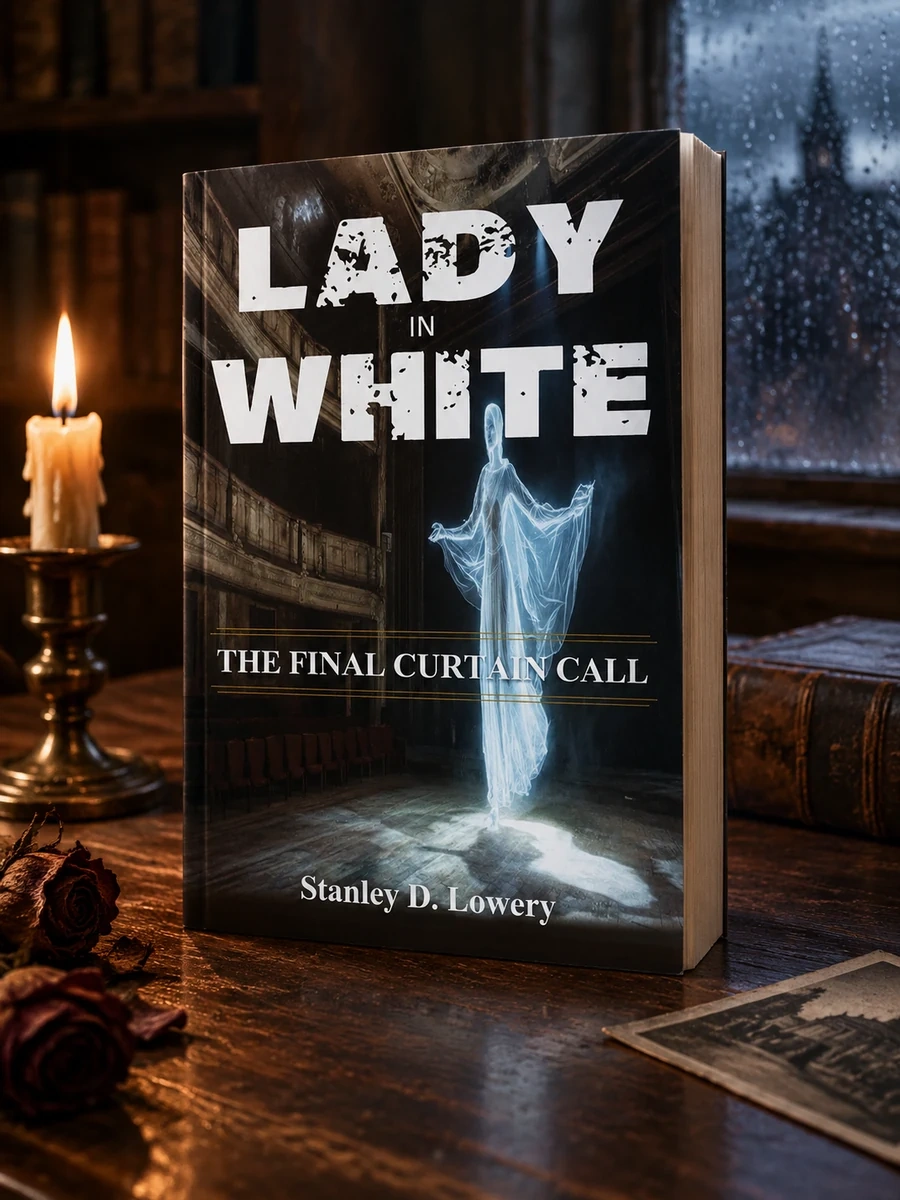
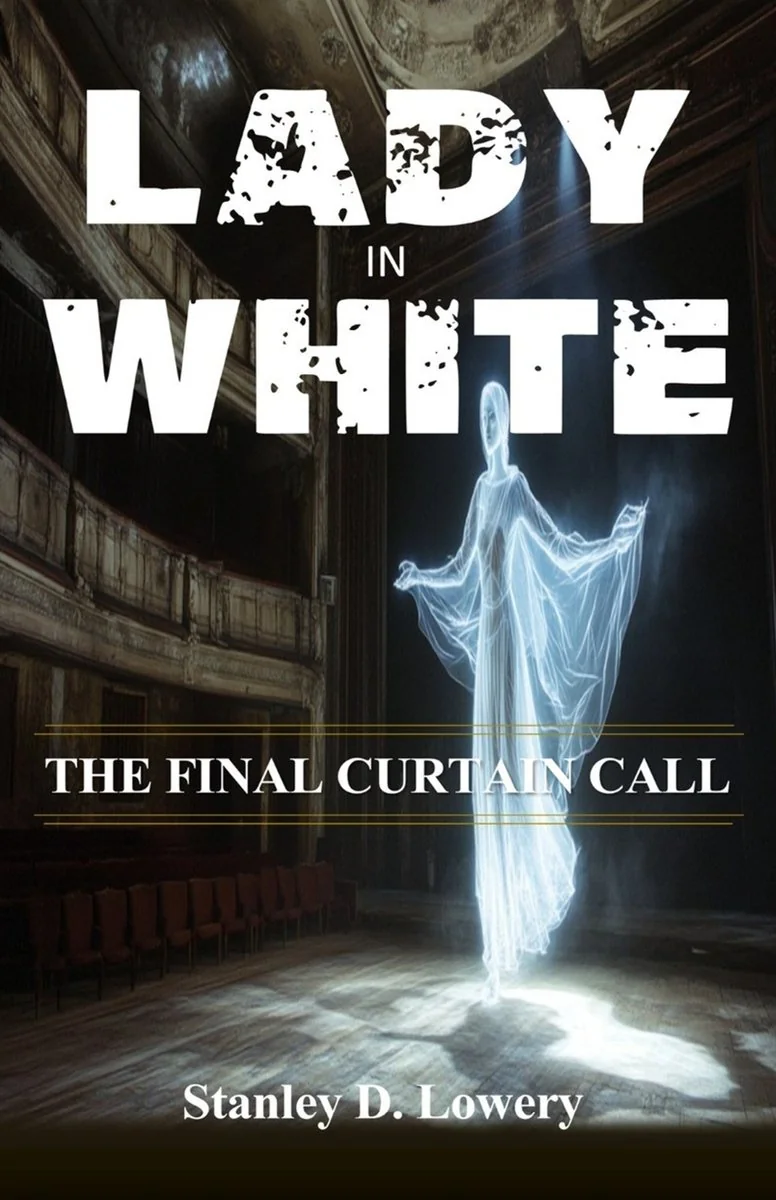
Lady In White: The Final Curtain Call
A ghost story about a trapped spirit seeking truth in a haunted theater.
The book operates as a confined psychological horror set entirely within the Majestic Theatre. It examines how unresolved trauma and murder can bind a consciousness to a physical space for decades. The structure avoids linear chronology, instead using Lily’s disjointed memories to piece together the events of her final performance. This approach highlights the disorientation of being stuck between life and death. The story does not offer easy answers but rather a gradual unveiling of a dark secret that has festered since 1961.
The narrative is rooted in the American gothic tradition, specifically focusing on the atmosphere of a forgotten theater. It begins its timeline in 1961, exploring the lingering effects of past events on a spirit trapped in that era's setting.


📝 Description: Lady In White: The Final Curtain Call
💎 Our verdict on Lady In White: The Final Curtain Call
📖 Why choose it
Why this book is worth reading
Readers who appreciate slow-burn atmospheric horror and gothic mystery will find this title rewarding. It is ideal for those interested in confined settings where the environment itself acts as a character, trapping consciousness through trauma. The fragmented narrative structure appeals to readers who enjoy piecing together disjointed memories and psychological disorientation rather than following a straightforward timeline. Those seeking deep character studies of trapped spirits and unresolved past events will gain satisfaction from the gradual unveiling of secrets. It is not suitable for those preferring fast-paced action or extensive historical non-fiction, but offers a focused, immersive experience for fans of spectral investigations and lingering dread.
⭐ Reader reviews
Reader rating
Lowery crafts a tightly confined psychological horror that effectively utilizes the Majestic Theatre as a vessel for exploring unresolved trauma. The non-linear structure, driven by Lily’s fragmented visions, successfully conveys the disorientation of existing between life and death. By focusing on a single trapped spirit rather than an ensemble cast, the narrative achieves intense intimacy with its protagonist’s plight. The gothic tone is maintained through a slow, vision-based pacing that prioritizes atmosphere and mystery over action. This approach suits readers who enjoy atmospheric supernatural tales centered on specific locations and dark secrets. It avoids easy answers, offering instead a gradual, disorienting journey into the past that rewards patience with a deep sense of lingering unease.
You might also like
See more →



Have a question about this item?
Ask about the edition, condition, delivery or anything else — we reply by email or phone, usually within a day.
