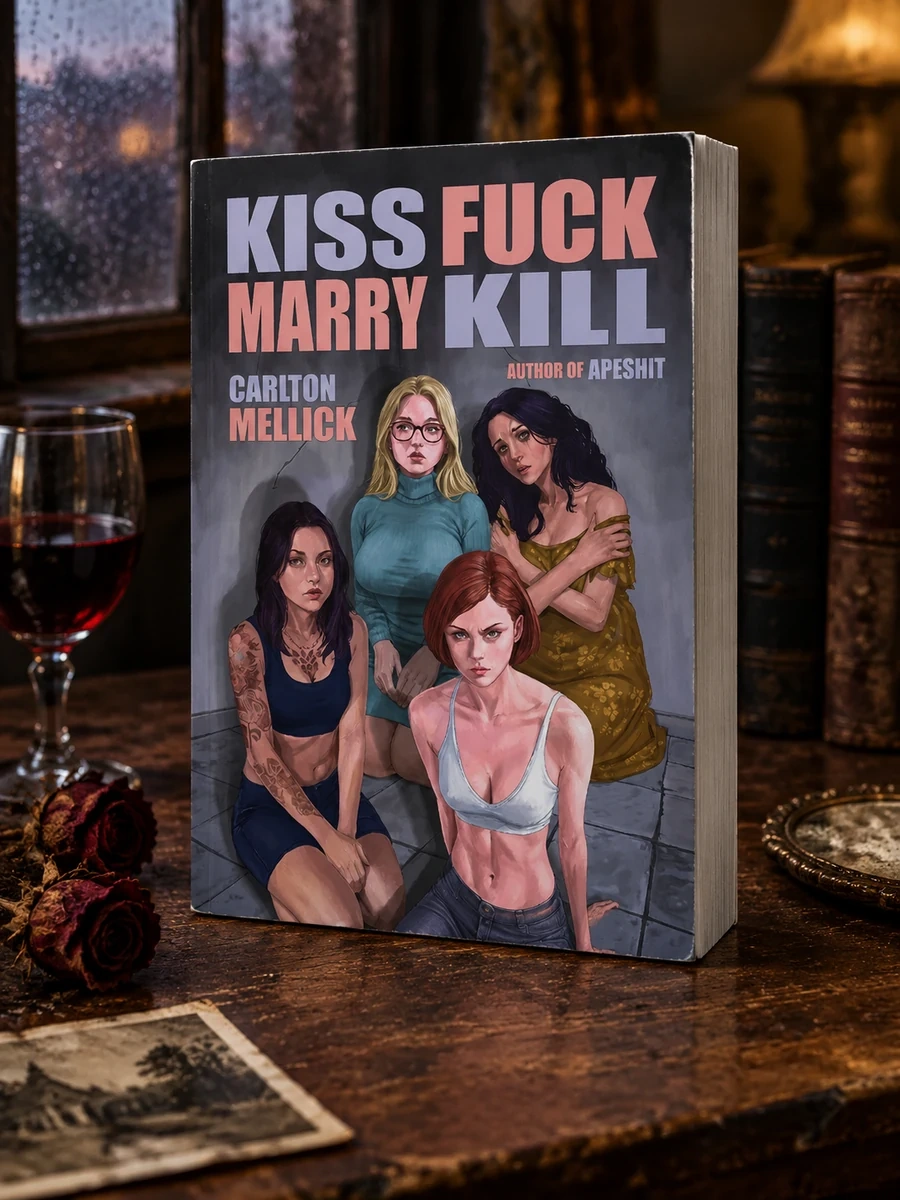
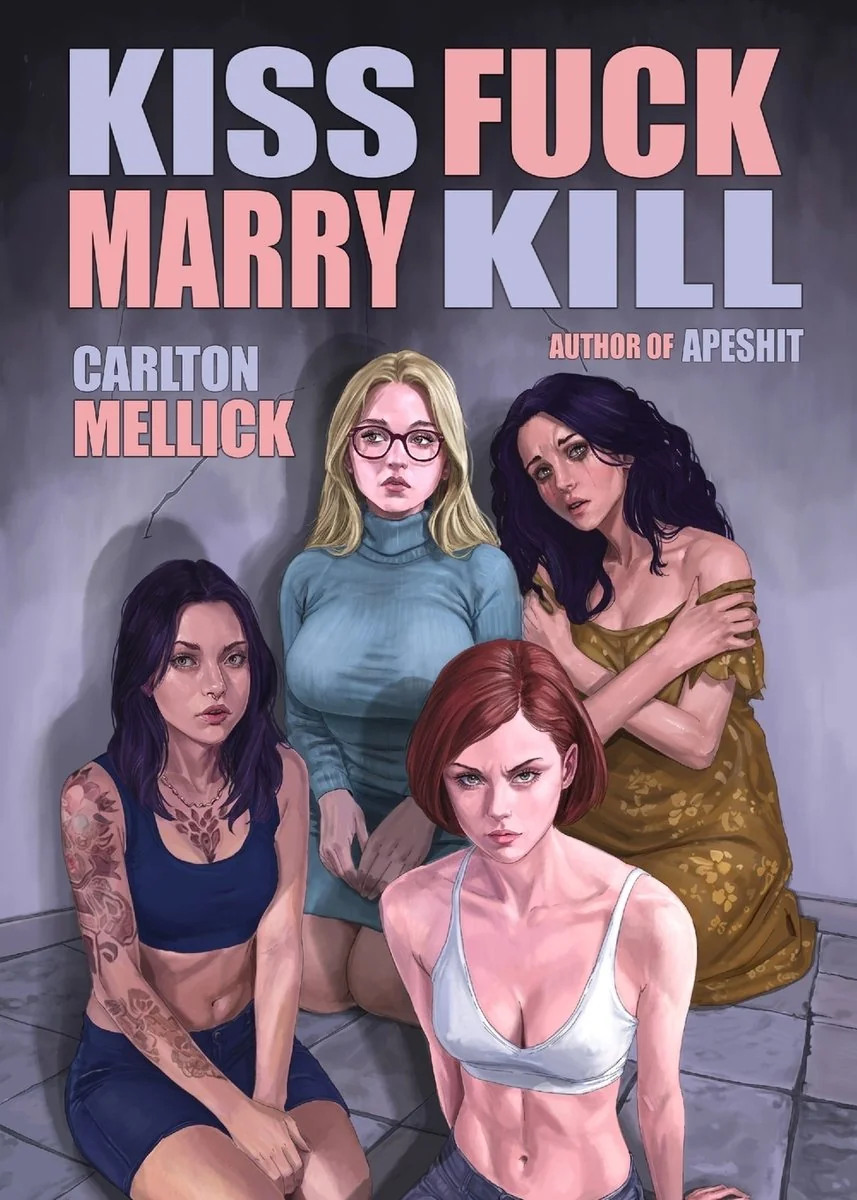
Kiss Fuck Marry Kill
A man's moral code is tested by a deadly game with four captives
The story examines the fragility of performative allyship when faced with extreme coercion. Arlo believes he understands women and respects their autonomy. The kidnapping scenario strips away his comfort and forces him to make impossible choices. The narrative does not rely on gore for its impact, but rather on the psychological unraveling of a man who thought he knew himself. Carlton uses this setup to explore how quickly civilized behavior can collapse when survival is at stake. The tension arises from the disconnect between Arlo's self-perception and his actions. It is a study in hypocrisy and fear, grounded in the immediate horror of the situation rather than distant threats.
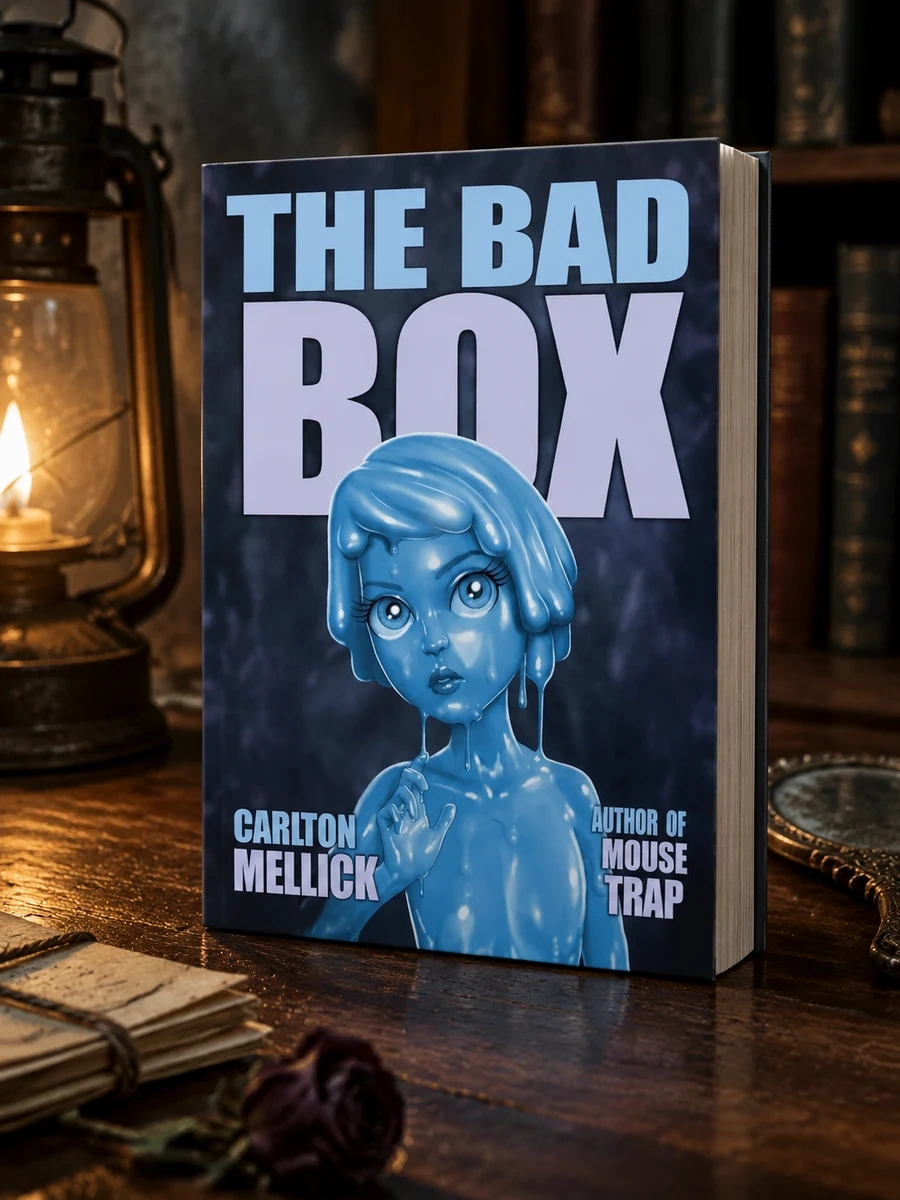
This novel emerges from the American bizarro fiction tradition, a genre known for its surreal and transgressive elements. Carlton Mellick III is an established voice in this space, recognized by major publications for his unique approach to genre writing. The book reflects contemporary anxieties about gender roles and the performance of virtue in modern society.


📝 Description: Kiss Fuck Marry Kill
💎 Our verdict on Kiss Fuck Marry Kill
📖 Why choose it
Why this book is worth reading
Readers who enjoy high-stakes ethical puzzles and deep character studies under pressure will find this compelling. The book offers a stark examination of how quickly civilized behavior collapses when survival is at stake, focusing on the disconnect between self-perception and action. It is ideal for those interested in the fragility of performative allyship and the psychological unraveling of a protagonist forced to make impossible choices. Those seeking traditional horror monsters or fast-paced action may find the focus on internal conflict less satisfying, but it provides a difficult, nuanced scenario for navigating gender dynamics without offering easy answers.
⭐ Reader reviews
Reader rating
Carlton Mellick III delivers a tense psychological thriller that effectively challenges the facade of modern masculinity through Arlo’s harrowing ordeal. By stripping away his comfort and forcing him into a deadly game, the narrative exposes the gap between his stated principles and actual reactions under duress. The story avoids gore in favor of psychological unraveling, making it a study in hypocrisy and fear grounded in immediate horror. Critics praise Carlton’s originality and experience in strange fiction, noting his place among top genre writers. This work suits readers who prefer moral dilemmas over supernatural elements, offering a gripping exploration of how self-image shatters when faced with extreme coercion and the terrifying reality of one's own limits.